




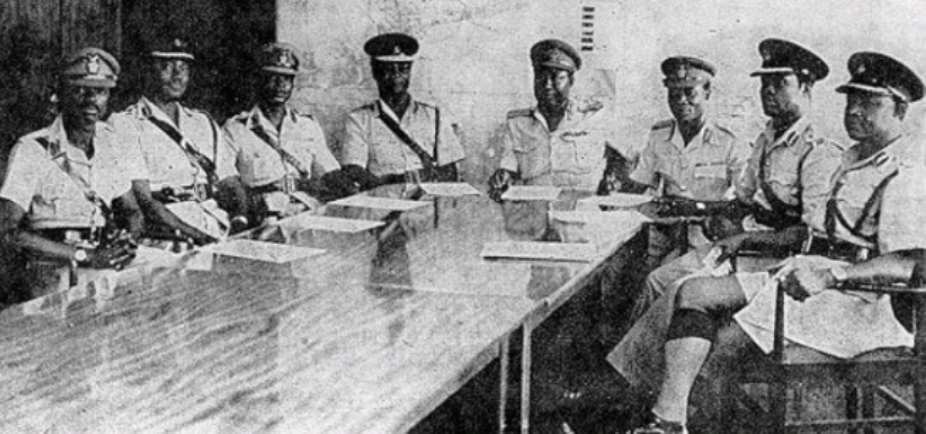
On 24 February 1966, Ghana’s first president, Kwame Nkrumah, was overthrown in a military coup while abroad. The takeover by the National Liberation Council (NLC) ended Ghana’s First Republic and shifted the country’s political and economic direction.
But did the coup represent a necessary correction to a failing socialist experiment or a setback that derailed Ghana’s independent development path?
Below is a sharper debate-style examination of both perspectives.
The Socialist Argument: “The Coup Undermined Ghana’s Independent Development”
Supporters of Nkrumah argue that the 1966 coup halted a bold attempt at African-centered socialism and economic self-reliance.
State-Led Industrialization Was Strategic, Not Reckless
Under Nkrumah, Ghana pursued:
Large-scale industrial projects
Expansion of state-owned enterprises
Infrastructure development (including the Akosombo Dam)
Free education expansion
Socialist defenders argue that newly independent states required strong state intervention to break colonial economic dependency. Private capital was weak, and foreign firms dominated trade. Without state leadership, industrialization would stall.
Cold War Interference
Nkrumah maintained relations with both East and West but increasingly cooperated with socialist states. Critics of the coup suggest Western powers were uncomfortable with his Pan-African ambitions and non-aligned activism.
Some declassified materials and scholarly works suggest that Cold War geopolitics formed part of the broader context surrounding the coup.
Economic Difficulties Were Transitional
Yes, Ghana faced:
Rising debt
Balance of payment problems
Shortages
But socialist supporters argue these were short-term structural adjustments typical of industrial transformation not proof of systemic failure.
From this perspective, the coup favored capitalist interests and foreign influence over Ghana’s long-term autonomy.
The Capitalist Argument: “The Coup Saved Ghana from Economic Collapse”
Supporters of the 1966 intervention argue that Nkrumah’s policies were economically unsustainable and politically authoritarian.
Excessive State Control
By 1966:
Over 50 state enterprises were operating
Many were unprofitable
Cocoa revenues had declined
Public debt had risen significantly
Critics argue that centralized planning led to inefficiency, corruption, and bureaucratic stagnation.
One-Party State and Political Repression
In 1964, Ghana became a one-party state under Nkrumah. Preventive detention laws limited opposition. Capitalist critics argue that economic mismanagement was compounded by political repression, eliminating accountability.
Post-Coup Economic Realignment
After the coup, the National Liberation Council:
Encouraged private enterprise
Improved relations with Western nations
Negotiated with the IMF and World Bank
Reduced state control in certain sectors
Supporters argue this rebalanced Ghana’s economy toward market principles and restored international confidence.
From this viewpoint, the coup favored capitalism because capitalism offered fiscal discipline, efficiency, and global integration.
The Middle Ground: Was It Ideology or Economics?
Some historians argue the coup cannot be reduced purely to socialism vs. capitalism. Instead, they suggest a mix of:
Economic crisis
Elite dissatisfaction
Military ambition
Cold War geopolitics
The ideological shift was clear Ghana moved away from centralized socialist planning toward market-oriented reforms. However, the NLC did not establish a fully free-market economy either; it maintained significant state involvement.
Thus, the coup represented not a pure capitalist revolution, but a decisive retreat from Nkrumah’s socialist trajectory.
Conclusion
In ideological terms, the 1966 coup favored capitalist-oriented reforms over state socialism. It reversed many of Nkrumah’s economic strategies and aligned Ghana more closely with Western financial institutions.
Yet whether this shift was necessary correction or historical setback remains debated.
More than six decades later, the 1966 coup remains one of the most contested turning points in Ghana’s political and economic history a moment when competing visions of development collided.
References
Jeffrey S. Ahlman (2017). Living with Nkrumahism: Nation, State, and Pan-Africanism in Ghana. Ohio University Press.
Richard Rathbone (2000). Nkrumah & the Chiefs: The Politics of Chieftaincy in Ghana 1951–60. Ohio University Press.
Naaborko Sackeyfio-Lenoch (2014). The Politics of Chieftaincy: Authority and Property in Colonial Ghana. University of Rochester Press.
National Liberation Council (1966–1969). Official policy statements and economic recovery reports.
Kwame Nkrumah (1965). Neo-Colonialism: The Last Stage of Imperialism.
Mustapha Bature Sallama.
Medical/ Science Communicator,
Private Investigator, Criminal investigation and Intelligence Analysis.
International Conflict Management and Peace Building.USIP
[email protected]
+233-555-275-880

 We were told dumsor would end with the levy – Dr Zaato fumes
 Did NPP use magic or witchcraft to keep our lights on? – Zaato jabs govt over du...
 Kofi Jumah sweats in EOCO custody as he struggles to meet GH¢55million bail cond...
 Cocoa prices to decline by over 50% globally in 2026 – World Bank
 Korle-Bu Doctors Association threaten strike over lack of laboratory and outpati...
 Ghana begins sixth IMF review as Finance Minister hails reform progress
 Otumfuo urges feuding factions in Middle East and Europe to cease fire
 Adamus Resources Boss Angela List buys Otumfuo gold artwork for GH¢1million
 FDA seizes over 2,100 banned alcoholic energy drinks in Western North Region
 Our prudent economic management shields Ghana from global shocks – Asiedu Nketia...


