




There is a dangerous temptation in Ghanaian higher education to confuse survival with success and expansion with excellence. Many universities trumpet rising enrolments and new programmes while quietly neglecting questions of quality, governance and long-term relevance. Christian Service University (CSU), however, presents a more complicated, and more interesting, story: one of measured growth, institutional discipline and leadership that appears conscious of both opportunity and responsibility.
Since attaining its presidential charter, CSU has moved decisively from the margins of private higher education into the arena of serious institutional actors. The numbers alone are striking. For the 2025/2026 September session, the University received 1,149 applications, with 911 applicants, nearly 80 per cent, accepting and registering. Total enrolment now stands at 3,031, up from 2,705 the previous academic year, with projections pushing the figure toward 4,000 in the near term. These are not cosmetic gains; they signal growing confidence among students and parents in a system that is increasingly competitive and unforgiving.
Yet enrolment growth, while impressive, is also a test of institutional character. The true measure of progress lies not in how many students are admitted, but in how well they are taught, housed, transported and prepared for life beyond graduation. On this front, CSU deserves both commendation and scrutiny.
The University’s response to demographic realities, particularly its gender imbalance, with women constituting over 70 per cent of the student population, has been pragmatic rather than rhetorical. Infrastructure planning has been adjusted, classrooms modernized with IT facilities, seating expanded and digital systems strengthened. The acquisition of a 60-seater Tata bus may sound mundane, but it speaks volumes about administrative attentiveness. Universities are built not only on lofty visions but on buses that run, networks that work and classrooms that function.
Still, growth at this pace demands vigilance. Rapid expansion has ruined better-resourced institutions across Africa. CSU must resist the allure of unchecked admissions and instead anchor its future in academic staffing, research capacity and student support systems. Without these, growth becomes inflation, large, impressive and hollow.
Academically, the University’s programme portfolio reflects cautious ambition. With eight postgraduate, 12 undergraduate, one diploma and three certificate programmes currently running, CSU has avoided the common Ghanaian impulse to flood the market with poorly resourced degrees. The proposed addition of a Bachelor of Law, Master of Arts in Contemporary Chaplaincy Studies and Doctor of Ministry, pending GTEC accreditation, suggests strategic rather than opportunistic thinking. Particularly noteworthy is the focus on chaplaincy and ministry at advanced levels, areas where CSU’s faith-based heritage provides a natural comparative advantage.
The planned development of the University’s 11.5-acre land at Sabin Akrofrom for health-related programmes could prove transformational if handled wisely. Health education is capital-intensive, regulation-heavy and reputation-sensitive. Inviting investors into this space is sensible, but the University must ensure that academic integrity, not profit margins, drives the partnership. Ghana has enough health institutions that produce certificates faster than competence.
Graduation outcomes from the latest ceremony offer another window into CSU’s academic culture. Of the 563 graduands, the distribution of classifications suggests a system that is neither excessively lenient nor unduly punitive. The modest number of First-Class graduates indicates standards that still mean something, a refreshing contrast in an era where grade inflation has become institutional policy in disguise.
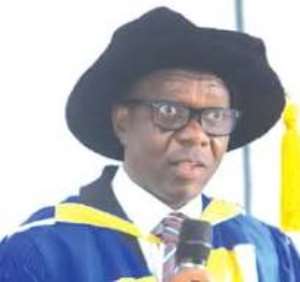
Beyond structures and statistics, however, institutions rise or fall on leadership. In this regard, the stewardship of the Acting Vice-Chancellor, Dr. Stephen Banahene, deserves special recognition. His tenure reflects a quiet, workmanlike style that is increasingly rare in university administration. Rather than chasing headlines, Dr. Banahene appears focused on consolidation, strengthening systems, planning for expansion and aligning growth with capacity.
Leadership in higher education is not about charisma; it is about restraint. It is knowing when to say no, when to slow down, and when to invest patiently in foundations that may not yield immediate applause. Under Dr. Banahene’s guidance, CSU has avoided the chaos that often accompanies post-charter transitions. That alone is an achievement worthy of tribute.
Equally deserving of acknowledgment are those whose sacrifices predate the current moment: founding administrators, council members, faculty, staff, and faith leaders who laboured when resources were scarce and outcomes uncertain. Universities do not emerge fully formed at the moment of charter; they are forged over decades by individuals who choose service over comfort and vision over immediacy. CSU’s current progress is, in many ways, the delayed dividend of earlier sacrifices.
Yet praise must not silence critique. CSU now stands at a crossroads. Its next phase must prioritize research culture, postgraduate supervision quality, international partnerships and staff development. A university aspiring to national and continental relevance cannot remain primarily teaching-oriented. Knowledge production, policy engagement and global visibility must become central, not peripheral, concerns.
Christian Service University’s story, therefore, is neither triumphalist nor trivial. It is a case study in disciplined growth within a challenging higher education ecosystem. The institution has earned its moment of confidence, but confidence must now mature into ambition anchored by accountability.
If CSU can balance expansion with excellence, faith with rigour and vision with institutional humility, it will not merely grow in size. It will grow in stature. And that, in the final analysis, is the only growth that truly matters.
The writer is a journalist, journalism educator and member of GJA, IRE and AJEN.

 VIDEO: Watch the only community toilet carried away by floods
 Sedina Tamakloe unwell and currently under house arrest – Franklin Cudjoe disclo...
 Ofaakor Court remands suspect, grants GH¢70,000 bail to accomplice over vehicle ...
 We don’t owe Tema Motorway contractor any amount of money — Agbodza
 Swift response by Saki High Tension residents helps contain warehouse blaze in K...
 Bank of Ghana converts 147 rural and community banks into community banks
 Five fake soldiers grabbed for armed robbery at Ashanti mining community
 Bawumia appoints Kyei-Mensah-Bonsu as Chief of Staff as he restructure his offic...
 Sam George announces major reduction in MTN Fibre broadband prices effective Jun...
 Concerned citizen gives EC seven-day ultimatum over Anyako by-election delay


