




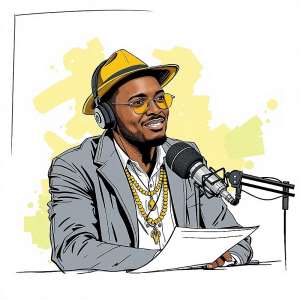
In every society, the media is expected to function as a watchdog, a mirror, and a bridge between the people and power. But when the media begins to rule—not inform—a nation slowly loses its ability to distinguish truth from agenda, fact from spin, and justice from propaganda. Ghana today stands at a dangerous crossroads where media influence has grown so powerful that it can shape elections, destroy reputations, create heroes overnight, or bury scandals beneath noise.
The old African wisdom says: “When the drums change rhythm, the dancers must adjust their steps.” In Ghana, our national rhythm is increasingly controlled not by leadership or the people, but by media houses driven by commercial interest, political sponsorship, and personality worship.
The Power of Media in Ghana’s Democracy
Ghana’s media freedom is often celebrated across Africa. But freedom without responsibility becomes a weapon. As former U.S. President Thomas Jefferson warned: “The man who reads nothing at all is better educated than the man who reads nothing but newspapers.”
This echoes in Ghana today, where misinformation spreads faster than facts, and sensationalism often replaces genuine journalism. The loudest voice, not the most truthful one, now determines public opinion.
As Ghanaian philosopher and statesman Dr. J.B. Danquah once said: "Knowledge is the only true foundation of freedom.”
But without truth, knowledge becomes corrupted, and freedom becomes manipulated.
When Media Captures the Nation
A nation ruled by the media will not know the truth because:
Media houses are deeply politicized.
Many stations wear party colors louder than the flags they hang. Every story is filtered through political allegiance.Money controls narratives.
Advertisers, politicians, and businessmen often determine what becomes news. As George Orwell warned: “Journalism is printing what someone else does not want printed. Everything else is public relations.”Public emotions are easily manipulated.
In Ghana, trends, hashtags, and viral stories can spark outrage before facts appear. People react before they reflect.
Media trials replace justice.
A suspect can be ruined before appearing in court. An accused person becomes guilty simply because the media repeats it often enough.Truth gets buried under entertainment.
Our screens are filled with gossip, political shouting matches, and endless opinion shows presented as fact.
Ghanaian Examples of Media Influence
Election periods dominated by propaganda-packed morning shows.
Social media “breaking news” that later turns out to be false.
Court cases and investigations influenced by public pressure instead of evidence.
Ordinary citizens mislabeled or humiliated on live TV or radio.
National issues forgotten after 72 hours because a new story emerges.
As Kofi Annan, Ghana’s global icon of diplomacy, once reminded us: “Knowledge is power. Information is liberating. But we must use information responsibly.”
The Danger: The People Become Followers, Not Thinkers
When media, not truth, shapes national consciousness:
- Citizens cease to question.
- Political parties control narratives.
- Justice becomes selective.
- Corruption hides behind media chaos.
- Development suffers because national debate becomes noise, not direction.
A nation influenced by media is normal.
But a nation ruled by media is lost.
The Way Forward: Reclaiming Truth
To prevent Ghana from drifting into a media-governed society, we must:
Strengthen media ethics and accountability.
Promote independent, fact-driven journalism.
Educate citizens on media literacy.
Encourage responsible digital behavior.
Support public-interest news over entertainment-driven content.
As Dr. Kwame Nkrumah famously said:“Thought without practice is empty. Action without thought is blind.”
Ghanaians must think critically, verify information, and refuse to be ruled by those who control headlines. Only then can we reclaim truth and strengthen our democracy.
Conclusion
because those who control information can control the mind of the nation. Ghana must rise above partisan media battles and reclaim a culture of truth, accuracy, and responsible journalism.
Only then can our democracy truly work for the people—and not for the narratives shaped in studios and social media timelines.
By
Komfa Ishmael Ofori
LLB Student


 Transport fares increased 8% from September 26
 Golokuati residents call for operationalisation of abandoned ECG office
 Frank Danquah declared wanted over alleged narcotics offences
 Ghana TVET Service warns against collection of fees in TVET institutions
 16 arrested as National Security uncovers counterfeit currency printing syndicat...
 Work without fear or favour — Shamima Muslim urges broadcasters
 MFWA begins 5-day training for journalists from northern sector on media law and...
 A/R: Assemblyman for Nkwantakese Electoral area killed
 Kumasi: Roadside trader killed in tragic accident at Brewery Traffic Light in As...
 Law student petitions CHRAJ over alleged military killing of Gbewaa Training Col...


