




Introduction
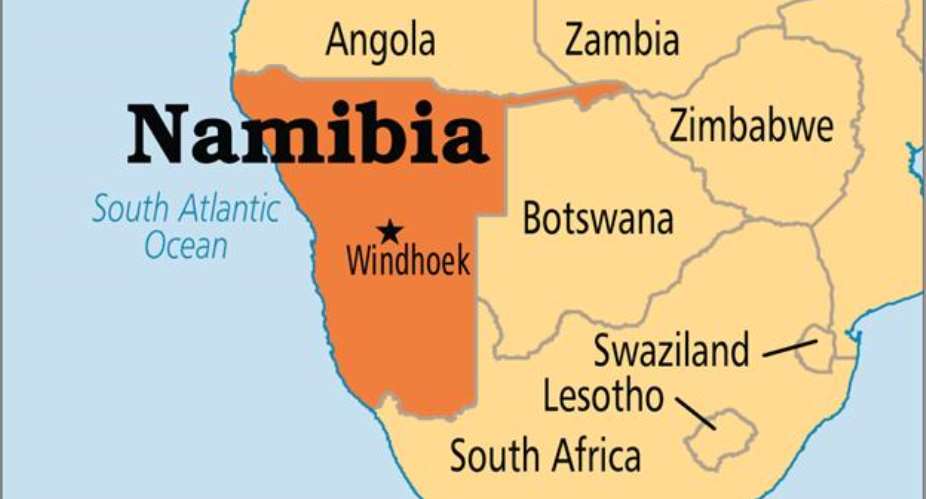
Have you ever wondered why on the Southern Africa Map,from mainland Namibia on the northeastern side, there is a 500 km stretch extending approximately 450km (280 miles) eastward wedged between Angola, Zambia to the north and Botswana to the south, stretching towards Zimbabwe in the east, is the"Caprivi Strip ". Meeting at a single point at the eastern tip of the strip, which also comes within 150 m (490 ft) of Zimbabwe, thus, nearly forming a QUADRIPOINT (meeting of four countries, Namibia, Botswana, Zambia & Zimbabwe).
Name
The area was originally known as "Itenga" or "Liyeyi" under Lozi rulers. However, after the territorial swap deal between the English and Germans in July of 1890, the area begun to be known as "Germany Barotseland" or "Germany Zambezi Region". In 1909 it was renamed Caprivi Zipfel that is, Caprivi Strip. Caprivi was named after the then Germany Chancellor who negotiated with the British to have that area previously under British colonial authority to be acquired by the Germans, General Count George Leo von Caprivi di Caprara di Montecuccoli, simply known as Count Leo von Caprivi or Chancellor Caprivi,(1831-1899), successor to Otto von Bismarck. Leon von Caprivi was chancellor of imperial Germany from 1890-1894.
Germany Desire For Easy Passage To Connect Her Colonies
The imperial Germany had a problem of connecting their two colonies,that is, Germany South West Africa (Namibia) andGermany East Africa (Tanganyika/Tanzania).Germans wanted the shortest, quick route & linkage between its two colonies. So according to their reasoning getting Caprivi would enable them to have access to Zambezi river to connect German South West Africa (Namibia) and Germany East Africa (Tanzania)through navigating the Zambezi river.
Swap Deal- Helgoland- Zanzibar Treaty 1 July 1890
Hoping to gain convinient access to its East Africa colony of Tanzania, Germany got into a treaty with Britain. A swap deal was agreed between the two colonial powers, Britain and Germany. The Heligoland- Zanzibar Treaty was in essence a territorial exchange of British-held Helgoland and German-held Zanzibar. Germany was given a ribbon of land, the Caprivi Strip which gave German South-West Africa(Germany controlled Namibia) access to the Zambezi River. In return, Germany recognized British authority in Zanzibar. Germany gave up her claims over Helgoland islands and Zanzibar to Britain. In return, Germany was rewarded by the then British controlled territory - allocation of a strip between Okavango and Zambezi rivers, the "Caprivi Strip".The logic between this territorial swap deal as far as Germany was concerned was to acquire a strip of land that would be added to German South West Africa, linking the Zambezi River, Lake Tanganyika and the Indian Ocean via another German colony Tanzania (German East Africa).
Geological Obstacle - Mosi-oa- tunya (Victoria Falls).
Caprivi Strip is a "colonial creation". Caprivi Strip became part of German South West Africa(Namibia) as a result of the so-called Helgoland-Zanzibar Treaty of 1st July 1890 which was signed between Germany and Great Britain. With this Germany was hoping to gain access to its land properties in East Africa via the Zambezi River. Unbeknown so it seems, the Germans were oblivious to the fact that the Victoria Falls was downstream and their plans to use the mighty Zambezi to access the Indian Ocean were naturally out of the question. Britain gladly let the Germans enter the deal. A diplomatic usurp for Britain and a diplomatic blunder for the Germans.This is how Caprivi Zipfel or Caprivi Strip came into existence.
Caprivi Borders & Demography
The borders of the area were demarcated according to geographical degrees of latitude and longitude or rivers without taking the local inhabitants into consideration.The exact demarcation of the various border sections was a long process and was only finalized in 1933. The Caprivi Strip consists of the narrow piece between the Okavango and Kwando Rivers and the area of East-Caprivi situated east of the Kwando. Some Khwe and small groups of Mbukushu formerly occupied the mostly waterless West-Caprivi. In addition, it was an area of conflict between the BaLozi of Barotseland and the BaTawana of Ngamiland during the 19th century. Although some Khwe still occupy certain parts of it today, the area is a conservation area, which includes the Bwabwata National Park in the north,(Gondwana Collection, 2012). The people of East-Caprivi, who form part of the Zambezi tribes, are not related to the other Bantu-speaking inhabitants of Namibia and comprise the BaLozi, BaSubiya, MaFwe, HaMbukushu, BaYeyi, MaTotela,MaMbalangwe and BaMashi, as well as some Khwe, (Gondwana Collection, 2012).
Contemporary Conflicts Tied To This Swap Deal
Border Dispute Botswana- Namibia 1989
Directly, related to the ambiguity of the 1890 Treaty which saw the Germans acquiring the "Caprivi" from the English,a border dispute arouse in the 1990s between Botswana and Namibia over islands in the Caprivi Strip.The Botswana-Namibia border dispute over the Caprivi Strip involved the islands of Kasikili/Sedudu and Situngu in the Chobe River. The core of the dispute was which channel of the river was the international boundary.The border between modern-day Botswana and Namibia was established along the “main channels” of the rivers along the mutual frontier by an 1890 treaty between the UK and Germany, the respective colonial powers at the time, (Le Roux,1999). The ambiguity of this delineation has led the governments of both countries to issue competing claims on territory in the border rivers, with the Sedudu Islands representing a particularly contested prize. While the Islands themselves have some value as tourist destinations, the primary concern was the division of water reserves that legal jurisdiction over the territory would offer, (Salman,2000). The disagreement was peacefully resolved by the arbitration of the International Court of Justice in 1999 after a series of border clashes.
Cessation Attempt 1999.
The Caprivi Strip in Namibia’s northeast was a result of arbitrary territorial deals and agreements between colonial powers,and in this case Germany and Britain (Heligoland- Zanzibar Treaty 1890). It was initially a separate entity within German South West Africa(Namibia) and later directly governed by the Apartheid era_ South Africa. reinforcing its distinct identity. After Namibian independence in 1990, centralized South West Africa People's Organization (SWAPO) rule exacerbated existing divisions, leading to secession or separatists tendencies in Caprivi. In 1999, the Caprivi Liberation Front,led by Mishake Muyongo, attempted unsuccessfully to secede from Namibia. Despite the failed 1999 secession, tensions have persisted, with ongoing concerns about the region’s economic and political status within the greater Namibia. Perceived marginalization is the reason why separatists group like the Caprivi Liberation Front exists. After Namibian independence, the Caprivi Strip was perceived by some as marginalized by the centralized SWAPO government, which focused its resources and attention on the other regions of Namibia,at the expense of the Caprivi.
Caprivi Renamed- Now Zambezi Region
In 2014, the Caprivi Strip was renamed the *Zambezi Region,* swapping the name of a German Chancellor for that of one southern Africa's great rivers-Zambezi. Zambezi region becomes one of the thirteenth (13)Namibian regions.The Zambezi region(formerly Caprivi Strip) comprises of six (6) ethnic tribes, the Subia, Yeyi, Mafwe, San, Tortela and Mbufarkushu.
Conclusion
The story of Caprivi strip is a story of Africa, of how Berlin created borders has defined us up to this very day.A story of how colonially created divisions, borders have carried with them seeds for post-colonial problems in Africa. Its not being from truth to argue that these funny & awkward borders created by colonialism has been the roots of some contemporary African problems. In this case, border dispute between Botswana & Namibia over islands in the Caprivi Strip, thank heavens, the conflict was peacefully resolved. This also explain irredentist or separatist tendencies which grips a lot of African nations. In this case , we have the Caprivi Liberation Front demanding to be free from the rest of Namibia, citing no connection with the rest of mainland Namibia. Also citing underdevelopment and marginalisation or perceived marginalization by Windhoek admnstrations.Caprivi is a story of scramble of Africa, a story of how Africa was partitioned, divided and shared on the whims of former colonial powers. Its a story of how former colonial powers, changed territories, how borders were created, not with consultations of locals but to suit their imperial objectives.Its a story of how different ethnic groups were lumped together to form nations of Africa as we know them today.Its a story we cannot change today, but certainly, a story we can learn from.Whilst the Berlin Conference of 1884 was about dividing us, creating funny & awkward borders like the "Caprivi Strip"...what Africa needs today is more of it's own African "conferences" to shun division, to stamp on hate fanned by colonial borders, to move towards vision of borderless Africa and above all unite Africa and Africans.
F. Madondo (African Teacher) [email protected]
References
C.J.B. Le Roux,1999, “The Botswana-Namibia Boundary Dispute in the Caprivi: To what extent does Botswana’s Arms Procurement Program represent a drift towards Military Confrontation in the Region?” Scientia Militaia, South African Journal of Military Studies, Vol. 29, No. 1. (1999)
Gondwanaland Collection, 2012, Available at www.gondwanaland.com
Salman M. A. Salman, 2000, “International Rivers as Boundaries: The Dispute over Kasikili/Seduku Island and the Decision of the International Court of Justice.” Water International, Vol. 25, No. 4. (2000) p.582


 Adu-Boahene’s lawyers ask court to strike out fabricated, invented evidence in D...
 'He is part of National Film Authority' – Kwasi Kwarteng exposes Obuasi SHTS hea...
 'Mahama should have appointed Edudzi Tameklo to EC to teach hypocrite NPP some s...
 'You have no moral right to complain about cost of living' – Prof Anankware to B...
 'You did the same thing' – Solomon Owusu defends EC appointment
 GFL vows to pursue justice for worker who lost five fingers at Afienya Industria...
 State to call first witness on January 12 in Canadian murder case
 Haruna Iddrisu refers Obuasi SHS headmaster's sexual misconduct allegations to C...
 Bawumia is a ‘prophet of pocket economy’ in opposition, ‘priest of paper economy...
 Bolgatanga Technical University Council Chairman allegedly locks up Vice-Chancel...


