




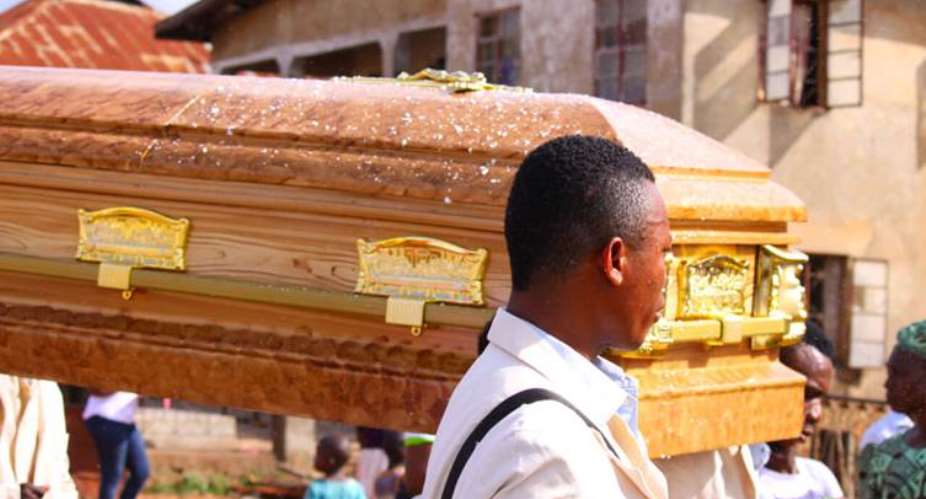
In the traditional Igbo society of old, death was not only a moment of grief but also a moment of solidarity. The passing of a community member evoked loads of sympathy. It was a period when neighbours, extended family members, and friends came together to support the bereaved, not to add to their pain. For four nights, people would gather in the compound of the deceased. They would sing songs, play the drum, dance, and recount the life and times of the departed. It was not the time for a show of wealth but a collective ritual that lightened the heavy burden of grief. Participants often came along with their own food, palm wine, and kola nut which they shared freely with others. The host family, in their period of sorrow, was not left alone to shoulder additional burdens. Instead, they were carried along by the long arms of the community, by their traditional spirit of togetherness that defined the Igbo way of life.
Today, that once noble tradition has been virtually turned inside-out and upside down. What used to be a solemn expression of sympathy has been hijacked by a culture of coercion, ostentation and waste. In contemporary Nigeria, burials are no longer purely about honouring the memory of the dead or consoling the living who lost dear ones. They have become flamboyant displays of wealth, where families are forced to entertain guests with feasts, assorted drinks, and even souvenirs. Instead of extended families and neighbours contributing resources to lessen the burden on bereaved families, visitors now arrive with expectations—expectations of being treated to lavish parties and, in some cases, to go home with customized items such as umbrellas, plates, mugs, exercise books, and pens bearing the name and image of the deceased. Families who can barely afford three square meals a day and have to go to bed at times on empty stomachs find themselves coerced by cultural pressure to meet these expectations. Those who fail to do so risk ridicule, gossip, and social stigma.
The consequences of this insensitive cultural evolution has been devastating, to put it mildly. Many families have been financially crippled by burials. These days, the cost of conducting what is considered a "befitting burial" often surpasses what the family can afford. Livestock is slaughtered, bags of rice bought and cooked, crates of beer stacked and shared, professional caterers also engaged. Designer canopies, chairs and tables, plates and cutleries are rented. In some cases, traditional music troupes are hired alongside gospel musicians, turning the burial into something of a carnival. Added to this are the customized souvenirs, which have become almost compulsory in many Igbo communities. The bereaved family, already weighed down emotionally by the loss of a loved one, must now carry the crushing financial weight of satisfying the public. In many cases, they go into debt, sell properties, or mortgage their future just to meet societal expectations.
But how did Nigerian society, especially in the Southeast, descend into this expensive burial culture? The answer lies in a mix of tradition, religion, colonial influence, and modern consumerism. In pre-colonial times, the burial of an elder, particularly one who lived a full life and left behind children and grandchildren, was considered a celebration of life. The community gathered to honour the memory of the deceased, and the atmosphere often combined grief with joy. Yet the joy was never commercialized, it was rooted in togetherness. With the advent of colonial rule and the spread of Christianity, some of the traditional practices were modified but not abolished. Churches introduced their own rites, with priests presiding over funeral events. But the sense of community remained.
It was in the post-independence era, particularly from the late 1970s onward, that the burial culture began to take a sharp turn. Nigeria’s oil boom brought wealth, and with wealth came the urge to display status. Funerals became one of the avenues for such display. The concept of “befitting burial” was born, a phrase that soon grew into an unwritten rule. Families began to compete with one another, sometimes unconsciously, to prove their love and respect for their departed relatives by spending lavishly. The rise of consumer goods in Nigeria reinforced the trend. Companies that branded everyday items like buckets, plates, and umbrellas found a new market in funeral ceremonies. Families began ordering hundreds of such items to distribute to guests, turning burials into miniature trade fairs. What was once communal sympathy evolved into an industry of profiteering and social pressure.
Religion, which should have helped tame this excess, instead became complicit. Both Catholic and Protestant churches, in many cases, failed to draw the boundary line. Rather than discourage the lavish spending, Church leaders sometimes measured a family's respect for their departed by the scale of the burial ceremony. The size of the offertory, the kind of reception provided after the funeral event, and the visible display of wealth often defined how a burial was perceived. Instead of offering comfort and counsel against unnecessary expenses, some religious institutions appeared to reinforce the culture, even organizing fundraisers during burial events that added further strain to already burdened families.
The Nigerian state, too, has largely looked the other way. Governments at local and state levels, which should protect citizens from exploitative traditions, have treated the matter as a private family issue. Yet, in reality, this is a societal problem with economic consequences. When families are forced into debt just to bury their dead, the ripple effects extend into poverty, children’s education, and even health. Entire lineages have been destabilized because of one expensive burial. In a country where poverty is already endemic, this culture is nothing short of inhumane.
The situation calls for urgent intervention. Both state governments and the churches must wake up to their responsibilities. The state can set regulations limiting the extravagance of funerals, just as has been done in some other African countries. For example, Rwanda and Ghana have placed restrictions on the number of days a corpse can be kept in the mortuary, the scale of public ceremonies, and the time limits for burial activities. Similar regulations could be adopted in Nigeria, curbing excesses while still respecting cultural and religious practices.
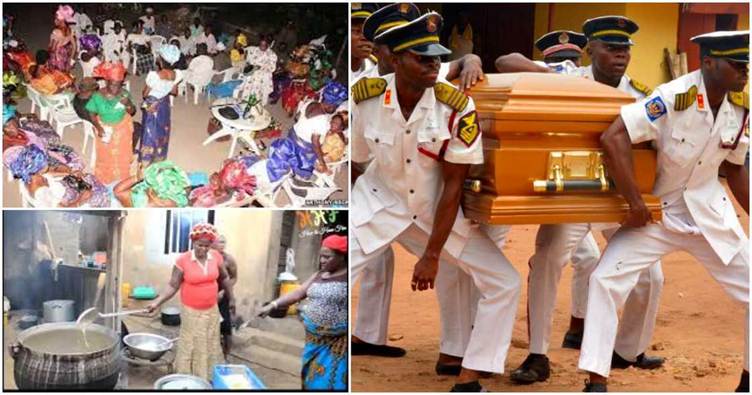
The Catholic and Protestant churches also have a moral duty to act. They should not only preach simplicity in death but enforce it among their members. The idea of giving souvenirs at funerals should be openly discouraged from the pulpit. Churches can set rules that burials be kept short and modest, with more emphasis on prayer and thanksgiving than on entertainment. Priests and pastors must be courageous enough to remind their congregations that respect for the dead is not measured in money spent or in the number of umbrellas distributed, but in the love and memories cherished by those left behind.
It is important to stress that culture is not static. What the Igbo society has today is a distortion of the past, a dangerous twist that has enslaved families instead of uplifting them. To defend this burial culture under the guise of tradition is to misrepresent history. True Igbo tradition emphasized solidarity, not waste; support, not exploitation. The present model is therefore not tradition but a commercialization of grief.
There is also a need for individual courage. Families must learn to resist societal pressure. It is not easy, given how communities gossip about those who bury their loved ones quietly. Yet someone has to start the change. A family that chooses to conduct a modest burial is not dishonouring their dead: they are honouring the values of sanity, responsibility, and wisdom. The more families make this bold choice, the faster the culture of waste will wither.
At the root of this problem is a Nigerian society that has become obsessed with appearances. Whether in weddings, birthdays, or burials, the urge to "show face" has overtaken the wisdom of moderation. But death is a universal equalizer. No amount of rice, beer, or umbrellas can change the reality of mortality. What remains is not the grandeur of the burial but the legacy of the deceased and the stability of the family left behind. To sacrifice the future of the living for the ceremonies of the dead is both unwise and inhumane. Nigeria is a country grappling with economic hardship. Inflation, unemployment, and poverty are daily realities for millions. And in such a context, to sustain an expensive burial culture is to deepen suffering. The practice not only drains families but also entrenches inequality. Wealthier families can afford to dazzle with pomp, while poorer families who cannot are stigmatized. This further widens the social gap, breeding resentment and envy. It is a cycle that does not serve the living, the dead, or the society at large.
The time to act is now. Communities must return to the values that once defined Igbo funerals: empathy, solidarity, and moderation. State governments must introduce laws that prevent exploitative practices. Churches must speak boldly and lead by example in promoting modesty. And individuals must summon the courage to resist cultural coercion. The burial of a loved one should be a moment of dignity, not of debt. It should unite families, not break them financially. It should bring comfort, not despair. To continue in the present path is to perpetuate cruelty under the guise of culture. This burial culture is simply inhumane and should be stopped.

 Two women die on migrant boat near France seeking to reach UK
 Iran offers strait deal, Trump says he's not satisfied
 Here are areas to be affected by ECG's planned maintenance today
 Suma Paramount Chief commends President Mahama’s development agenda
 How faulty fan regulator sparked fire, destroyed two rooms at Suhum Konfine
 Don’t store bread beyond four days – Baker advises
 Mahama commissions divisional police headquarters at Laasi, Krobo-Odumase
 Lambussie district assembly fails to elect presiding member after two rounds of ...
 Public sector workers struggling to meet pressing needs – TUC secretary
 Seven arrested in Ashaiman police operation over robbery, arms supply


