




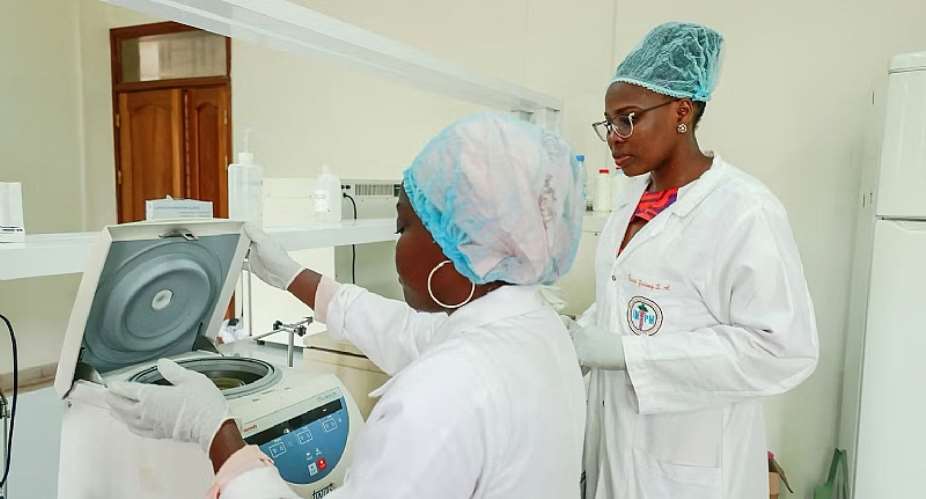
Modern medicine prides itself on being a universal science, built on evidence from clinical trials.
But there's a bias in medical research. While Africa accounts for roughly 25% of the global disease burden and 19% of the global population, the continent's people are largely invisible in some clinical trials.
The scale of the erasure is revealed in a landmark study of 2,472 randomised controlled trials globally published between 2019 and 2024.
I led this team of researchers, who scrutinised the world's most influential medical publications to quantify African representation. They included the New England Journal of Medicine, The Lancet, the Journal of the American Medical Association, Nature Medicine, and the British Medical Journal. There were also three leading cardiovascular journals in the study: Circulation, the European Heart Journal and the Journal of the American College of Cardiology.
I am a physician-scientist working at the intersection of cardiometabolic epidemiology and biomedical data science. I also focus on large-scale population studies in Africa and data-driven cardiovascular prevention.
Randomised controlled trials are a cornerstone of evidence-based medicine. Introduced in the mid-20th century, they rigorously evaluate the safety and effectiveness of treatments by randomly assigning participants to different groups. This is done to minimise bias. Trials like these have been central to major medical breakthroughs, from cardiovascular therapies to vaccines. They continue to guide clinical decisions and the development of new treatments worldwide.
What we discovered
Our findings show a profound imbalance in the global clinical research landscape. Across the five most prestigious general medical journals, only 3.9% of trials were conducted exclusively in Africa. In cardiovascular health, the numbers drop to a statistical whisper. Of the major trials published in leading cardiology journals, just two studies (0.6%) were conducted solely on African soil.
This is a crisis of scientific accuracy. When clinical trials exclude African populations, they produce evidence that lacks “external validity”. This refers to how well the results of a study can be generalised beyond the participants. It asks whether findings from a clinical trial will still hold true when applied to different populations, settings, or real-world conditions.
Without that validity, doctors are essentially conducting unmonitored experiments on millions of patients every day.
Modern medicine cannot claim to be universal if entire populations remain invisible in the evidence base. Biology, health systems and disease patterns are not identical across the world.
The gap and why it matters
Many treatments used across the continent are based on evidence generated in non-African populations, raising concerns about their applicability.
Moreover, most Africa-based trials still focus on infectious diseases, despite the rising burden of non-communicable diseases such as cardiovascular disease.
Emerging evidence shows that genetics, environment and diet can radically alter how a body responds to a drug. It therefore makes no medical sense that an entire continent is left out of the trial net.
There's also evidence showing that certain treatments have different safety profiles in Black patients. Diabetes and gout are just two examples. So are certain common blood pressure medications, such as angiotensin-converting enzyme (ACE) inhibitors. Research shows that they carry a three- to four-fold higher risk of severe, life-threatening side effects in people of African descent compared to other populations.
When clinical trials exclude populations, doctors are forced to extrapolate findings from one population and apply them to another.
The study also highlights a dangerous lag between global research funding and the evolving reality of African health. The new data show that nearly 76% of trials conducted exclusively in Africa focused on infectious diseases. But the continent is undergoing a massive epidemiological shift. Non-communicable diseases – heart disease, stroke, and diabetes – now account for about 38% of all deaths in many African nations.
The middle class in Africa has tripled to 300 million people from roughly 100 million people in the early 2000s. More people are now living long enough with lifestyles that increase the risk of chronic conditions such as heart disease, diabetes, and hypertension. Consequently, there is a growing need and market for long-term treatments that manage these diseases, rather than short-term therapies for infections. Yet cardiovascular trials continue to be discouraged.
Even within the continent, the data show deep “black holes” of information. South Africa accounted for over 62% of all trials conducted on the continent. Central Africa, a region that's home to more than 180 million people, was virtually non-existent in the global research record. It contributed less than 3% of the continent's limited trial output. Possible reasons include South Africa's decades of cumulative investment, seen in stronger academic hubs, research governance, experienced trial units, and more established sponsor relationships. Other regions face barriers like fewer resourced research institutions, less access to trial platforms, and sometimes language and publication issues that can reduce visibility in top-tier journals.
The inequity extends into the hierarchy of science itself. Even when African sites are included in large, multicontinental trials, they are often relegated to the role of “recruitment hubs” rather than scientific partners. Our study found that African scientists led only 3.6% of multicontinental trials that included an African site.
Towards a new era of African science
Africa should not simply be a location where studies are conducted.
It must be a place where research is conceived, led and interpreted. The current model creates a cycle of external dependence where international institutions manage the funding and the data. This leaves local research systems fragile and unable to translate evidence into national policy.
There is need for “ring-fenced” funding for African-led research, the development of regional trial networks, and a mandate for medical journals to report on the diversity of trial populations.
There are signs of a rising momentum. Organisations like Alliance for Medical Research in Africa are working to equip a new generation of African investigators. Africa must create a research ecosystem that is too important for the global community to ignore.
Bamba Gaye does not work for, consult, own shares in or receive funding from any company or organisation that would benefit from this article, and has disclosed no relevant affiliations beyond their academic appointment.
By Bamba Gaye, Adjunct professor, Université Cheikh Anta Diop de Dakar
 Mahama summons TDC, TMA officials over disputed Tema development project
 Govt disburses GH¢23.1 billion to clear road contractors' arrears - Roads Minist...
 Mahama commissions Paga SHS E-Block
 Ghana to expand pharmaceutical manufacturing capacity - Mahama
 Wiawso College of Education student produces raincoat and umbrella from empt wat...
 We will hold referendum on proposed constitutional amendments in 2027 - Mahama
 Roads Minister announces 267km of road projects for Upper East Region
 Feed Ghana Programme drives sharp fall in food inflation to 2.2% — Agric Ministe...
 Government to establish Ghana Scholarships Authority to improve scholarship admi...
 Legal vacation trials: ‘Where is the constitutional violation?’ – Prof Azar quiz...

