




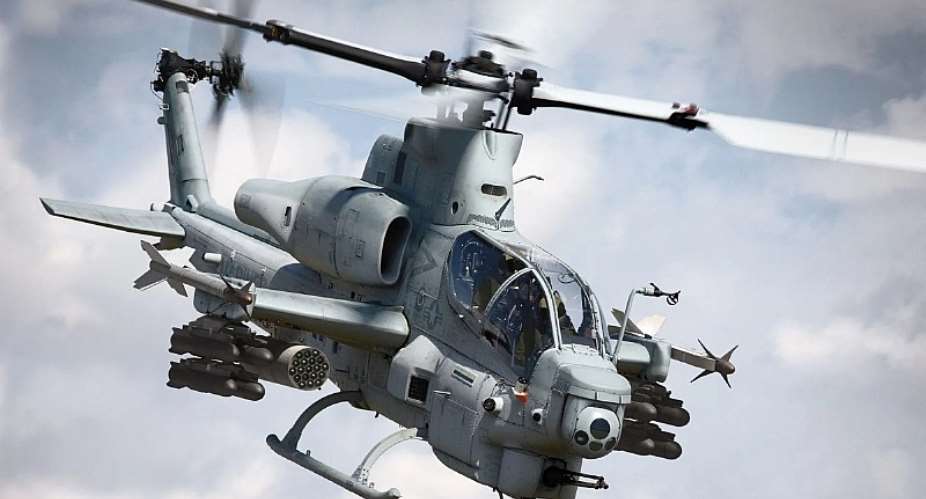
OBUASI, GHANA — 6 AUGUST 2025
At 11:30 GMT, the sky over Obuasi — that ancient gold city whose veins have fed empires — split with the metallic roar of disaster. A Ghana Armed Forces helicopter, on what should have been an uneventful logistics run from Kumasi to Takoradi, vanished from radar and slammed into the Ashanti earth with a violence that silenced the town. By the time the smoke thinned, eight patriots lay still in their uniforms, their final mission written in fire and dust.
To the ordinary citizen, this was a tragedy. To the trained eye of a security strategist, it was also a signal flare — a brutal reminder that in the age of hybrid threats, no crash is just a crash until proven otherwise. In modern conflict, sabotage wears civilian clothes, cyber intrusions come disguised as technical glitches, and enemies are often invisible until the damage is done.
The Fragility of Strategic Depth
Nations survive crises not by luck, but by the strength of their strategic depth — the ability to absorb shocks without breaking (Freedman, 2013). On that August afternoon, Ghana’s depth was tested, and the test revealed something uncomfortable: our buffer is too thin. We have the men and women willing to die for the Republic — but do we have the systems, the foresight, and the discipline to protect them before disaster strikes?
A Warning from History
The Obuasi tragedy is not without precedent. In 2010, Poland’s President and military elite died in the Smolensk crash, a catastrophe that crippled national command continuity and deepened political fractures (Millar, 2011). That event became a textbook case in how a single aviation disaster can ripple into national instability. Ghana cannot afford to learn this lesson in hindsight.
Three Orders from the Wreckage
- Forensic Closure Before Public Exposure
Half-truths are the handmaidens of panic. NTSB gold-standard practice (National Transportation Safety Board, 2020) demands full, disciplined investigation before the public is briefed. In Ghana, politics must step aside for precision. The guilty — if any — must face justice without regard to rank, uniform, or party color.
- Submarine Governance
In turbulent waters, the quiet vessel survives. Governance in times of volatility must operate like a submarine — deep, unseen, surfacing only when the mission is done (Gray, 2014). Not every move needs the theatre of press briefings; in security affairs, silence is often a stronger shield than speech.
- Intelligence That Leads, Not Lags
Rear-view mirrors don’t prevent collisions. Ghana’s security apparatus must evolve into forward radar — integrating human intelligence, advanced analytics, and inter-agency unity to detect threats before they materialize (Clapper, 2018). In this age, blind spots are fatal luxuries.
The Epitaph We Choose
The eight who died above Obuasi carried Ghana in their blood. The greatest tribute we can give them is not in flowers or folded flags, but in reform that ensures no future mission ends the same way.
Security resilience is not built in press conferences; it is forged in the quiet, relentless discipline of those who hold the line when no one is watching.
The skies have already wept. The question before us is simple: will Ghana let those tears sink into the soil as forgotten rain — or will we channel them into a river that fortifies the Republic for generations to come?
President Mahama, The Time to Shake the System Is Now
Mr. Mahama, the soil of Obuasi has already absorbed the blood of eight patriots. Their sacrifice demands more than mourning — it demands movement. Ghana’s national security architecture is not broken in silence; it is breaking in plain sight. The threats we face today are not loud — they are quiet, coded, and cloaked in civilian disguise. And yet, our response remains sluggish, reactive, and dangerously outdated.
This is not a moment for incremental reform. It is a moment for a seismic shift.
You have worn the weight of Ghana’s hopes before. Now, wear the urgency of its future. Shake the foundations. Demand intelligence that leads, not lags. Strip away the ceremonial layers and build a security system that is lean, lethal, and listening. One that operates like a submarine — deep, disciplined, and invisible until impact.
The Republic cannot afford another wake-up call written in fire and dust. Let Obuasi be the last time we learn too late.
History will not remember how long we mourned. It will remember how swiftly we reformed.
“In the age of ambient threats, the strongest intelligence doesn’t shout from podiums — it listens beneath the surface. Submarine security isn’t secrecy for secrecy’s sake; it’s the discipline of knowing when silence protects more than speech.”
||Bismarck Kwesi Davis||
References
- Clapper, J. R. (2018). Facts and fears: Hard truths from a life in intelligence. Penguin Press.
- Freedman, L. (2013). Strategy: A history. Oxford University Press.
- Gray, C. S. (2014). Strategy and defence planning: Meeting the challenge of uncertainty. Oxford University Press.
- Millar, A. (2011). The Smolensk air crash and its aftermath. Survival, 53(3), 117–130. https://doi.org/10.1080/00396338.2011.571015
- National Transportation Safety Board. (2020). Aviation accident investigation manual. Washington, DC: Author.

 Appointment of Emelia Agbenyo as EC deputy chair was well calculated, reasoned –...
 Relief for students as GAUA and TUSAAG call off strike; declare return to work o...
 Who gave Cabinet authority to decide for Ghanaians to join BRICS without parliam...
 Mahama urges Ghanaian businesses to tap CSIR innovations
 Partisan EC appointments could set dangerous precedent — NPP's Kamaldeen
 Winneba: Afenyo-Markin commissions police apartments at Fetteh-Osakam
 Council of State failed Mahama over Emelia Agbenyo’s EC appointment – Prof. Asa...
 CDD‑Ghana: EC Deputy Chair Should Step Down Now
 Family Announces October 23 Memorial Mass for Nana Konadu Agyeman-Rawlings
 Eduwatch Urges Nationwide Audit of Sexual Misconduct in Secondary Schools


