




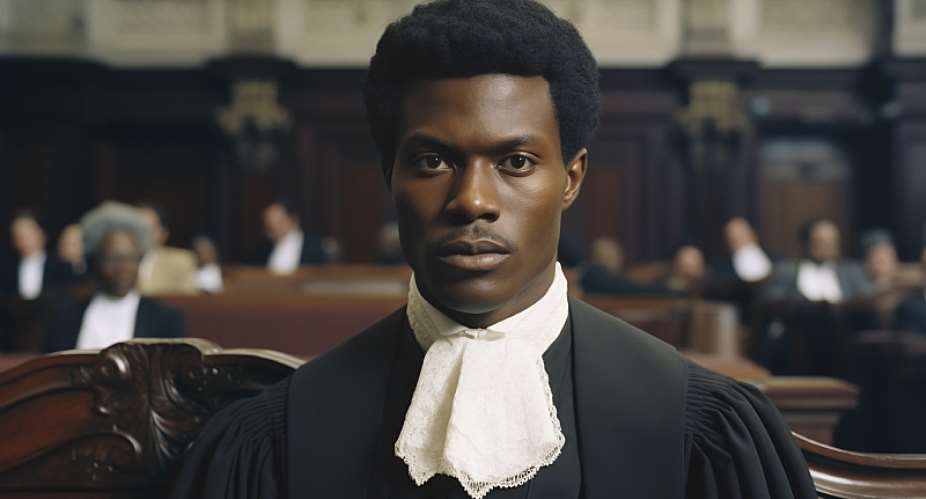
Why Ghana's Legal Education Must Evolve in the Digital Age
In a powerful exposé published by MyJoyOnline, a former director of the Ghana School of Law called for an urgent overhaul of Ghana's legal education system, describing it as outdated and disconnected from the realities of modern life. That call is not only valid but long overdue. In an era marked by data breaches, artificial intelligence, and digital surveillance, the traditional curriculum—still focused on precedents rooted in the colonial era—has become woefully inadequate.
The Ghanaian legal fraternity now stands at a crossroads. The growing influence of the digital economy demands a lawyer who is not just articulate in the language of torts and contracts but also fluent in data protection law, cybersecurity frameworks, digital governance, intellectual property in the tech age, and cross-border data flow regulations.
The question we must ask ourselves is this: How can the legal system be expected to defend citizens' digital rights when its architects are digitally illiterate?
The Legal Illiteracy of the Digital Space
From unauthorized data collection by apps to facial recognition in public spaces and the improper use of CCTV in sensitive environments, new legal challenges are emerging daily. Yet most Ghanaian lawyers, judges, and law students are ill-equipped to handle them. The Data Protection Act, 2012 (Act 843), has been law for over a decade, but few legal practitioners can interpret or even cite its provisions confidently.
This legal illiteracy extends to the bench as well. Cases that clearly involve data protection violations are often framed in the context of constitutional breaches, with judges missing key elements like consent, purpose limitation, or the rights of data subjects under Act 843.
This gap is not just academic—it has real-life implications. When lawyers can’t properly frame digital rights cases, and when judges can’t rule on them from an informed perspective, justice is delayed, distorted, or denied.
Why Legal Education Must Be Reshaped
Legal education in Ghana continues to prepare lawyers for yesterday’s world. While constitutional law, criminal law, and civil procedure remain important, today's reality demands that we also train lawyers who can interpret:
- Cybersecurity regulations and digital forensics
- Data protection laws like Ghana’s Act 843 and the GDPR
- AI and algorithmic accountability
- Tech-based contracts and online dispute resolution
- Digital copyright and intellectual property in the streaming age
Globally, leading law schools have introduced courses in Law and Technology, Digital Rights, Cybercrime, Blockchain Regulation, and AI and Ethics. Ghana must not be left behind.
Lawyers as Digital Guardians
As society digitizes, the lawyer's role must evolve from simply interpreting statutes to defending digital rights. Lawyers will be expected to:
- Represent clients in cases of online harassment, data theft, or defamation.
- Advise corporations on legal compliance with data protection laws.
- Assist governments in drafting modern, rights-based cyber laws.
- Ensure that digital surveillance tools are used lawfully and ethically.
But none of this is possible unless the legal education system trains future lawyers to think digitally.
A Call to Law Faculties and the General Legal Council
The Ghana School of Law, University of Ghana, GIMPA Law School, and other faculties must act now:
- Revise Curricula: Introduce mandatory and elective courses in Data Protection Law, Cybersecurity Law, and Tech Ethics.
- Invite Industry Experts: Practitioners from the Data Protection Commission, National Cyber Security Authority, and private tech firms should co-deliver practical modules.
- Promote Interdisciplinary Learning: Encourage joint programs between law and computer science, or law and information systems.
- Digital Moot Courts: Law students should be tested on hypothetical cases involving AI liability, data breaches, or algorithmic bias.
Practicing Lawyers Must Upskill
For current practitioners, continuous legal education (CLE) must reflect the digital era. Bar associations and private firms should:
- Offer CPD-certified short courses in data protection and cybersecurity.
- Require all members to complete digital law training within a set time frame.
- Host tech-law symposiums with real-world case studies.
Legal consulting today is incomplete without digital fluency. Whether advising a fintech startup, challenging an unlawful surveillance law, or interpreting a cybercrime charge, a modern lawyer must be able to connect law and technology.
The Stakes Are High: A Future at Risk
If we fail to act, the consequences will be grave:
- Citizens’ rights will be violated with no effective legal redress.
- Courts will continue to issue outdated rulings based on analog thinking.
- Tech companies will exploit legal gaps to misuse user data.
- Ghana will lose credibility in the global digital economy, where privacy, ethics, and trust are currency.
We cannot allow a generation of lawyers to emerge who are blind to the issues shaping our future.
A Cultural Shift Is Needed
Legal transformation is not only about curriculum—it’s about culture. We must inspire students to see data protection not as a technical footnote but as a cornerstone of modern justice. We must encourage judges to value digital rights as much as physical ones. We must challenge the legal community to broaden its understanding of what it means to practice law in the 21st century.
Conclusion: The Law Must Not Lag Behind
The law is society’s guidepost. When it lags behind, injustice accelerates. When legal education resists change, the entire justice system stagnates.
This is a call to action—for law faculties, the Bar, the Bench, and every legal professional in Ghana. The future of law is digital, and it is already here.
Let’s train lawyers not just to quote statutes, but to protect identities. Not just to win cases, but to defend rights in the cloud, on the blockchain, and across digital networks.
The robe must evolve.
#LegalReform #DigitalLawGhana #Act843 #CyberLaw #LawAndTech #MrPrivacy #JusticeInTheDigitalAge

 Ounahi stars as Morocco outclass Canada to advance to last eight at World Cup
 Hezbollah, Hamas and Houthi officials attend funeral ceremonies for Iran's Khame...
 World Cup 2026: Ounahi fires Morocco to quarter-finals with decisive brace
 ‘International law is our compass’ in global conflict, UN rights chief tells RFI
 Govt set to name two new military barracks after distinguished generals
 Government begins distribution of relief items to June 29 flood victims
 Accra is technically a flat-lying area, drains alone can’t solve Accra floods — ...
 FDA closes Italian Boy Lounge at Teshie following suspected illicit drug raid
 Sierra Leone President commiserates with Mahama on June 29 flood disaster
 I want to uphold my father's dying wishes, not to chase his properties — Adwoa S...
