




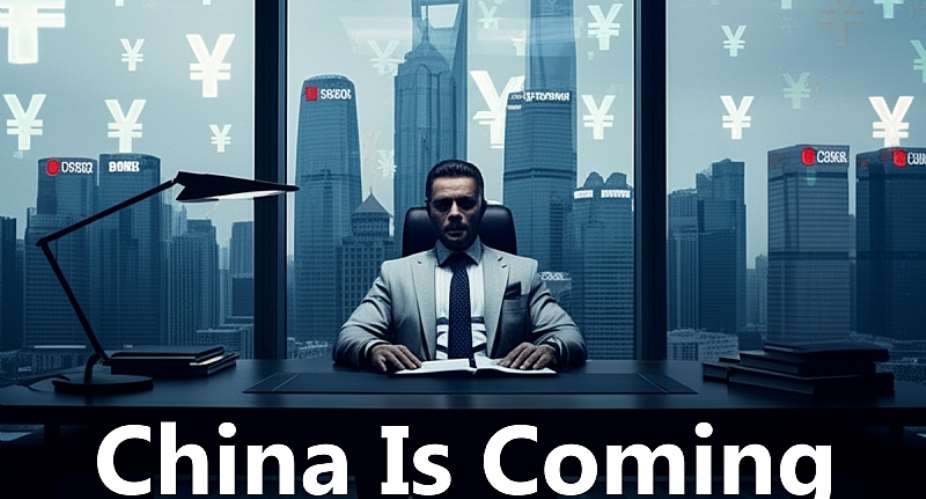
Over a decade ago, China emerged on the global development scene with grand overtures—pitches of prosperity delivered with ribbon-cuttings and photo-ops. From Nairobi to Colombo, and indeed Accra, the promise was the same: roads, bridges, railways, ports, and power plants, all generously financed by Beijing.
It was an offer too tempting for struggling nations to refuse. When the West hesitated, China came bearing billions. For Ghana and many others in the Global South, the appeal was obvious: infrastructure without the policy strings that usually accompany loans from the International Monetary Fund or World Bank.
But now, in 2025, the promise of prosperity is demanding payment. And the bill is steep. A staggering $22 billion is due this year from 75 of the world’s most vulnerable nations. The benefactor of yesterday has become the debt collector of today. And at the centre of it all stands China—modern-day Shylock—insisting on its pound of flesh.
This is no longer development. This is entrapment with diplomatic polish.
Ghana’s Involvement Is No Footnote
Ghana’s own path in recent years has been shaped by extensive Chinese involvement in key infrastructure projects—many of them funded under the Belt and Road Initiative (BRI), the hallmark of China's global lending strategy.
We would be naive to assume that Ghana is not part of this unfolding global debt narrative. In fact, recent debt restructuring talks with the IMF have revealed just how complex and significant China’s role is in our financial ecosystem. Yet, public discussion on the actual terms of these Chinese loans remains dangerously thin.
What were the repayment conditions? Were the interest rates adjustable? Do penalties apply upon default? And crucially, what assets—if any—have been offered as collateral? We don’t know. And that’s precisely the problem.
Cautionary Tales We Can’t Ignore
Consider what has already happened elsewhere. In Sri Lanka, failure to repay a Chinese loan forced the government to lease its Hambantota Port to China for 99 years—a strategic maritime asset lost in a debt swap.
In Laos, China now controls 90% of the national power grid for the next 25 years—again, the result of bad debt and worse terms.
These are not isolated incidents. They are cautionary tales from a growing list of nations entangled in opaque agreements that now threaten their economic sovereignty.
And yet, China continues to deny any wrongdoing, insisting that it simply stepped in where others refused. But the facts on the ground—and the outcomes for debtor countries—tell a more troubling story.
When the Lifeline Becomes a Noose
Unlike traditional concessional loans from the World Bank, which carry average interest rates of around 1.5%, Chinese loans often exceed 2%, and many come with adjustable interest rates—subject to market fluctuations that have only worsened post-COVID.
When nations default, the cost multiplies: interest is compounded, penalties are imposed, and renegotiation becomes a trap rather than a solution.
In Ghana’s case, our external debt exposure to China, although difficult to independently verify, is understood to be significant. As part of the IMF program we recently entered, China’s role as a creditor has taken centre stage in talks about debt relief, restructuring, and economic sustainability.
But restructuring alone is not enough. We must scrutinise the terms, increase transparency, and prioritise accountability to avoid sleepwalking into a sovereignty crisis.
A Crossroads We Must Not Ignore
China is no longer just a lender—it is a nation under economic pressure of its own. Domestic growth has slowed. Its real estate sector is in crisis. Youth unemployment is rising. It is locked in a trade war with the United States. And now, it is scrambling to recover money it lent abroad during its years of unchecked lending.
This places Beijing in a bind: It cannot afford to forgive loans, but nor can it afford the reputational damage of being seen as an economic overlord bleeding poor nations dry.
Meanwhile, Ghana stands at a critical juncture.
We cannot undo the past, but we must interrogate it. What we accepted in hope must now be managed in reality. Infrastructure is important, but it must not come at the cost of national control over strategic assets.
As a country still in the thick of a debt recovery program, Ghana must insist on transparency in all external financing arrangements. Parliament, civil society, and the media must begin asking hard questions—not just of our government, but also of our partners.
Because make no mistake: the Shylock is knocking. And if we do not act now, the next port, power grid, or pipeline at stake may be ours.
The writer is a concerned Ghanaian citizen and policy observer.
The views expressed in this article are those of the author and do not necessarily reflect the official position of any institution.

 VIDEO: Watch the only community toilet carried away by floods
 Sedina Tamakloe unwell and currently under house arrest – Franklin Cudjoe disclo...
 Ofaakor Court remands suspect, grants GH¢70,000 bail to accomplice over vehicle ...
 We don’t owe Tema Motorway contractor any amount of money — Agbodza
 Swift response by Saki High Tension residents helps contain warehouse blaze in K...
 Bank of Ghana converts 147 rural and community banks into community banks
 Five fake soldiers grabbed for armed robbery at Ashanti mining community
 Bawumia appoints Kyei-Mensah-Bonsu as Chief of Staff as he restructure his offic...
 Sam George announces major reduction in MTN Fibre broadband prices effective Jun...
 Concerned citizen gives EC seven-day ultimatum over Anyako by-election delay



Comments
China is no father Christmas... they work for their money!