




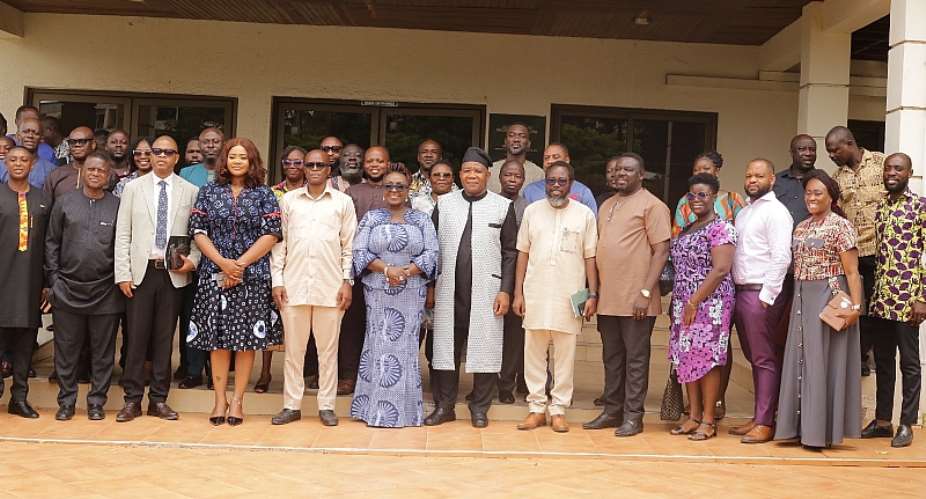
Ghana has officially launched the implementation of the UNESCO Culture|2030 Indicators, marking a pivotal step in integrating culture into the nation’s sustainable development agenda.
The launch event, held at the Accra Tourist Information Centre, was presided over by the Minister for Tourism, Culture and Creative Arts, Hon. Abla Dzifa Gomashie.
This milestone follows more than a decade of foundational work that began in 2013, spearheaded by cultural pioneers such as Mr. Akunu Dake, Korkor Amarteifio, Prof. Esi Sutherland-Addy, Christopher Conduah, Abla Dzifa Gomashie, Carl Ampah, and others. Their dedication and advocacy laid the groundwork for Ghana’s adoption of the UNESCO framework, underscoring the country’s longstanding commitment to positioning culture as a central pillar of sustainable development.
In her keynote address, Hon. Gomashie posed a pressing question: “What is culture’s contribution to our dear nation’s GDP?” She described the launch of the Culture|2030 Indicators as a “strategic step” that will provide Ghana with data-driven tools to assess and communicate the value of culture in national progress.
“The Culture 2030 Indicators will give us the methodology to track progress meaningfully, quantify the contribution of cultural employment to GDP, and advocate for stronger investment in the arts, heritage, and creative sectors,” she stated.
The Minister stressed the need for collaboration across key state institutions such as the Ghana Statistical Service, Ministry of Finance, and Ghana Revenue Authority. Their engagement will be vital to ensuring the cultural sector receives the recognition and resources it deserves.
She also noted that the initiative aligns with Ghana’s broader commitment to achieving the Sustainable Development Goals (SDGs), framing culture as a powerful vehicle for inclusive growth and social transformation.
“Our culture gives us a platform for equality and not exclusion,” she added, highlighting the unifying role of Ghana’s cultural diversity in strengthening national identity and social cohesion.
UNESCO Country Representative, Mr. Edmund Moukala N’gouemo, lauded the initiative’s alignment with global best practices:
“The value of culture is evident and recognized worldwide. This project reflects a collaborative and evidence-based process involving national institutions and local partners, fully grounded in the five pillars of the 2030 Agenda: People, Planning, Prosperity, Peace, and Partnership.”
Dr. Osman Tahidu Damba, Acting Secretary-General of the Ghana Commission for UNESCO, emphasized that the Culture|2030 Indicators go beyond heritage preservation, positioning culture as both a driver and enabler of development across multiple sectors.
The UNESCO Culture|2030 Indicators framework equips countries with a comprehensive set of tools to measure how culture contributes to economic, social, and environmental goals. By embracing this framework, Ghana cements its leadership role in the region and sets a precedent for incorporating culture into evidence-based policymaking and national development planning.

 NDC is a useless govt – Miracles Aboagye fumes
 66-year-old woman remanded over death of toddler in her care after alleged hot w...
 Ghana suspends all gun licences over public safety concerns
 Govt eyes 1,012km rail corridor to boost trade, transform cargo transport from T...
 Rent Control Task Force begins nationwide crackdown on illegal rent charges
 Mahama’s delay in appointing Environment Minister shows lack of seriousness on c...
 Late Victor Gbeho's contributions to Ghana's foreign policy will never be forgot...
 June 23: Cedi sells at GHS12.35 on forex market, GHS11.22 on BoG interbank
 SHS graduation was never part of the GES calendar – Kwadwo Poku
 World Cup 2026: We know how England play, and we know how to control them – Ghan...


