




A Short-Term Gain That May Mask a Long-Term Strain
In recent days, the Ghanaian cedi has shown unexpected strength against the US dollar—an occurrence many welcomed with optimism. But like a naturally short person feeling tall only because a taller person momentarily stooped low, we must be cautious not to misread temporary relief as lasting change.
While some analysts are cautiously optimistic, others are raising concerns about the sustainability of this trend. It appears that a combination of two primary factors might be contributing to the recent dip in the dollar's strength:
A U.S. policy ripple: There is a notable global weakening of the dollar, reportedly linked to fiscal policy signals from former President Donald Trump. Though largely symbolic for now, such shifts can trigger volatility in global markets. This isn't just Ghana's issue—it’s a global adjustment. Countries with underdeveloped or highly import-dependent economies, especially in the Global South, must take note.
Local intervention: Reports also indicate that the Bank of Ghana has injected a significant amount of dollars into the market, likely from reserves or proceeds such as the recent COCOBOD loan inflows, to stabilise the cedi.
Together, these forces have produced a brief moment of relief. However, this moment could be dangerously misleading if interpreted as a signal to relax our guard.
The Risk Behind the Relief
Currency movements driven by artificial or unsustainable means often backfire. A strong dollar may return—perhaps even with greater force. For Ghana, which remains import-dependent and heavily dollarised, this could mean:
- Sudden spikes in inflation
- Higher cost of living
- Debt servicing burdens
- Foreign exchange shortages for businesses
And when that reversal comes, those who made decisions based on short-term gains may feel the pinch.
A Word to Global Peers
The U.S. dollar remains a currency with influence over virtually every economy. What happens in Washington or Wall Street often echoes through Accra, Nairobi, Dhaka, or Caracas. Countries that often bear the brunt of American monetary shifts—particularly those in the Global South—should watch such developments with sober scrutiny.
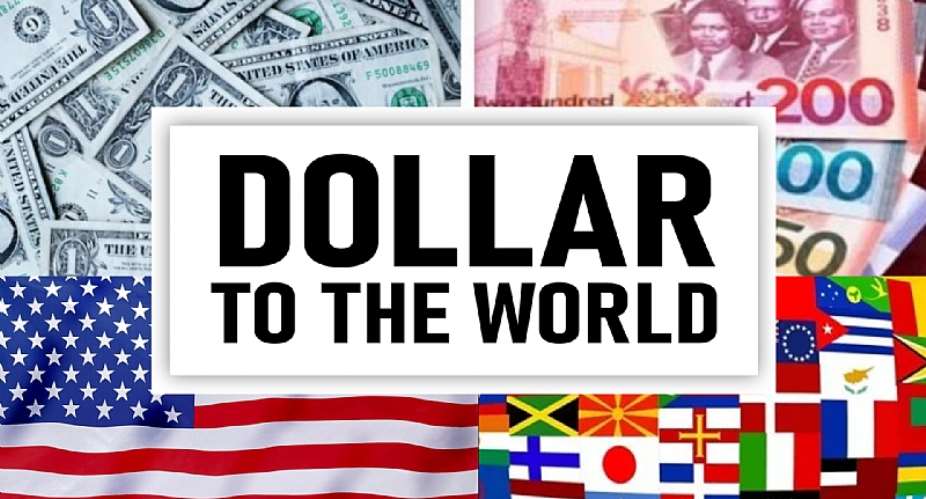
Your image, “Dollar to the World,” captures this aptly. It reminds us that the dollar's dominance can be both a buoy and an anchor, depending on which direction it moves.
A Call for Caution
This is not to spark fear, but to advocate prudence. Policymakers must continue strengthening domestic buffers, diversifying foreign currency sources, and promoting productivity-led growth. And the public—particularly investors and importers—must stay informed and act wisely.
In short: Let us not celebrate too quickly. This may be a short-term gain that masks a long-term strain.

 VIDEO: Watch the only community toilet carried away by floods
 Sedina Tamakloe unwell and currently under house arrest – Franklin Cudjoe disclo...
 Ofaakor Court remands suspect, grants GH¢70,000 bail to accomplice over vehicle ...
 We don’t owe Tema Motorway contractor any amount of money — Agbodza
 Swift response by Saki High Tension residents helps contain warehouse blaze in K...
 Bank of Ghana converts 147 rural and community banks into community banks
 Five fake soldiers grabbed for armed robbery at Ashanti mining community
 Bawumia appoints Kyei-Mensah-Bonsu as Chief of Staff as he restructure his offic...
 Sam George announces major reduction in MTN Fibre broadband prices effective Jun...
 Concerned citizen gives EC seven-day ultimatum over Anyako by-election delay



Comments
This is your opinion, but remember good measures will always yield positive results. Most of you are haulding dollars hence your fears. Like that Alhaji that the bank managers have selling dollars to , soon he will collapse
Author's Reply
Well, as you well know, should the cedi come down to 1.50 per dollar, we will all love it.
What we're talking about here is not necessarily about the fall, but what is causing the fall.
Permit me to say that if you're just a bit well educated and you follow current affairs very well, you will realize that the same thing that previously brought the dollar rate down that we could not sustain it, is the same thing this time round.
What then is the guarantee that it'll be different now?
Sit there and politicize this matter blindly.
You're talking about good measures; please ask and be educated: The only good thing that can really bring dollar rate down is when we export more that we import. Which can only be possible through manufacturing, production and adding value to our raw materials.
Since you want to talk politics, go and tell your president to build factories and stop excessive importation.
If you care to know, he's very much aware of these things than me and you.