




Introduction
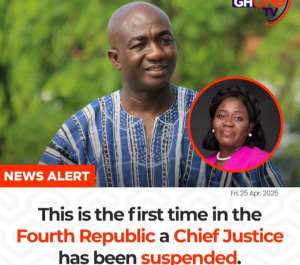
The judiciary plays a fundamental role in safeguarding democracy, ensuring fairness, and upholding the rule of law. Article 146 of Ghana’s Constitution provides a legal mechanism for holding judges accountable, particularly in cases of misconduct or incompetence. However, as Awudu Mahama rightly observed, presidents who prioritize unity and cohesion rarely invoke this provision, recognizing that judicial removals—while legally justified—can fracture national trust if perceived as politically motivated.
In recent times, Ghana has witnessed growing concerns over the selective application of Article 146, raising questions about its impact on judicial independence. While accountability must be upheld, the manner in which it is pursued can either strengthen or erode democratic institutions.
Judicial Accountability: A Pillar of Democracy
No institution within a democracy should be immune to scrutiny, and the judiciary is no exception. Article 146 serves as a safeguard against judicial overreach, reinforcing the idea that trust in the courts must be earned through integrity and competence. The removal process, however, must be based strictly on merit and transparency rather than political expediency.
The perception of executive interference in judicial affairs can weaken confidence in legal institutions, fostering skepticism about the objectivity of rulings. Judicial accountability should be pursued through a well-defined and impartial process that eliminates doubts about bias or selective enforcement.
Selective Invocation and Its Implications
A key concern with Article 146 lies in its perceived selective enforcement. In cases where judicial removals align with political interests, the credibility of the process is questioned, weakening democratic norms. Public skepticism grows when high-profile cases appear to serve partisan agendas rather than legitimate concerns about judicial conduct.
To protect the judiciary from political manipulation while maintaining accountability, it is crucial to establish rigorous safeguards that prevent undue executive influence. If Ghana truly values judicial integrity, mechanisms must be refined to ensure transparency, impartiality, and adherence to constitutional principles.
Proposed Reforms: Strengthening Institutional Trust
To enhance judicial accountability while preserving national unity, the following measures are recommended:
1. Independent Oversight Committee: A neutral body, insulated from executive influence, should review petitions for judicial removal to ensure that cases are assessed purely on merit.
2. Transparency in Proceedings: Public access to documented reasons for invoking Article 146 would strengthen trust in the process, dispelling suspicions of political motivation.
3. Objective Criteria for Removal: Clear guidelines should be established to determine the threshold for judicial misconduct, preventing arbitrary or politically motivated removals.
Conclusion
Ghana’s judiciary must remain independent yet accountable. The invocation of Article 146 must be rooted in due process, free from political interference, and transparently communicated to the public. Awudu Mahama’s statement serves as a reminder that governance is not just about enforcing constitutional provisions but about fostering national cohesion while maintaining the integrity of democratic institutions.
By refining the application of judicial accountability mechanisms, Ghana can strike the necessary balance—ensuring that the judiciary remains credible without undermining the stability that holds the nation together.
Retired Senior Citizen
Teshie-Nungua
[email protected]

 One dead, fire officer hospitalised after bee attack at Quarry Site in Sokode Gb...
 Israel and Iran step back from further strikes after renewed clashes
 Patients stranded as doctors, nurses refuse to see new patients over KATH CEO su...
 Avenor Rural Bank CEO’s house destroyed by fire
 Three arrested in Winneba for illegal mining near GWL water lines
 Two pupils of Alice Elite Academy laid to rest after fatal school bus crash
 Here are areas to be affected by ECG's planned maintenance on Tuesday
 Family of civil engineer killed in alleged military shooting demands justice
 SHS teacher allegedly beats female student over unpaid hostel fees
 Blow to EU defence cooperation as France, Germany abandon joint fighter jet prog...


