




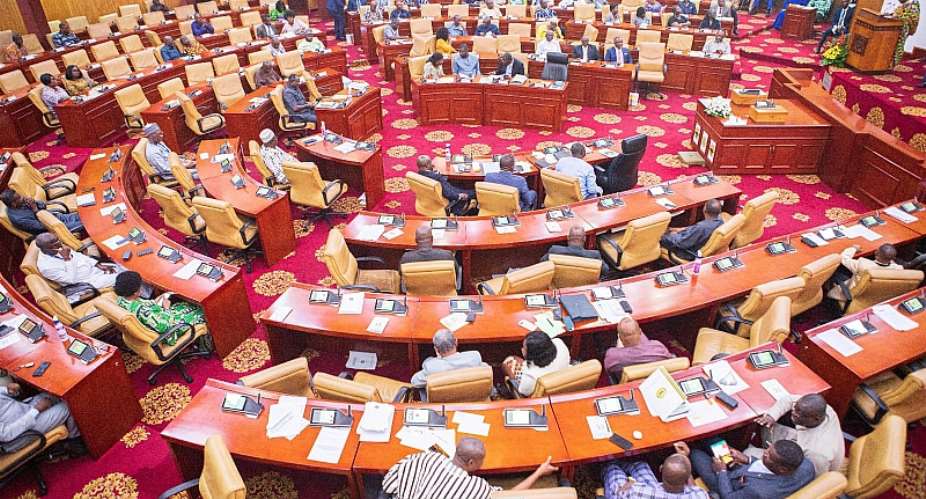
The history of Ghana's parliament is a rich tapestry woven with significant events, pioneering figures, and milestones that mark the country's legislative evolution. From its early beginnings in the colonial era with a mere five-member council in 1874 to the establishment of a vibrant parliamentary democracy post-independence in 1957, Ghana's legislative journey reflects its enduring quest for self-governance and representation.
THE BIRTH OF LEGISLATIVE GOVERNANCE:
In 1874, the Gold Coast witnessed the formation of its first Legislative Council. Comprising five elected members and several appointed officials, this body was primarily advisory, allowing the British colonial administration to manage local governance matters. This landmark event marked a crucial step in the political landscape of the region, laying the groundwork for future legislative assemblies.
KOBLA AGBLI GBEDEMA: A Pioneering Voice:
Among the first elected members of this council was Kobla Agbli Gbedema, known for his advocacy for the rights of the local populace. Gbedema's participation represented a notable shift towards recognizing the importance of native representation in governance, a theme that would resonate throughout Ghana's legislative history.
EMERGENCE OF POLITICAL PARTIES AND STRUGGLE FOR INDEPENDENCE:
As the 20th century progressed, the quest for independence gained momentum. Political parties emerged, laying the groundwork for a more representative governance structure. Dr. Kwame Nkrumah, a prominent nationalist leader and founder of the Convention People's Party (CPP), played a vital role in the fight against colonial rule. His efforts culminated in Ghana becoming the first sub-Saharan African country to achieve independence from British colonial rule on March 6, 1957.
THE FIRST PARLIAMENT OF INDEPENDENT GHANA:
With independence came the establishment of a new Parliament in 1957, marking a significant milestone in Ghana's legislative journey. The first Parliament was composed of 114 members, directly elected by the citizens of Ghana, a stark contrast to the previously limited representation during the colonial period. This new legislative assembly was a symbol of the democratic aspirations of the Ghanaian people.
LEGACY OF GHANA’S LEGISLATIVE EVOLUTION:
Over the decades, Ghana's Parliament has continued to evolve, embracing democratic principles and reflecting the diverse voices within the nation. The struggles, sacrifices, and achievements of leaders like Gbedema and Nkrumah laid the foundation for a robust legislative framework that has withstood challenges and thrived in a multiparty democracy.
Ghana's legislative history is a testament to the resilience and determination of its people in the quest for representation and self-governance. From the initial five-member council in 1874 to the current dynamic Parliament, the journey underscores the importance of legislative bodies in shaping national identity and policy. Today, Ghana stands as a beacon of democracy in West Africa, with a parliamentary system that continues to evolve in response to the aspirations of its citizens.
#Retired Senior Citizen
Teshie-Nungua
#Professor Kweku Ansa-Asare


 Chief Justice Baffoe-Bonnie is Mahama's surrogate to control the judiciary — Mar...
 Court gives OSP four more weeks to serve Ofori-Atta, Akore in US
 Dangote's $16bn Kenya refinery 'new chapter' for Africa
 Mahama to open national conference on housing finance
 NPP announces voter ID requirements for October 3 national conference
 Ghana rejects calls to abolish International Criminal Court , urges stronger act...
 September 30: Cedi sells at GHS12.20 on forex market, GHS11.70 on BoG interbank
 'Ghana is now training lawyers illegally' — Former Bar president
 Akyem Hemang residents demand justice for alleged military shooting of 29-year-o...
 Adenta-Accra morning travel time improves significantly in just 23 minutes under...


