




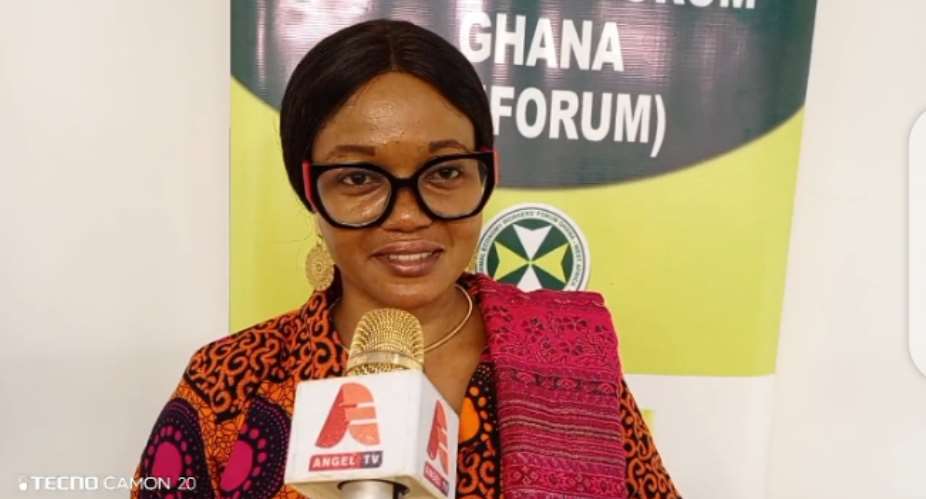
The Executive Secretary of the Informal Economy Workers’ Forum of Ghana (INFORUM), Mrs. Debora Freeman, has highlighted the significant barriers preventing women from attaining leadership roles in Ghanaian society, attributing these obstacles to the traditional view that limits women to domestic duties.
She expressed this during a conference in Accra on September 5, 2024, marking the launch of research conducted by INFORUM and the Global Fairness Initiative (GFI). The research seeks to encourage women in the informal sector to assume leadership positions and advocate for improved working conditions.
Mrs. Freeman pointed out that although women make up the majority of Ghana's population, they continue to have limited opportunities to take on leadership roles in organizations and society. She attributed this inequality to the entrenched belief that women's primary role is within the household, which severely restricts their potential for leadership in professional and public spheres.
“Women have the capacity to lead in communities and workplaces,” she stated, “but traditional views often confine them to being homemakers, making decisions only within the domestic sphere.”
She emphasized that women constitute 85% of Africa's informal economy workforce, yet they endure harsh working conditions. Many informal workers face long hours with low income, and they often live in environments where essential services such as safety, healthcare, and education are lacking.
Mrs. Freeman identified limited educational opportunities as a key factor contributing to the exclusion of women from leadership positions, particularly in the public sector. This lack of education hinders their ability to be considered for formal appointments, further discouraging their pursuit of leadership roles.
To address these challenges, she called on authorities to develop educational programs designed to equip women in the informal sector with the technical and leadership skills necessary for such roles. She also advocated for raising awareness about the injustices faced by women in the workforce.
Mrs. Freeman urged unions and other stakeholders to enhance women's access to external funding and resources, which are essential for business success and economic empowerment. She stressed the importance of communication skills in leadership success and encouraged women to see themselves as capable leaders.
“I encourage women to step forward as leaders in their communities. Discuss these opportunities with your families when they arise,” she said, inspiring women to embrace leadership roles.
The research, titled "Women’s Voices and Leadership in Organizing Africa’s Informal Economy," includes partners from several African countries, such as Rwanda, Côte d'Ivoire, Liberia, Tunisia, and South Africa.
Attendees at the conference included representatives from various organizations like the Fédération des Travailleurs et Travailleuses de l’Economie Informelle du Côte d’Ivoire (FETTEI-CI), Petty Traders and Informal Workers Union of Liberia (FEPTIWUL), South Africa Domestic Service and Allied Workers Union (SADSAWU), Syndicat des Travailleurs Domestiques et Indépendants de l'Économie Informelle du Rwanda (SYTRIECI), and the Tunisia Inclusive Labor Initiative (TILI).
 VIDEO: Watch the only community toilet carried away by floods
 Sedina Tamakloe unwell and currently under house arrest – Franklin Cudjoe disclo...
 Ofaakor Court remands suspect, grants GH¢70,000 bail to accomplice over vehicle ...
 We don’t owe Tema Motorway contractor any amount of money — Agbodza
 Swift response by Saki High Tension residents helps contain warehouse blaze in K...
 Bank of Ghana converts 147 rural and community banks into community banks
 Five fake soldiers grabbed for armed robbery at Ashanti mining community
 Bawumia appoints Kyei-Mensah-Bonsu as Chief of Staff as he restructure his offic...
 Sam George announces major reduction in MTN Fibre broadband prices effective Jun...
 Concerned citizen gives EC seven-day ultimatum over Anyako by-election delay


