




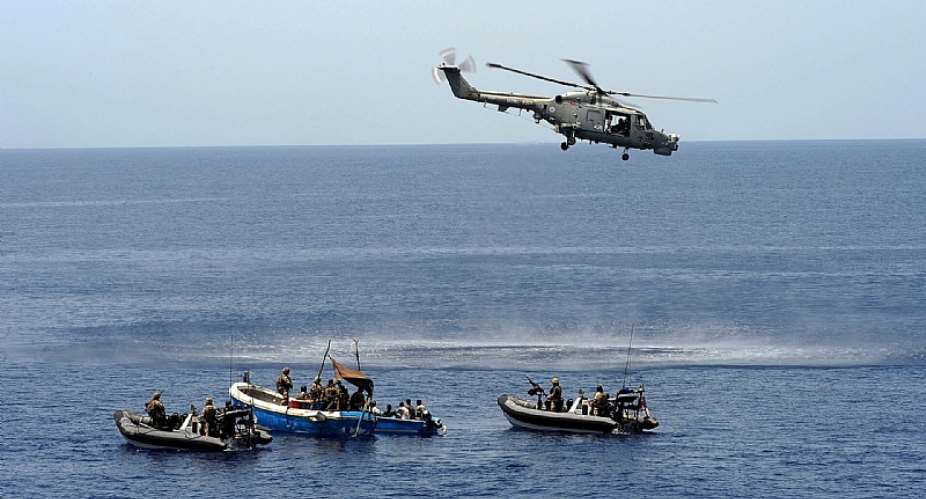
On August 9, 2021, chairing a high-level debate on maritime security, Indian PM Modi enunciated the importance of security cooperation in the Indian Ocean Region (IOR). And within three years, India walks the talk as PM Modi and his Mauritian counterpart Pravind Jugnauth jointly inaugurated a new airstrip and jetty along with six more India-assisted development projects at the Agalega Island, Mauritius.
Located 1,100 km north of the main Mauritius island, Agalega’s location holds geostrategic significance. Being in the centre of the southwest Indian Ocean, it has Seychelles in the north, Maldives, Diego Garcia (a US base in the Indian Ocean), and Chagos Island in the east, and Madagascar, the Mozambique Channel and the whole eastern coast of Africa to its west. Comprised of two islands, Agalega is part of an exclusive economic zone stretching 2.3 million square km. Nevertheless, this strategically located island is vulnerable to increasing piracy attempts and forays by Chinese warships.
Conceived in 2005, India formalised the plan to set up, upgrade, and develop the island’s infrastructure, including upgrading the 10,000-foot runway to accommodate large commercial aircraft through a MoU during Prime Minister Modi’s visit to Mauritius in 2015. The plan also included the construction of a port near the existing jetty, structures for communications and intelligence installations, and a transponder system to identify ships passing through the Indian Ocean. However, protests erupted locally, accusing the Mauritian government of compromising national security. Some of these anti-India protests might have had covert support from Beijing.
Despite the protests, construction began in 2019. Now, as the infrastructure becomes functional, it reaffirms India’s commitment to bolster regional maritime security. In a way, India has now stepped out of the closet to engage with the wider Indian Ocean region, stressing its security interests are critical. The region is critical for global trade; therefore, countries as varied as the US, France, the UK, and China are deploying more warships than ever.
As the race to control the region continues to heat up, this move would also help India counter China’s aggressive expansion. Chinese warships have been present in the Indian Ocean since 2008. China also has a military naval base in Djibouti since 2015 and trying to set up one more in Equatorial Guinea, on the other side of Africa.
India now has about 130 warships, roughly a third of China’s naval fleet comprising 350 ships and submarines, the largest in the world. In the last two years, the naval ships have sailed 40,000 nautical miles carrying food, medicines and weapons to Indian Ocean countries. On December 26, an Indian warship sailed into Mozambique for the first time carrying weapons and humanitarian aid. However, most Indian submarines critical to controlling the oceans are about two decades old and plans to increase the warship fleet to 200, including a third aircraft carrier, keep getting delayed.
Nevertheless, this base, coupled with French Reunion Island on which India has deployed P-8I’s several times under the logistics exchange agreement and the new airstrips and facilities coming on both the Lakshadweep and Andaman and Nicobar Islands, would help India to assert its role as the net security provider for the region.
India’s Security and Growth For All (SAGAR) policy aims to bolster India’s maritime capabilities and enhance its presence in the Indian Ocean Region. Through this vision, India seeks to deepen economic and security cooperation with its maritime partners and assist in building their maritime security capabilities. And in the ethos of SAGAR, this newly-developed Indian infrastructure will be critical for countering terrorism, piracy and the illegal narcotics trade near Agalega. Improving sea and air connectivity will also help improve the lives of the inhabitants of this island. It will also help Indian ships to refuel from Agalega. This becomes more important given the recent fiasco with the Maldives, where Indian military personnel were asked to leave the island nation and remove the helicopters and a radar chain.
While India will continue to expand its reach in the region, the future will likely be one of increased competition from China. Therefore, India needs to be cautious of any increase in Chinese presence that could dilute its regional influence. Increased cooperation with and support from France and United States will be crucial to strike the right balance in naval cooperation. India must tread carefully in order to ensure that it firmly establishes its role as a Net Security Provider in the region while maintaining the pre-eminence of Indian Navy maritime dominance. As China continues to flex its muscles in the battle of influence in the Indian Ocean, multi-aligned cooperation will be key for India to rise as an influential maritime power and become the voice of the Global South.


 Ayitey Powers arrested over alleged death threat against Yaw Ampofo Ankrah
 It lies with Sammy Gyamfi to prove his extortion allegation against Afenyo-Marki...
 ‘I’m ready to submit myself for investigation into Sammy Gyamfi extortion allega...
 Osahen Afenyo-Markin sues Sammy Gyamfi, others over extortion allegation
 CID yet to submit report on alleged assassination attempts on Kissi Agyebeng – M...
 NDC’s ‘love’ will soon end as Ghanaians demand results — Bryan Acheampong
 Court adjourns Tuba murder case to September 28 as Police prepare to forward doc...
 Mother seeks justice after four daughters allegedly abused by father at Gomoa Do...
 Muntaka reveals how prime suspect in 2024 Tolon election violence wins NPP const...
 'I have not landed GoldBod contract to provide platform for buying and selling g...

