




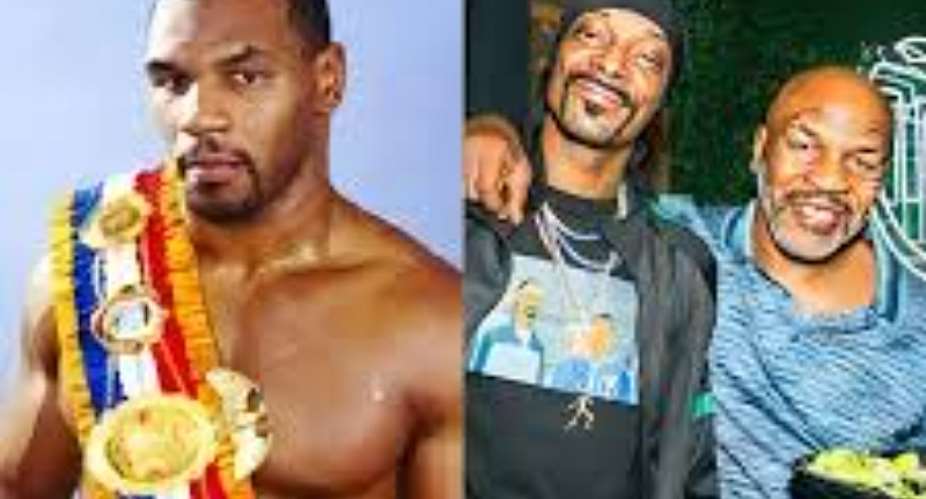
In recent years, public debates have intensified around how countries apply immigration and visa rules to high-profile individuals, particularly entertainers and athletes with past legal issues. Cases involving figures such as Mike Tyson and Snoop Dogg are often contrasted with situations involving African professionals and athletes, including Ghana’s Thomas Partey.
At the center of the debate is one recurring question: are visa decisions applied uniformly across nationalities and reputations, or do perception, influence, and geopolitical context shape outcomes more than policy suggests?
Historical Context: Canada’s Immigration and “Criminal Inadmissibility” Rule
Canada’s immigration framework allows authorities to deny entry to individuals considered “inadmissible,” including those with certain criminal convictions or pending legal matters. However, the system is not absolute. Entry can still be granted through:
Temporary resident permits (TRPs)
Rehabilitation applications
Time elapsed since conviction
Nature and severity of the offense
Perceived risk to public safety
This discretionary structure means two individuals with similar legal histories may receive different outcomes depending on timing, documentation, and administrative judgment.
This is where public confusion often begins.
The Public Perception Gap: Celebrity Cases vs. Ordinary Applicants
High-profile entertainers such as Mike Tyson, who was convicted in the early 1990s, and Snoop Dogg, who has faced past legal scrutiny in the United States, have reportedly been able to perform or enter Canada on multiple occasions over the years.
These cases are often cited in public discourse as evidence that Canada may exercise flexibility when dealing with globally influential figures whose visits have cultural or economic value.
But this raises a difficult question:
Is discretion in immigration policy being influenced more by global celebrity status than by uniform legal standards?
The Thomas Partey Question: Fairness or Different Interpretation?
In contrast, discussions surrounding Thomas Partey have sparked debate online, with claims and counterclaims about visa access and travel restrictions.
While full official details of any individual visa decision are typically confidential, the public reaction highlights a broader concern:
Why do some individuals with global fame and documented histories appear to move more freely?
Are African professionals subjected to stricter scrutiny in comparable situations?
Or are these cases simply governed by different legal and procedural contexts that the public does not fully see?
These questions matter not only for Ghana but for many countries whose citizens rely on international mobility for careers in sports, entertainment, and business.
Hard Questions Nobody Wants to Ask
This debate forces uncomfortable but necessary questions:
1. Is immigration discretion being applied consistently across race, nationality, and global influence?
2. Do celebrity status and economic value override standardized legal restrictions?
3. Are African applicants facing higher evidentiary thresholds in visa adjudication?
4. How transparent are visa decisions when they involve public figures?
5. Should countries publicly explain discretionary approvals to avoid perceptions of bias?
These are not accusations they are structural questions about transparency in global mobility systems.
Canada’s Position: Law, Discretion, and Confidentiality
From a policy standpoint, Canada maintains that visa decisions are:
Case-by-case
Legally grounded
Subject to privacy laws
Based on risk assessment, not public opinion
Officials generally do not comment on individual applications, especially those involving celebrities or athletes.
However, this silence often creates a vacuum one that public speculation quickly fills.
Africa, Ghana, and the Question of Global Equality in Mobility
For many observers in Ghana and across Africa, the discussion is not only about individuals but about broader patterns in global mobility.
The perception fair or not is shaped by experiences where African applicants often face:
Longer processing times
Higher documentation requirements
More frequent refusals for minor inconsistencies
Against that backdrop, high-profile exceptions elsewhere can appear inconsistent, even if legally justified.
This leads to a deeper concern:
Is global mobility truly neutral, or does influence quietly shape outcomes more than policy admits?
What Does This Mean for Ghana?
For Ghana, a country with a growing diaspora of athletes, students, and professionals abroad, these debates matter because they affect:
Trust in international systems
Expectations of fairness for citizens abroad
Government-to-government diplomatic engagement
Public perception of equal opportunity in global institutions
It raises a strategic question for policymakers:
Should Ghana push for greater transparency or standardized global visa guidelines for public figures?
Conclusion: Between Law, Influence, and Perception
The comparison between cases involving Mike Tyson, Snoop Dogg, and Thomas Partey is not simply about visa approvals.
It is about how the world interprets fairness in systems that are both legal and discretionary.
Whether these differences are rooted in policy nuance, timing, documentation, or perception, one truth remains clear:
The lack of transparency in high-profile immigration decisions continues to fuel questions that governments rarely fully answer.
And until those answers become clearer, the debate will persist not just in Canada, but globally about who gets to move freely, who does not, and why.
By:
Patrick Belebang Yagsori
+233240292413
[email protected]
 NPP sets GH¢1,500 nomination fee for constituency chairman aspirants
 We can win Panama game one hundred percent – Majeed Ashimeru
 “OSP’s business is only to dirty Ken Ofori-Atta” – Richard Ahiagbah
 Govt launches committee to probe rising building collapses across Ghana
 NACOC arrests alleged drug kingpin ‘Whiteman’, wife and two others in Kasoa
 'You can do it again' — Bawumia inspires Black Stars ahead of World Cup
 GN Savings and Loans clears major legal hurdle as court strikes out receiver’s a...
 Gifty Oware-Mensah trial: ADB witness says bank processed initial NSA transfer t...
 Ghana, Côte d'Ivoire agree to harmonise cocoa prices to boost farmer incomes
 Ken Agyapong has the appeal young voters who don’t believe politicians will grav...


