




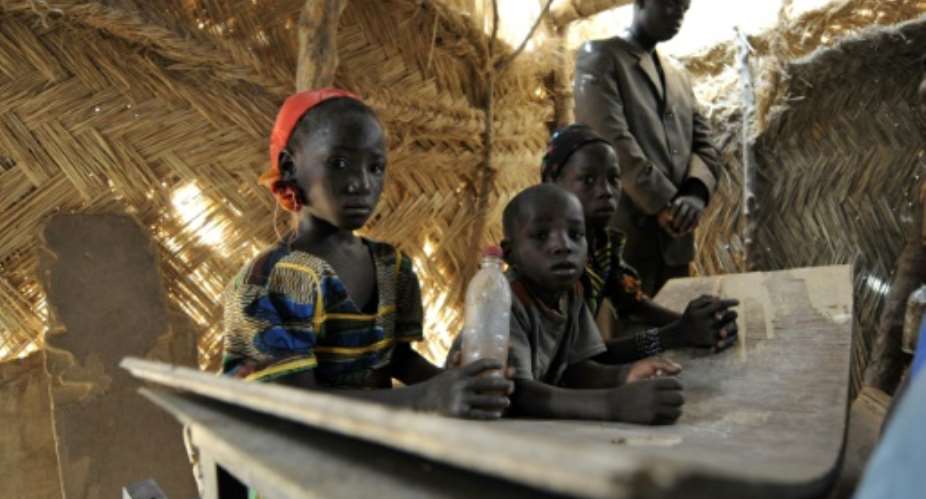
Jihadist attacks in the Sahel nations of Burkina Faso, Mali and Niger have disrupted schooling for more than 400,000 young people, the United Nations' children's agency Unicef said Thursday.
Nearly 2,000 schools have had to close, a doubling since 2017, it said in a statement.
"Direct attacks on schools, teachers and schoolchildren themselves, and the military occupation of places of learning are serious violations of children’s rights," said UNICEF Executive Director Henrietta Fore.
"When children miss out on school –- especially in times of conflict -– not only are they unable to learn the skills they need to build peaceful and prosperous communities, they also become vulnerable to horrific forms of exploitation including sexual abuse and forced recruitment into armed groups."
Northern and eastern Burkina Faso, north and central Mali, and the west and southeast of Niger are particularly unstable due to the activities of armed jihadist groups, according to local NGOs.
The armed forces in all three countries are struggling to contain the jihadists, including Boko Haram fighters, who attack businesses and livestock, torch schools and evict villagers, according to the NGOs.
"At a time where the Sahel is facing growing threats of violence, we must not forget that education is a child’s right -– and a powerful force for peace," said Fore.


 'We don't reject partnerships, but those partnerships must be on our terms' — Ma...
 Mahama receives five reports ahead of Ghana’s 2027 AU chairmanship
 Police arrest suspect in GH¢1.1m fake gold deal in Berekum
 C/R: Wildlife Guard shot dead by suspected poacher at Kakum Forest Reserve
 Here are areas affected by planned power interruption on Sunday from 3 AM to 6 P...
 Upper East youth raise concern over ‘snail-paced’ development
 Gold buyer reportedly shot dead in daylight robbery at Manso Adubia
 50 Aspirants Pick Forms for 11 National Executive Positions in NPP Elections
 Amoah: Minority’s Questions on GoldBod Are Legitimate and Necessary

