




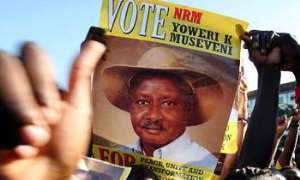
Diplomatically, the relationship between Uganda and Burundi can be described as cordial. But its more to the individual interests of the two leaders; Yoweri Museveni and Pierre Nkurunziza respectively.
The Ugandan leader is the only one surviving of the three African statesmen who spearheaded the process that lifted Burundi from the quagmire of a dozen-year ethnic bloody war (1998-2000).
The other leaders were Tanzania’s Mwalimu Julius Nyerere and South Africa’s Nelson Mandela. These have since died. Of these statesmen, only Museveni witnessed the signing of the Arusha-Burundi Peace Accord of 2000 upon which, the current politics of Burundi ought to be structured. Until lately, he, therefore, drew a considerable respect among Burundian politicians from both sides of the divide.
In light of this, Burundi is considered a valuable and strategic ally of Uganda as a country and Museveni as a person.
Despite a number of cooperation pacts and MOUs in key areas like agriculture, transport, education, health, security, ICT, trade and investment, Nkurunziza has personally been inspired and physically supported to implement some major national, regional and international policies by Museveni.
It’s upon this basis that the former UN secretary General Ban Kin Moon literally appointed Museveni to sort out the present mess in Burundi as a peace mediator.
JOINING AMISOM
When Uganda became the vanguard of peace-keeping forces in Somalia against the Al-Shabab group in 2007, it somewhat appeared awkward for only one country to intervene in an internal affair of a sovereign state.
Uganda had been oddly persuaded by the Pentagon of America—whose troops had twice in early 1990s and 2000s been humiliated, bruised and killed by the Somali militants.
While Washington provided the international diplomatic cover—through the UN-Security Council and later the African Union, there was an impasse, as these two bodies could only sponsor a sole country’s military into another country under their name.
Efforts to negotiate with Nigeria and Senegal hit a snag. Ethiopia, on the other hand was perceived as a risky party, whose involvement could reignite conflict with Eritrea which had just ended a few years back.
Not to miss the opportunity, Museveni highlighted to Nkurunziza the advantages of joining this mission. Typical of him, Museveni never appears to be more interested than the one he persuades into an action.
So, he pointed to Nkurunziza how he was to gain international recognition by being foremost in enabling the formation of the African Union Mission in Somalia (AMISOM) that was to be supported by the US and EU via the AU. Reality is Museveni had more interest in this as without another African country joining it, it was a null and void project.
For once, the otherwise, ill equipped and trained Burundi military was exposed to the state-of-the-art military equipment and training skills before their deployment in Somalia.
They became the second army to join Uganda’s UPDF in that mission that has lasted to the present. Later on, other African countries—including Kenya found it attractive to join.
Nkurunziza is recognized in the US security sector for his initial role. It’s partly why today he is upbeat about the Republican administration of Donald Trump because in the first place, the Somali intervention was sanctioned by the Republican George W. Bush administration.
But, if Nkurunziza must appreciate any benefits from this intervention, he renders credit to the mentorship gained from Museveni.
JOINING THE EAC
The East African Community (EAC), which is political in nature, is ultimately aimed at becoming a political federation under one executive political leadership.
The bloc originally comprised three nations—Kenya, Tanzania and Uganda. Driven by his personal ambition to reconstruct and reinstate the influence of the centuries old Chwezi Dynasty, Museveni persuaded both Rwanda and Burundi to join the grouping. In his writings, Museveni contends that, the Chwezi dynasty used to stretch from modern day northern Tanzania, via Burundi, Rwanda, eastern DRC, central and norther Uganda, parts of western Kenya as well as South Sudan and western Ethiopia. Hence to him the present day traditional institutions including the 600—800--year old Buganda, Toro, Bunyoro kingdoms in Uganda, are subordinates of the Chwezi dynasty—whose principal leaders are the ancestors of present day Hima and Tutsi ethnic group.
In the same manner that Museveni managed to convince Rwanda and Burundi to join EAC, he did bring on board Salva Kiir and South Sudan. Currently, he is only left with Eastern DRC to have the entire territorial structure of his dream shaped together.
In the meantime, Burundi has never fully grasped the objective of its membership to the EAC. The initial mandatory annual fee was physically paid on its behalf by Uganda tax payers (through Museveni) so that it does not become a reason for not joining. The other subsequent annual fees are still pending payment.
Although records indicate that beside Kenya, all other EAC members pay annual fees in piece meal, Burundi is faulted for one hundred percent defaulting. Latest records for 2016 show Kenya has paid 100%, Uganda—90%, Rwanda—64%, Tanzania—30% and Burundi—00%. Hence Bujumbura and in particular president Nkurunziza clearly do not place the EAC among their financial year priorities, but rather perceive it as a ‘Museveni’ project.
EPAs AND THE EUROPEAN SANCTIONS AGAISNT BURUNDI
On 16 October 2014, the Eastern African Community finalized the negotiations for a region-to-region comprehensive Economic Partnership Agreement (EPA) with the European Union (EU). The agreement covers trade in goods and development cooperation. It also contains an extensive chapter on fisheries–aiming mainly to reinforce cooperation on the sustainable use of resources.
Main features of the agreement draft include: 1.) Immediate duty-free quota-Free access to the EU market for all EAC exports; 2) Partial and gradual opening of the EAC market to imports from the EU, taking full account of the differences in levels of development between the EAC and the EU.
The deal was to be signed and ratified by October 2016. But it has since stalled principally by Tanzania and Burundi. The former is skeptical of clause (ii) that requires to open its market for better-standards European products and the later insists the EU must first reinstate the aid it froze.
Now that Museveni assumed the EAC chairmanship for the next one year, he pledged to help resolve the Burundi political impasse as well as the EPAs. It’s clear that Museveni intends to help Nkurunziza (unverified reports suggest it was him who helped Nkurunziza to sneak back into Bujumbura after he had been temporarily overthrown by coup plotters in 2015)
So how is Museveni to help Nkurunziza this time? First Nkurunziza has to accept a tit-for-tat-deal with Museveni.
Considering that the European Union is desperate to have the EAC sign the EPAs, having waited since 2014, and the fact that it represents their interests against Chinese dominance in this region, Museveni is to argue in favor of lifting the EU embargo against Burundi on basis that it not only impact on Burundi’s economy but also other bloc members EU seeks to economically deal with.
He is for instance to report that the volume of trade between Uganda and Burundi used to be $27.2m in 2014 before the sanctions—simply because in that FY the Burundi budget was donor-supported. But in the subsequent FYs until now, there is virtually no trade going on. Uganda in that case, does blame the sanctions much as Burundi is doing. On the strength of those economic arguments, the EU is poised to partially or fully lift the sanctions against Burundi.
On the other hand, Museveni will endeavor to persuade the Burundi belligerents to allow Nkurunziza complete this term as they prepare themselves for a ‘free and fair’ election that is only three years away in 2020. In this breathing time space, Nkurunziza has to pay more attention to what Museveni advises him next on ways of retaining legitimate power or regional influence.
MUSEVENI AS MAIDEN EAC EXECUTIVE LEADER
Museveni as the annual incumbent EAC chairman will be followed by Nkurunziza next year. It therefore follows that Museveni has to effectively use these two years to drive home his regional political interests. After pacifying the situation for Nkurunziza—ie helping to lift EU sanctions and influencing relative calm in Burundi, Museveni will expect Nkurunziza to bring on table the issue of implementing the EAC political federation—with him as the most senior regional head of state to become the first regional executive leader. He expects that Uganda, Kenya (in case Kenyatta returns for second term), South Sudan and Rwanda will support that suggestion. And Tanzania, for its own reasons will not but will have no power to veto it.
By this, Nkurunziza will not only have paid for Museveni’s support but also secured a new lease of himself retaining power with a now more empowered Museveni’s regional and international influence.
Because of higher expectations in Nkurunziza Museveni has recently made the Bujumbura Ugandan embassy one of the most funded—only next to that in Washington, USA.
M23 REBELS AND BURUNDI REFUGEES IN UGANDA
Uganda is home to over 45,000 Burundian refugees, many of who live in the Nakivale Camp in the western Ugandan District of Isingiro. Over 200,000 Burundians have fled the country after violence broke out in protest of President Pierre Nkurunziza’s re-election in 2015. This implies they feared for their lives—and therefore, sympathetic to the group of the foiled coup leaders, many of whom Tutsis.
Fearing that the huge Tutsi presence in Uganda would transform into an armed rebel wing, Bujumbura recently embarked on a campaign to convince its citizens who took refuge in neighboring countries of Uganda, Tanzania and the Democratic Republic of Congo to return home. But Uganda, which initially had accepted the Bujumbura request reversed its decision, after ascertaining and dismissing Burundi’s fear.
Indeed, Burundi had obtained intelligence of its citizens being trained in combat skills from Uganda. It turned out though, that the suspected training could have been for M23 rebels whose mission is to capture and occupy territory in eastern DRC and later demand for its secession from the main DRC.
CONCLUSION
Therefore, in the mid-term, the relationship between Uganda and Burundi has more to do with advancing Museveni’s long term regional interests than for Uganda as a country. In retrospect, it is cordial in the political sense and very low in the economic aspect that is the key concern of most Ugandans.


 ‘Too arrogant, too sure of itself’ France confronts its legacy in Africa
 Nigeria's unwritten power-sharing rule looms over presidential race
 Several killed, dozens wounded in Jordan church shooting
 ‘I killed lots of terrorists, but it didn’t make me feel better’: The trauma hau...
 Casualties feared as multi-storey building collapses in Nairobi
 Cabinet approves bill to regulate public relations practice – Shamima Muslim
 Bawumia was right; NDC's economy is only on paper, not in people's pockets – Kwa...
 NDC should credit Bawumia for introducing gold-for-reserves policy – Kwadwo Poku
 Obuasi SHTS sex scandal: Gender Ministry deploys team to support affected studen...
 Adwoa Safo's Dome-Kwabenya comeback bid must push Elikplim Akurugu to deliver mo...


