




“Too arrogant, too sure of itself, France failed to see the anti-French wave coming,” Boisbouvier says. His book, Françafrique Is Dead, Long Live Africa-France, examines the breakdown of France's old model of relations with the continent.
For decades after African countries gained independence, Paris maintained privileged relationships with friendly leaders and sought to protect its strategic interests – sometimes through military intervention.
The system, known as Françafrique, gradually became synonymous with a neo-colonial pattern of French influence and patronage.
Military retreat
French troops have been forced to withdraw from Mali, Burkina Faso and Niger, where military governments have turned away from Paris and towards Moscow. France has also ended permanent military deployments in Chad, Senegal and Côte d'Ivoire through negotiations.
Some of the damage dates back to former president Nicolas Sarkozy's 2007 speech in Dakar, Boisbouvier argues, when Sarkozy said Africans had “not sufficiently entered history”.
“That phrase did a great deal of damage to Franco-African relations, because many Africans saw in it – a terrible word – 'arrogance',” Boisbouvier says.
Even President Emmanuel Macron has sometimes displayed “an attitude of superiority that African countries have not understood” and increasingly refuse to accept.
But the balance of power is changing. Africa's combined economy is set to become larger than France's this year, with gross domestic product of around €3 trillion – what Boisbouvier describes as a “historic economic milestone”.
“That's a historic date which shows that France can no longer be in a dominant position,” he says. France must now build a relationship based on “respect and partnership, on an equal footing”.
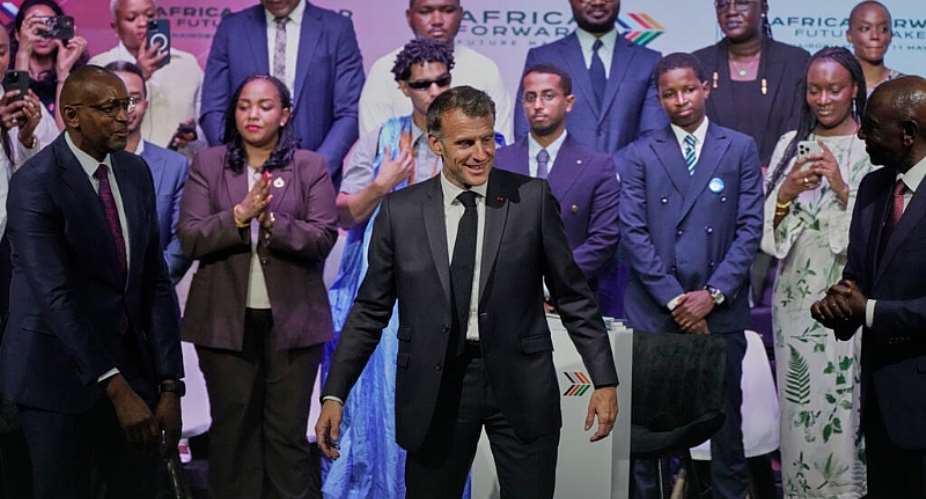
He cites the Africa-France summit in Nairobi in May as evidence of the potential for renewed economic cooperation, including with major African investors such as Nigerian billionaire Aliko Dangote.
At the Africa Forward summit, a different conversation about France
Intervention dilemma
Some of France's military interventions have proven helpful, and yet received little attention, Boisbouvier argues.
One came in September 2015. After the overthrow of Blaise Compaoré in Burkina Faso, supporters of the former president attempted a military coup against the transitional authorities led by Michel Kafando.
French forces, under then president François Hollande, provided rapid but crucial assistance to thwart the putsch.
“It was very precise assistance. It lasted a few minutes, but it was enough to make the coup fail,” Boisbouvier says.
That intervention had remained secret until now. Boisbouvier suggests Burkinabe officials at the time may have asked France to keep it under wraps.
While that episode showed France intervening to help protect a democratic transition, the question of when Paris should weigh in militarily remains difficult.
In 2019, a French air strike against rebel forces advancing in northern Chad prompted criticism in France. Macron, fearful of being accused of neo-colonialism, came to regret it and decided France should no longer intervene in African political crises, Boisbouvier says.
That decision had grave consequences, he argues. Two years later, Chadian president Idriss Déby was killed while visiting troops fighting rebels. Protesters hold signs reading "No to an amnesty for assassins" and "Yes to the dissolution of the Regiment of Presidential Security" in Ouagadougou on September 23, 2015, shortly after Burkina Faso's toppled interim president Michel Kafando resumed power after a week-long coup by renegade troops.
'I'm incredibly proud of my record' on Africa, Macron tells RFI
Policy reversal
Macron appeared unequivocal in June 2025.
Asked in a televised interview whether the post-colonial system endured, he replied: “It stopped several years ago… Many people who claim that France is in decline are effectively saying, 'You should stage coups or put a stop to them when they happen', but we don't do that sort of thing any more.”
Six months later, Macron did the opposite by intervening in Benin, Boisbouvier says.
In December 2025, Benin's army attempted to overthrow the country's president, Patrice Talon. France provided intelligence and logistical support, while Nigeria supplied military assistance, including air strikes and ground troops, at Benin's request.
“It was a French counter-subversion operation, involving French aircraft and Nigerian Super Tucano planes, alongside the decisive intervention of forces loyal to Talon,” he says. Macron with his Benin counterpart Patrice Talon signed an agreement to return looted cultural artefacts in November 2021. France later helped Talon avoid a military coup.
Benin authorities say coup attempt foiled, President Talon safe
For Boisbouvier, the operation showed that Paris had not abandoned military involvement in Africa but was prepared to act when it believed a partner government faced a threat – particularly one that risked strengthening Russian influence.
The apparent reversal reflects a French president still struggling to find a coherent policy on Africa – caught between a determination to distance himself from France's colonial past and a desire to retain influence when a friendly government is threatened, Boisbouvier argues.
The book also turns to Gabon, where General Brice Oligui Nguema seized power in August 2023, ousting Ali Bongo and ending the Bongo family's 56-year dynasty.
France was connected to the coup, Boisbouvier claims. He points to tensions over a possible Chinese naval base in Libreville, which Bongo supported but was opposed by both Macron and then US president Joe Biden.
While there is no proof of France's explicit involvement in organising or supporting the coup, “everything suggests that the French intelligence services were aware of the preparations for General Oligui Nguema's coup”, Boisbouvier says.
Leaked files reveal Russia's blueprint to expand African Sahel alliance
Can France offer something different?
There is no question of France abandoning Africa altogether, Boisbouvier argues, pointing to opportunities for economic cooperation and says a relationship based on equality could be rebuilt with emerging powers such as Nigeria, Kenya and South Africa.
Senegal offers a possible model of a post-colonial shift in relations.
President Bassirou Diomaye Faye, elected in 2024 on a sovereignty-focused platform, forced France to withdraw from its last two military bases in Dakar in July 2025. But Senegal has left room for economic cooperation, which Boisbouvier says shows France can remain a partner without maintaining its former military dominance. The kind of relationship that former French President Charles de Gaulle had with a number of African leaders is changing, but France hasn't fully turned the page on Françafrique.
France also faces competition from powers whose influence has grown as its own has waned.
Russia has capitalised on anti-French sentiment, particularly in the Sahel, deploying Russian paramilitaries, now called Africa Corps, to prove it can better protect against jihadist threats than former colonial power France.
With no colonial past, Moscow initially benefited from what Boisbouvier calls a kind of “historical virginity”. It also proved adept at using social media to promote its influence and peddle disinformation – something France was slow to recognise.
But he believes Moscow's advantages are diminishing, pointing to allegations of abuses by Russian forces and their partners in Mali, including the killing of hundreds of civilians in Moura in 2022.
Just days before the Russia-Africa summit on 28-29 October, France's strongest argument, he says, is now political rather than military.
“What France and the other European countries offer is nothing less than democracy and human rights."
This article was partly based on an interview in French by Arnaud Pontus.


 ‘Too arrogant, too sure of itself’ France confronts its legacy in Africa
 Nigeria's unwritten power-sharing rule looms over presidential race
 Several killed, dozens wounded in Jordan church shooting
 ‘I killed lots of terrorists, but it didn’t make me feel better’: The trauma hau...
 Casualties feared as multi-storey building collapses in Nairobi
 Cabinet approves bill to regulate public relations practice – Shamima Muslim
 Bawumia was right; NDC's economy is only on paper, not in people's pockets – Kwa...
 NDC should credit Bawumia for introducing gold-for-reserves policy – Kwadwo Poku
 Obuasi SHTS sex scandal: Gender Ministry deploys team to support affected studen...
 Adwoa Safo's Dome-Kwabenya comeback bid must push Elikplim Akurugu to deliver mo...


