




Morocco broke free from years of French colonial rule with the return of King Mohammed V in 1956 from his exile in Madagascar and Corsica. On November 18th, 1956, Mohammed V proclaimed Morocco's independence; he was crowned as king the following year.
Ghana similarly broke free from decades of British colonialism in 1957, emerging as the robust champion sub-Sahara Africa's seething resolve to reassert their freedom.
Ghana, with her historical commitment to freedom from fear, from poverty and to pursuit of freedom in dignity, had continued to exhibit strong leadership in democratic governance in Africa.
Ghana's unique historical situation also committed her to good neighbourliness, regional economic wellbeing and maintenance of peace and security locally and in the sub-region and beyond.
Also, over the last two and half decades, Ghana's economy has consistently witnessed positive growth culminating in the country's attainment of lower middle income status in 2010.
Morocco shares with Ghana in this economic growth trajectory, as well as the vision of African Renaissance for a prosperous and united continent.
Both countries also share prime positions as being among Africa's leading contributors of military troops involved in UN peacekeeping operations.
And for Moroccans in Ghana, therefore, Independence Day 2013 was an occasion to hail the efforts and sacrifices of their forebears who had sacrificed lives and money to achieve the independence of the country and subsequently to place it amongst the democratic, modern, moderate and open countries.
The popular Sultan Mohammed V, along with nationalist parties incessantly negotiated the independence of his Morocco while gradually starting various reforms in the kingdom, one of which was transforming Morocco into a constitutional monarchy with a democratic government. Negotiations for independence from France and Spain were done separately and on different dates in 1956, culminating in the independence of the Kingdom after 44 years of French-Spanish colonial presence. Later on, Morocco restored control over Tangier.
November 18 is the day the popular King Mohammed V proclaimed the freedom of Morocco from its colonial shackles. This day marks a watershed event in the history of the kingdom, the day Moroccans regained hope in seeing their nation moving forward after 44 years of colonial rule.
Since then, all Moroccans, home and abroad, have celebrated the Independence Day which symbolizes a unifying attachment that brings all Moroccans together in commemoration of their independence.
Not surprising, therefore, that for Moroccans the Independence Day is a national equalizer. The rich and poor, the young and old, the illiterate and the intellectual, the decision-maker and the citizen all celebrate one watershed event, and glorify the greatness of a nation that said 'No' to colonial oppression and 'Yes' to freedom and hope for a better tomorrow.
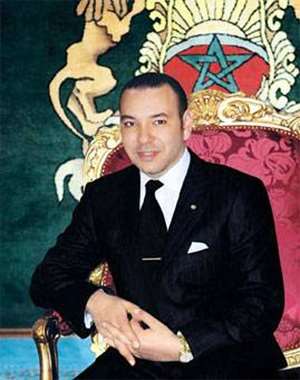
And since his coronation, Morocco's King Mohammed VI has worked to consolidate the Moroccan heritage and legacy. Specifically, he continues to take steps to introduce transparency in the democratic governance of the country, including infusing sweeping changes to reduce social inequality and to usher in democratic reforms.
Also, under King Mohammed VI, Morocco gained a reputation as one of Africa's top business destinations which helped preserve the country's stability and insulate from the violent uprisings that wracked its neighbour during the so-called Arab Spring.
The Moroccan aeronautical industry is believed to have played a major role in the country's steadiness, especially thanks to the hundreds of millions of dollars that were invested in the sector. Since 2010, American and European aeronautical companies largely contribute to this development, but measures at the national level also explain this success.
Indeed, Morocco hosts more than 100 international companies, including The Boeing Company, Bombardier Inc. and United Technologies Corporation. In addition, the country's education system supports the burgeoning sector, with more than 10,000 engineers graduating every year, according to Minister for Industry, Trade, Investment and Digital Economy Moulay Hafid Elalamy.
This number is expected to grow dramatically after the government established the Moroccan Aerospace Institute, which opened in May. 10,000 Moroccans benefit directly from this success since they are employed by the country's aerospace industry, which has doubled in size in less than five years. These employees also earn about 15 per cent above the average national monthly wage of $320, according to the Moroccan Ministry of Industry.
Morocco's success is also a result of the US aeronautical business shrinkage. Boeing, for example, could take future manufacturing out of America to either the Mideast or Africa after the International Association of Machinists rejected a proposal to start a pensions freeze and a reduction in starting salary for new workers.
“In my view, we are very much able to support such development if Boeing wanted to bring their plants here, said Elalamy, and the government along with my department will spare no effort to promote and develop industries including aerospace and we will do everything possible to make sure that Boeing is satisfied should they decide to open up more plants in Morocco.”
Also, the social reforms undertaken by Morocco since the early 2000s have reduced poverty and increased human development. In turn, this has brought security into the region and a boom in foreign investment, which has risen by 25 percent in the first 10 months of this year, the highest rate of increase in investment on the entire continent.
Morocco, unlike countries that were affected by the Arab Spring, continues to implement sweeping political and educational reforms. These reforms help secure the country's position as a desirable place to do business. Just this November, King Mohammed VI met with US President Barack Obama and discussed the business links between the countries. The United States has long counted Morocco as an ally and both countries strengthen their partnership in the war against terror that has seeped into sub-Saharan Africa.
But in addition to being in pole position to lead Africa in aeronautics, Morocco, along with South Africa, also looks set to emerge as a digital leader in Africa by 2025.
Already, the kingdom has the highest internet penetration in Africa, according to a recent report by the reputed American consulting firm McKinsey which sampled 14 African countries, including three North African states of Morocco, Algeria and Egypt. Figures revealed that approximately half of Moroccans were online in 2012 as opposed to the general African average of sixteen per cent.
With a trade balance which contributes 40 per cent of GDP, According to the same source, Morocco's achievement is explained by the kingdom's successful Business Process Outsourcing (BPO) industry, said the report.
Last year, the BPO industry created some 60, 000 jobs and achieved export revenue of $1 billion.
And while both Morocco and South Africa are depicted as continental leaders in trade surplus because of their strong business process outsourcing industries, Morocco, however, is doing slightly better, the report also noted.
Morocco's public expenditure on internet activities corresponds to 14 per cent of its GDP, as it reaches $309 million which is $9.60 per capita. It is the highest spending per capita in Africa as the report indicated.
No doubt, Ghana and Morocco have enjoyed mutually-beneficial political and trading relations since independence; and, Ghana remains one of the kingdom's top three trade partners within the ECOWAS bloc.
Going as far back as the era of the Osagyefo, President Kwame Nkrumah and Morocco's King Mohammed V Ghana's strategic relationship with Morocco in the Casablanca Group was critical to the emancipation of Africa.
The Casablanca Group pursued a progressive stance and shared values on the question of African unity, which culminated in the founding of the Organisation of African Unity (OAU) in 1963.
And, since both countries' respective independence, they have continued to explore new grounds to further strengthen and deepen their mutual ties, with the latest being the Ghana-Morocco Permanent Joint-Commission for Cooperation (PJCC) the operational framework which is presently being firmed up by negotiators from both sister countries.
When adopted, the PJCC would provide avenues for mutual cooperation between the two countries in the areas of trade, commerce, agriculture, fisheries, tourism, energy and investment.
Meanwhile, however, many Ghanaian students are studying at various Moroccan universities on Moroccan government scholarships.
More: Moroccan trade and investment in West Africa had risen to 460 over the years, with Ghana being a focus of many of them.
But, regardless, both countries need to aspire to achieve more ambitious levels and accelerate the progress made in recent times.
Specifically, Accra and Rabat need to urgently move to strengthen the legal framework pertaining to trade relations through the establishment of an ambitious Preferential Trade Agreement and a Convention for the Avoidance of Double Taxation between the two countries.
 Korle Bu Teaching Hospital to introduce IVF and Corporate Clinic before end of 2...
 Accra West: Sarpeiman, Medie and other areas to experience power outages on Sund...
 Accra West: Faulty transformer causes outage Pokuase Amanfrom and surrounding ar...
 Restoration of Akosombo turbines not automatic solution to current dumsor — Mira...
 We have enough capacity to meet electricity demand — Energy Minister
 May 2: Cedi maintains value, sells at GHS12.15 on forex market, GHS11.20 on BoG ...
 2024 outages not due to transformer overloads — Energy Minister defends past com...
 US to withdraw about 5,000 troops from Germany
 Rebels take key military base in Mali's north
 Middle East war's impact on shipping hitting refugee aid: UNCHR


