




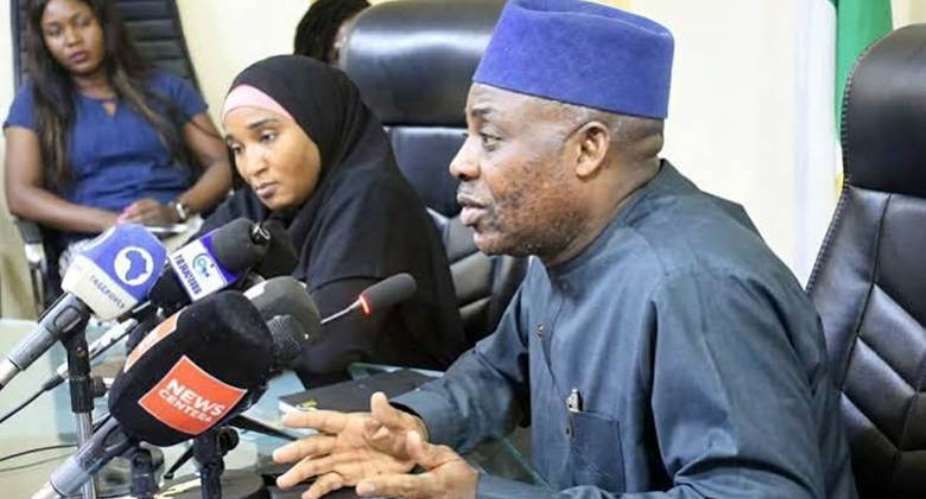
The announcement by the Minister of Education, Dr. Tunji Alausa, on November 4 that the Federal Government had met 100 per cent of ASUU's demands is undoubtedly one of the most significant education-sector pronouncements of the year. Coming after years of disagreement, negotiations, warning strikes and prolonged university closures, the declaration offers a potentially important turning point in the troubled relationship between the government and university lecturers. Speaking on Channels Television, Alausa attributed the government's achievement to improved funding of universities, a more stable academic calendar and improvements in the international standing of Nigerian universities. He further disclosed that the number of Nigerian universities featuring in global rankings had increased from 14 to 29. He also pointed to the substantial financial interventions in tertiary education, including student support through the Nigerian Education Loan Fund.
The minister's declaration has raised hopes of a new era of stability in Nigeria's public universities. But until the union's national leadership confirms that the outstanding issues have been resolved, students and their parents have every reason to remain cautiously optimistic. The real measure of success will not be government announcements but whether lecturers stay in classrooms, students graduate on schedule and families can plan their children's educational future without the recurring nightmare of industrial action.
For a country whose university system has repeatedly been held hostage by industrial disputes, these are encouraging claims. However, there is a fundamental distinction between a government declaring that it has fulfilled its obligations and the union whose demands were the subject of negotiations confirming that those obligations have actually been discharged.
That distinction is particularly important in the present circumstances. ASUU's national leadership, under its president, Professor Christopher Piwuna, had, in September, warned that outstanding matters arising from the December 2025 agreement remained unresolved. Following its National Executive Council meeting of September 5, the union called on the Federal and state governments to address outstanding issues, warning that industrial action could resume if the matters were not resolved. The union's concerns were not merely procedural. They involved the payment of the remaining three-and-a-half months of lecturers' withheld salaries, unremitted deductions for pensions, cooperative societies and union dues, promotion arrears, earned academic allowances and the implementation of provisions in the renegotiated agreement. ASUU had acknowledged that some payments had been made but insisted that partial implementation could not be presented as complete settlement.
There is, therefore, an important question that the minister's announcement has not, by itself, answered: has the government paid every outstanding entitlement, implemented every agreed provision and secured compliance from the various state governments that own public universities?
As at November 4, there was no publicly reported formal endorsement from ASUU's national leadership confirming Alausa's latest 100 per cent claim. Nor should the absence of an immediate public rebuttal be interpreted as acceptance. Indeed, developments within the union's branches suggest that the industrial relations picture remains complicated. On November 4, ASUU's Gombe State University branch rejected what it described as inadequate salary arrears and threatened further action over outstanding entitlements under the 2025 agreement. The branch also sought permission from the national leadership to resume its suspended strike. This is a significant qualification. It does not necessarily invalidate the minister's account of progress at federal level, but it demonstrates that the practical implementation of agreements across Nigeria's university system cannot be measured by a single national announcement. Federal universities, state universities and their respective governing authorities do not always experience the same financial and administrative realities.
The experience of Lagos State-owned universities provides an interesting illustration. ASUU's joint campus group declared industrial action over the failure to domesticate and implement relevant provisions of the December 2025 agreement. The dispute involved academic allowances and welfare provisions for serving and retired lecturers. The union maintained that the action was necessary to secure implementation of agreements rather than to punish students. This is why the response of ASUU's national leadership matters so much. Professor Piwuna and his colleagues must be able to tell the country, in clear and unambiguous terms, whether the union considers the government's obligations fulfilled. If the answer is yes, the country deserves to know what has changed and what guarantees exist to prevent a recurrence. If the answer is no, the union should identify the outstanding matters and engage the government towards a verifiable settlement.
The stakes are much greater than the relationship between two negotiating parties. At the centre of this prolonged disagreement are millions of young Nigerians whose educational and professional future depends on the stability of the university system.
For these young people, an ASUU strike is never simply a disagreement between lecturers and government officials. It is an interruption of life itself. It is a semester that refuses to end, an examination postponed indefinitely, a graduation ceremony that disappears from the calendar and a job opportunity that may be lost because an applicant cannot produce a certificate on time. Consider the young Nigerian who gains admission at 18 or 19, full of ambition and expectations, believing that a four-year degree will provide a reasonably predictable route into adulthood. Repeated industrial disputes can turn that four-year programme into five, six or even seven years. During those additional years, the student remains financially dependent on parents who may already be struggling to meet the cost of food, accommodation, transportation and other household responsibilities.
The psychological consequences are equally serious. Students who should be concentrating on their studies find themselves worrying about uncertainty, prolonged dependence and the possibility that their peers in private universities or foreign institutions will graduate years ahead of them. Some lose motivation; others become frustrated by a system in which academic progress appears to depend less on effort and ability than on the outcome of negotiations between government and organised labour.
There is also a painful economic dimension. A prolonged university calendar means additional years of feeding, rent, transport and other living expenses for families. Parents who planned their retirement, business investments or other family commitments around a child's expected graduation date are forced to make fresh financial sacrifices. In some households, the cost of keeping a child in university becomes a burden that affects the education and welfare of younger siblings. The consequences extend beyond individual families. Nigeria has a large and youthful population, and its young people constitute a significant part of the country's present and future workforce. They are the population expected to drive innovation, entrepreneurship, public administration, scientific research and economic transformation. Keeping them out of productive employment for unnecessarily prolonged periods is a waste of valuable human capital.
A country that repeatedly delays the graduation of its young people also delays their entry into the labour market, their capacity to earn incomes, establish businesses, pay taxes and contribute meaningfully to national development. The economic implications of university strikes are therefore not confined to the lost teaching hours. They affect productivity, household incomes, national competitiveness and the country's ability to benefit from its demographic potential.
For students, the issue is particularly frustrating because they have little or no influence over the negotiations that determine their academic future. They do not sit at the negotiating table. They do not determine government appropriations, approve university budgets or decide whether or not lecturers receive their outstanding entitlements. Yet they are invariably the first to suffer when the parties fail to reach an agreement.
Some students have spoken openly about this predicament. During the July 2026 disruption at Adekunle Ajasin University, students expressed frustration at examinations being stalled and graduation plans being disrupted. One student, quoted by Premium Times, lamented that peers who had entered university at the same time were already advancing to higher levels while the strike had left others behind. Another described his disappointment in having expected to graduate but experiencing those plans thrown into the arms of uncertainty.
These experiences explain why students and their parents should welcome the minister's announcement without surrendering their right to demand accountability. They have heard optimistic assurances before. In October 2025, Alausa similarly declared that the government had addressed every request made by ASUU. Yet the union proceeded with industrial action, demonstrating that the government's understanding of a dispute and the union's assessment of its resolution can be very different.
It is against this background that the latest declaration must be judged. The important question is not whether the government has made progress, but whether that progress is sufficient to guarantee lasting industrial harmony. There are several things the Federal Government must now do. First, it should publish a detailed implementation report showing the specific demands agreed with ASUU, the obligations already fulfilled, the payments made and any outstanding commitments. Such a report should be independently verifiable rather than simply be another exercise in government publicity.
Second, the government must ensure that the agreements reached with ASUU are implemented consistently across federal and state universities. It is unreasonable to celebrate the resolution of a national dispute while individual state universities continue to shut their gates because their lecturers are denied agreed entitlements. State governors and university governing councils must recognise that their institutions are part of the same national higher education system and should honour the applicable agreements.
Third, there must be a credible monitoring mechanism involving government representatives, ASUU and university administrators. Agreements should not become forgotten documents after the excitement of their signing. Their implementation should be monitored continuously, with clear deadlines and an established process for resolving disagreements before they escalate into industrial action.
The government must also recognise that improving university rankings is important but cannot, on its own, demonstrate that the conditions responsible for industrial disputes have been resolved. Having 29 Nigerian universities represented in global rankings rather than 14 is encouraging. However, the quality of a university is not determined by its international visibility alone. It is also measured by the quality of teaching, research facilities, laboratory equipment, libraries, staff welfare, funding, institutional autonomy and the employability of its graduates. A university that appears in an international ranking but cannot consistently provide uninterrupted academic sessions has an important contradiction to resolve. Similarly, lecturers cannot be expected to deliver world-class teaching and research when their legitimate welfare concerns remain unsettled.
ASUU, for its part, must also recognise the enormous social cost of prolonged industrial action. The union has legitimate responsibilities to protect its members' welfare and the integrity of university education. But it must continually explore constructive mechanisms that minimize disruption to students. Industrial action should not become the only language through which university workers and government communicate. The union's leadership should also be transparent with students and parents about the issues under negotiation. Students deserve to know what has been agreed, what remains outstanding and what practical steps are being taken to avoid another shutdown. Their interests should be represented more deliberately in conversations about the future of public universities.
The Nigerian government must equally resist the temptation to treat ASUU as an adversary. A properly funded and motivated academic workforce is not an obstacle to national development, it is one of its most important assets. The lecturers who teach in public universities are preparing the doctors, engineers, teachers, lawyers, scientists, administrators and entrepreneurs on whom the country's future depends.
Ultimately, what should follow Alausa's announcement is not another round of congratulatory statements, but a demonstrable commitment to making university strikes a thing of the past. The Tinubu administration has an opportunity to distinguish itself by converting the present optimism into a lasting settlement. If the government has indeed met every demand, it should have no difficulty demonstrating this through transparent evidence and obtaining formal acknowledgement from ASUU. If some matters remain outstanding, it should address them without unnecessary delay.
For Nigerian families, the issue is painfully straightforward. They want their children to enter university, study under decent conditions, graduate when expected and move into productive adulthood without repeatedly having their lives suspended by industrial disputes. They want to invest in education with the confidence that the system will honour the promises made to them.
For the young Nigerians who constitute the country's demographic majority and its most valuable development resource, the message should be equally clear: their future must not remain collateral damage in an endless contest between government and university unions.
At the end of the day, real victory will not be measured by the number of demands the Federal Government says it has met, the number of agreements signed or even the number of Nigerian universities appearing in global rankings. It will be measured by the number of uninterrupted academic sessions, the quality of graduates produced, the confidence restored in public universities and the ability of Nigerian students to complete their education without losing precious years to avoidable disruptions.
Now that the Federal Government says it has met 100 per cent of ASUU's demands, the country must ask a more consequential question: can the government and the union finally guarantee Nigerian students university education without the recurring threat of strikes?
That is the assurance Nigerian parents deserve, and it is the future Nigerian students have waited far too long to enjoy.


 Sam George pushes for probe into Ningo-Prampram military brutalities
 Democrats warn Trump camp to ‘lawyer up’ as anger over corruption drives midterm...
 'They must be sacked now' – NPP demands dismissal of NACOC, GACL, GPHA, National...
 Meridian Rock dispute: Peace Council urges Tema, Nungua chiefs to pursue dialogu...
 ORC to cancel unrenewed business names from January 17, 2027
 AMA gives traders 48 hours to vacate unauthorised bus stops ahead of enforcement
 Mahama holds bilateral talks with WTO Director-General
 Anaesthetists threaten nationwide strike from December 1 over unresolved concern...
 Ghana to establish 21,000-tonne grain storage facility in Upper West Region
 Fifi Kwetey hints at another reshuffle


