




Mr Ahmed Ibrahim, the Minister for Works, Housing, and Water Resources, has revealed that climate change is already testing the resilience of WASH systems, with prolonged dry seasons reducing the reliability of sources, intense rainfall damaging infrastructure and contaminating water points, and rising temperatures affecting sustainable operation.
“Ladies and gentlemen, climate change is already testing the resilience of our WASH systems. Communities at the last mile are experiencing that test first and most severely. Our response must match the scale of the challenge," he declared.
The minister emphasised that national adaptation strategies must systematically integrate WASH through climate-resilient design standards, protection of catchments and aquifers, and mainstreaming water considerations into local development planning, plus strengthening data systems that identify underserved areas and monitor service reliability under climate stress.
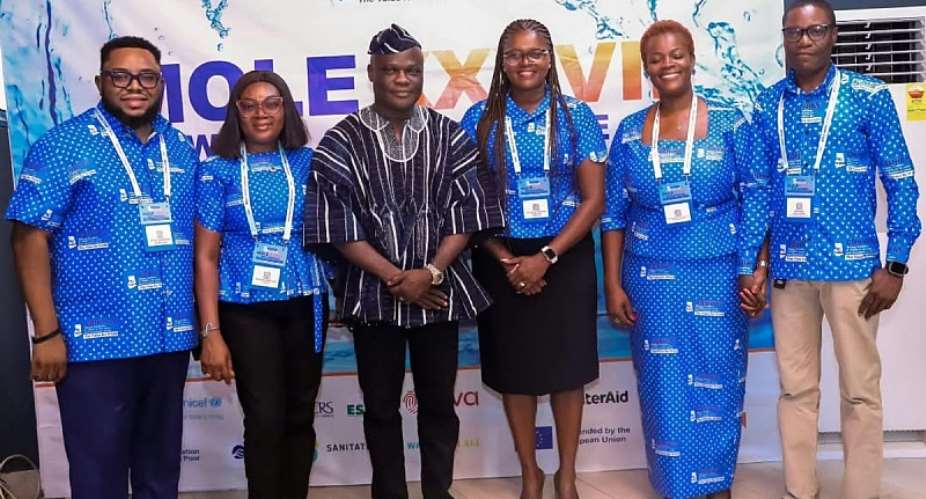
Mr Ibrahim announced this in his keynote address at the 37th MOLE WASH Conference (MOLE XXXVII), being organized by CONIWAS at Aqua Safari Resort, Ada Foah. The opening ceremony was chaired by Nene Agudey Obichere III, Mankralo of Ada State, on behalf of the Paramount Chief of Ada Traditional Area.
The conference is being held from November 1st to 6th, 2026, and is on the theme "Accelerating Climate-Resilient WASH Service Delivery for Last-Mile Communities: Options, Strategies, and Actions," building on the deliberations of MOLE XXXVI.
The Media Coalition Against Open Defecation (M-CODe), through the empowerment of World Vision Ghana, is providing a strategic and targeted communication platform for the conference, ensuring national visibility and citizen engagement.
He charged participants that MOLE has always been a working platform where evidence is examined and commitments forged, urging them to leave with clear options, actionable strategies, and shared determination to deliver climate-resilient services to every Ghanaian community.
He also disclosed that Ghana will co-chair the Interactive Dialogue A on “Water for People” at the 2026 United Nations Water Conference in Abu Dhabi alongside Switzerland, focusing on human rights to water and sanitation, including for those in vulnerable situations.
Mr Ibrahim described the co-chairship as both opportunity and responsibility for Ghana, saying options, strategies, and actions developed at MOLE XXXVII can inform commitments that emerge from Abu Dhabi, while outcomes of Abu Dhabi must reinforce political will, financing, and institutional capacity required to accelerate progress at home.
“This dialogue focuses on human rights to water and sanitation, including for those in vulnerable situations and for healthy societies and economies. It is the global expression of the Leave No One Behind principle,” Mr Ibrahim told participants, including Paramount Chiefs, development partners, CONIWAS leadership, civil society, and the private sector.
"Rationalizing the Leave No One Behind principle means ensuring that global and national pledges are translated into measurable improvements in reliability, equity, and climate resilience for households and communities that currently lack them,” he added.
He said as Ghana prepares for Abu Dhabi, its contribution should be grounded in practical experience, including the implementation of the Presidential Compact on Water, Sanitation, and Hygiene signed in 2024; ongoing reforms in rural service professionalization; efforts to protect water resources from pollution and degradation; and deliberate targeting of last-mile communities.
“These experiences can help shape a global agenda that moves from aspirational language to financed and accountable action,” he noted.
The Minister explained that the Presidential Compact elevated WASH to the highest political level and commits substantial annual resources toward universal access by 2030 with explicit attention to hard-to-reach communities, schools, health facilities, and climate-resilient infrastructure.
He said Ghana has recorded gains in basic water coverage, but safely managed services remain limited, especially in rural and remote areas, with sanitation lagging and open defecation continuing in many communities, particularly among the poorest households, riverine and island communities, women, girls, persons with disabilities, and the elderly.
Miss Nabeeha Erasoung Sulemana Atiah, the Reigning Child Sanitation Diplomat, has reminded national leaders that children are always the first and hardest hit by lack of safe Water, Sanitation, and Hygiene (WASH) services, with climate change worsening the crisis daily in last-mile communities.
Delivering a solidarity message on behalf of Ghanaian children at the opening of the 37th MOLE WASH Conference (MOLE XXXVII) Miss Atiah, said “in our last-mile communities, climate change is our daily reality. When heavy rains submerge pit latrines, or sweep away everything from open defecation fields, our drinking water sources become contaminated with dangerous waste.”
Miss Atiah expressed profound appreciation to strategic partners sustaining child advocacy platforms, including World Vision Ghana, Kings Hall Media, Zoomlion Foundation, School Health Education Programme (SHEP) of the Ghana Education Service, and the Ministry of Local Government, Chieftaincy and Religious Affairs, for creating and sustaining the School Sanitation Solutions Challenge, the Children Sanitation Festival, and the Child Sanitation Diplomat campaign.
She said the advocacy journey by children for safe, clean, and dignified living environments has been made possible by their unwavering commitment.
“When droughts dry up our streams, children are forced to walk long distances early in the morning in search of water, risking personal safety and missing vital school hours. When schools lack climate-resilient, gender-friendly toilets, adolescent girls are forced to stay home for a couple of days every month.”
“For us, clean water and safe sanitation are fundamental rights that protect our health, preserve our dignity, and safeguard our future,” she stressed.
Miss Atiah urged leaders, development partners, and the private sector to stop viewing investment in climate-resilient WASH for last-mile communities as charitable or social expense.
Dr. Beata Awinpoka Akanyani, CONIWAS Chairperson said the last mile is not merely a geographical description, adding “It represents people and places too often excluded from reliable services: deprived rural communities, small towns, peri-urban and informal settlements, as well as schools, health facilities, markets, and other public spaces.”
She disclosed that the CONIWAS budget review identified a sharp decline in the sector’s share of the national budget from 0.81 per cent in 2023 to 0.29 per cent in 2024, with allocations of approximately GH¢741 million in 2024 and GH¢544 million in 2025.
For 2026, the review identified approximately GH¢1.874 billion across selected WASH-related allocations, including district-level earmarks, solid-waste infrastructure, and central water projects.
Measured against the estimated annual requirement of US$1.7 billion to achieve national WASH targets, this points to a financing gap of more than US$1.5 billion.
“We must also remember that allocations, releases, and actual expenditure are not the same,” she cautioned.

 Mahama instructs Finance Ministry to pay striking JUSAG members from November
 Mahama must sign same anti-gay bill NDC backed in opposition – Osahen Afenyo-Mar...
 Romance Scam: Asante Akyem North MP's extradition hearing set for November 18
 JUSAG accuses FWSC CEO of taking unilateral decisions in salary negotiations
 Police arrest three Nigerians over alleged bank customer robberies in Kumasi
 'Next week I will show how the new economy will turn the gains we have made into...
 NDC's parliamentary seats projected to drop to 154 as NPP rises to 100 in 2028 f...
 NPP to pursue Ablakwa’s removal through Parliament – Jinapor
 I will name and shame anyone who obstructs passage of anti-LGBTQI+ bill – Speake...
 Mahama's government is doing way better than NPP's administration 8 years – Fifi...


