




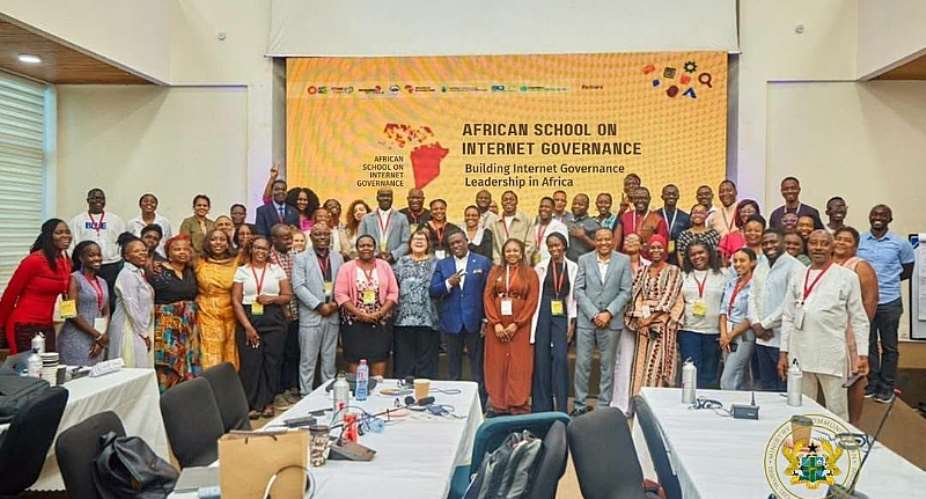
The Minister for Communication, Digital Technology and Innovations, Hon. Samuel Nartey George Esq., has called on African countries to take a more active role in shaping global internet governance and artificial intelligence (AI) policies to ensure that the continent’s interests, perspectives and priorities are adequately represented in decisions shaping the digital future.
He made the call on Sunday, November 1, 2026, at the closing ceremony of the 2026 African School of Internet Governance (AfriSIG), held at the Ghana-India Kofi Annan Centre of Excellence in ICT in Accra.
The Minister, who is an alumnus of the 2023 AfriSIG programme held in Abuja, Nigeria, stressed that Africa must move beyond being merely a consumer of technologies and policies developed elsewhere and position itself as an active contributor to global digital policy development and standard-setting.
He noted that the continent’s growing youthful population presents a significant opportunity for Africa to influence the future of the internet. However, he emphasised the need for stronger African representation in international internet governance institutions and global decision-making processes.
On artificial intelligence, Hon. George cautioned that AI systems developed without adequate representation of African data, languages and perspectives risk misrepresenting the continent and deepening existing inequalities. He therefore called for increased investment in digital skills development, computing capacity, data infrastructure and local innovation, backed by robust data protection and accountability frameworks.
The Minister further underscored the importance of a united African position in global digital policy discussions, particularly through platforms such as the Internet Governance Forum (IGF), the International Telecommunication Union (ITU) and other international standard-setting institutions.
As Chair of the African Union Specialised Technical Committee on Communication and ICT, Hon. George reaffirmed his commitment to championing Africa’s interests and ensuring that the continent’s voice is heard in global digital governance engagements.
He also highlighted Ghana’s commitment to building digital capacity and preparing young people for the evolving digital economy through initiatives such as the One Million Coders Programme, which seeks to equip the youth with relevant digital and technology skills.
Addressing the AfriSIG 2026 graduates, the Minister challenged them to translate the knowledge and expertise acquired during the programme into meaningful action by contributing to effective digital policies, sound regulation and inclusive internet governance in their respective countries.
He commended the programme’s convenors and partners for their continued efforts in strengthening internet governance capacity across Africa and congratulated the graduates on successfully completing the programme.
He reminded them that their responsibility extended beyond acquiring knowledge to actively contributing to shaping a digital future that is inclusive, equitable and beneficial to all Africans.


 Ashanti Region infighting could sink NPP to 23% in 2028 — Prof. Adu Gyamfi
 BoG Governor urges GSS to make Ghana’s socio-economic data AI-ready
 Any Upper East MP not championing constituency development should be voted out i...
 BoG flags 20 unlicensed mobile loan apps, warns public against using them
 Galamsey fight: One dead, another injured in gunfire exchange with suspected ill...
 Parliament resumes sitting with 2027 Budget and Anti-Gay Bill expected on agenda
 President Mahama lands in Antigua for 2026 Commonwealth Heads of Government Meet...
 “We want action” – JUSAG to meet Labour Ministry as indefinite strike continues
 Inside Bawumia's visit to University of Tokyo AI lab in Japan
 Dutch prosecutors offer record €2m reward for fugitive drug lord linked to Ghana...


