




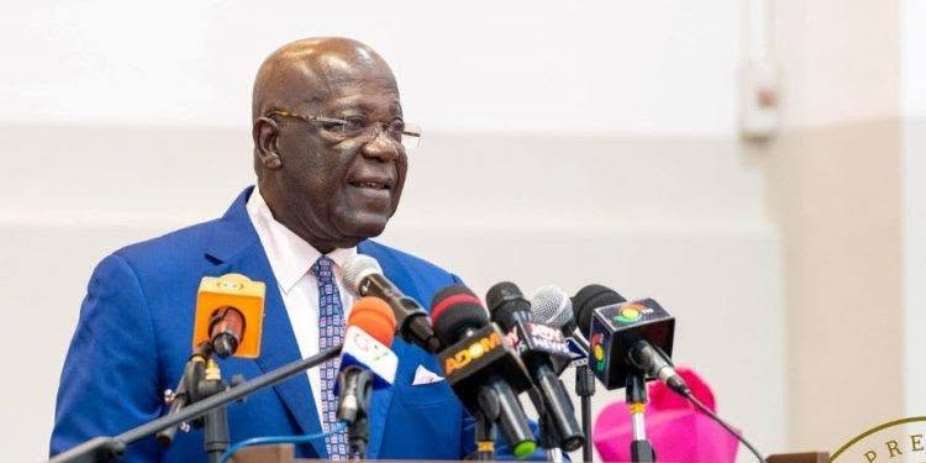
Renowned Ghanaian businessman and mining executive Sir Sam Jonah has expressed concern over the extensive destruction of the country's rivers, forests and farmlands caused by illegal mining, popularly known as galamsey, warning that the practice poses serious environmental, economic and public health challenges.
Sir Sam Jonah lamented the deteriorating state of Ghana's water bodies, observing that many rivers that once provided clean water and sustained communities have become heavily polluted by mining activities.
He made these remarks on Thursday, October 15, 2026, when he addressed the Methodist University Ghana International Conference 2026, organised to commemorate the institution's 25th anniversary.
The mining executive described the damage caused by illegal mining as a troubling reflection of the country's failure to protect its natural resources and safeguard the interests of present and future generations.
“Illegal mining, galamsey, is destroying our rivers, our forests and our farmland. Rivers that fed our grandparents now run the colour of chocolate milk. This is not only an environmental problem. It is an economic problem, a health problem and, in the end, a moral problem.
“It is what happens when people gain all they can and forget Wesley’s condition about not hurting their neighbour. But stewardship is not only about the land. It is also about money and talent.”
Galamsey has contributed to the pollution of rivers and other water bodies, the degradation of forest reserves and the destruction of arable land.
The activities also threaten livelihoods in communities that depend on farming, fishing and other natural-resource-based occupations.
The pollution of water bodies has become one of the most visible consequences of illegal mining, with concerns mounting over the implications for water treatment, access to safe drinking water and the cost of supplying potable water to affected communities.
Beyond the immediate environmental damage, the destruction of farmland and forests raises concerns about food production, biodiversity and the long-term sustainability of the country's natural resources.
—citinewsroom

 “Our ancestors didn’t survive Notsie for us to divide ourselves” – Awadada
 Court jails mine worker 14 years for defiling 8-year-old girl at Manso Kumpese
 President Mahama orders review of Ghana’s disaster preparedness systems
 Galamsey: Ghana’s rivers now run chocolate and milk colour — Sam Jonah
 A nation of job-seekers will always be poor — Sir Sam Jonah
 CAGD pays promotion arrears to 56,003 GES teachers ahead of deadline
 “If you attack us with pepper spray, we’ll fight back” — NDC Yakubu Tony Aidoo w...
 We must support artisans to unlock job creation potential – Bawumia
 Ms. Emelia Affi Agbenyo must honourably resign as new EC Deputy Chairperson to p...
 Osahen Afenyo-Markin reflects on loneliness of public service, says survival is ...


