




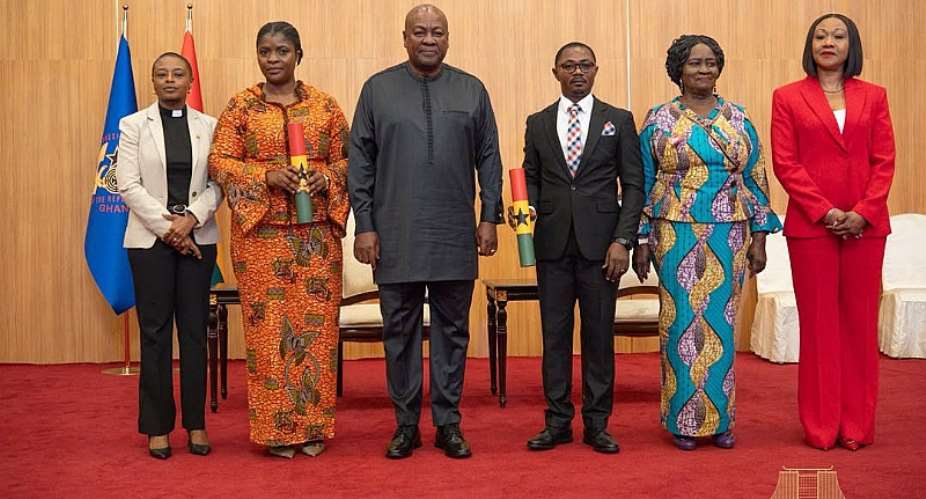
The appointment of electoral officers to run Ghana’s Electoral Commission always faces opposition from political parties not in power. Ghana President H.E. John Dramani Mahama recently appointed two deputies to replace two officers who left the Electoral Commission, but this has not been unusual. This appointment has sparked debate among Ghanaians. The primary opposition party believes the two appointees may not be impartial in carrying out their responsibilities because of their affiliation with the National Democratic Congress (NDC).
Supporters of President Mahama’s government nomination argue that the New Patriotic Party ignored public concerns when it appointed a new Electoral Commission Chair and staffed the position with its own supporters years ago, when it was in power. The New Patriotic Party argued that Ghana's 1992 Constitution grants the incumbent President authority to appoint the Chairperson, Deputy Chairmen, and members of the Electoral Commission, subject to the advice of the Council of State, as outlined in Article 70(2) and Article 43(2). Opposition parties at the time contended that this creates a conflict of interest, as the president is often a leader or beneficiary of a party contesting elections.
Notably, different parties have used the same article of the 1992 Constitution to support appointments they viewed as valid. Once, the NPP, led by Nana Akuffo Addo, appointed Professor Appiahene, a renowned NPP regional election director, as Deputy Commissioner. The President also appointed Hajia Salima Ahmed Tijani as a member of the board of Ghana’s Electoral Commission, a woman whose political background was unclear and who was seen as a staunch NPP supporter. This raised concern among Ghanaians and a few National Democratic Congress (NDC) members. The ruling government at the time responded that qualifications and Presidential authority were paramount in those circumstances.
President Mahama's recent appointment is facing opposition from the previous government, the NPP. A notable argument against the appointment of one of the appointees is their past political activities and affiliation with the National Democratic Congress (NDC). The NPP contends that the appointee's prior affiliation with a ruling political party should render them ineligible. The way the opposition is raising fire over this nomination makes many political analysts think the new additions to the EC staff will hamper the opposition party’s electoral success.
My question about this brouhaha is: Are Electoral Commissioners not political creatures who can admire a political party? Ms. Jane Mensah, the electoral chairperson, is a political creature, as every human being is; she chooses her political party. She demonstrated this through specific actions and inactions during the 2024 Parliamentary and Presidential elections, yet she remains in charge of the country’s Presidential and Parliamentary elections. All the opposition parties need to do is wait for their turn.
This disagreement between political parties and their supporters is not conducive to the country's future. Its root cause lies in the constitutionally sanctioned appointment process, which fuels recurring claims of partisanship. Consequently, I investigated this root cause and suggested potential solutions.
The Chairperson, Deputy Chairmen, and members of the Electoral Commission are appointed by the sitting President, who, on the advice of the Council of State, has exclusive authority under Article 70(2) and Article 43(2) of Ghana's 1992 Constitution. This is a critical factor in determining the root causes of the friction. Opposition parties contend that this creates an inherent conflict of interest, as the president is often a leader or beneficiary of a party contesting the elections.
This also fuels perceptions of partisanship. The opposing side frequently accuses the administration of selecting known party loyalists, activists, or sympathizers whenever a new government makes appointments.
Additionally, research and political history in Ghana show a cyclical pattern: the party in power defends the EC's independence and the legality of the appointments. By contrast, the same party vigorously opposes comparable appointments when it is in opposition. This cycle deepens the dispute.
The EC's perceived lack of neutrality in the democratic process has fueled concerns that the arbiter is biased toward the ruling establishment, especially in highly competitive elections between major parties such as the National Democratic Congress (NDC) and the New Patriotic Party (NPP). This makes political trust fragile.
Political analysts, civil society organizations, and critics have frequently advocated for constitutional amendments to modify the selection process for commissioners. These recommendations aim to reduce perceptions of bias and strengthen confidence in the Electoral Commission. The legislative branch or a multi-party parliamentary committee should approve nominees, as in other democracies, rather than leaving the decision solely to the executive.
To build cross-party confidence, involve civil society organizations or a neutral council in the nomination and vetting process. The Electoral Commissioner and the deputies are custodians of the electoral process, ensuring elections are conducted lawfully, fairly, and credibly. This is essential for the health of a democracy. Therefore, political parties must support the conditions needed to perform their assigned duties while they wait patiently for their political party to come to power.
By Kwame Aduhene-Kwarteng PhD, MA


 ECOWAS, AfDB discuss ways to advance West Africa’s development priorities
 October 16: Cedi gains against dollar, sells at GHS12.25 on forex market, GHS11....
 “Our ancestors didn’t survive Notsie for us to divide ourselves” – Awadada
 Court jails mine worker 14 years for defiling 8-year-old girl at Manso Kumpese
 President Mahama orders review of Ghana’s disaster preparedness systems
 Galamsey: Ghana’s rivers now run chocolate and milk colour — Sam Jonah
 A nation of job-seekers will always be poor — Sir Sam Jonah
 CAGD pays promotion arrears to 56,003 GES teachers ahead of deadline
 “If you attack us with pepper spray, we’ll fight back” — NDC Yakubu Tony Aidoo w...
 We must support artisans to unlock job creation potential – Bawumia


