




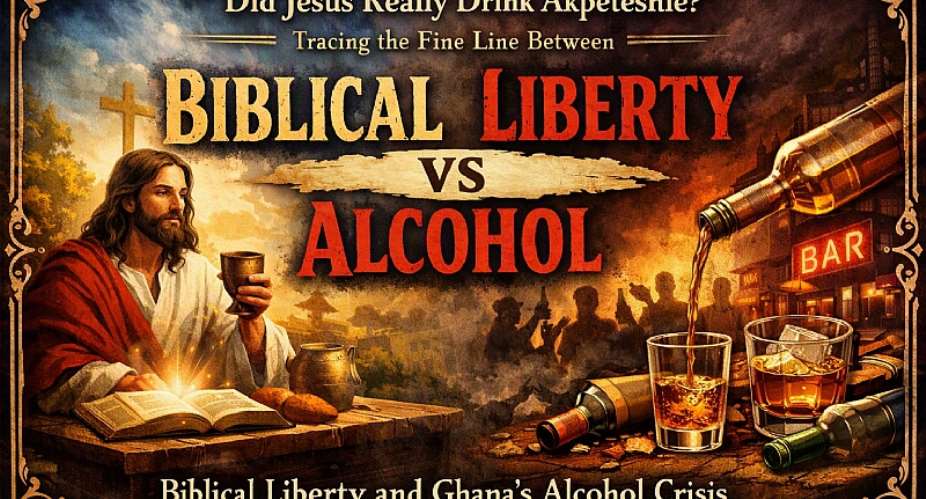
In the heart of Ghanaian society, alcohol occupies a deeply paradoxical space. From the pouring of traditional libations at cultural festivals and naming ceremonies to the lively atmospheres of local drinking spots, and right into the sacred pews of our churches, fermented beverages are deeply woven into our daily lives. Yet, our nation faces an undeniable crisis: a rising tide of alcohol abuse, youth addiction, and tragic road accidents fueled by drunk driving. As a deeply religious people—with over 70% of our population identifying as Christian—Ghanaians frequently look to the Bible for moral guidance. However, scripture's stance on alcohol is often misunderstood, weaponized, or oversimplified. This article seeks to bridge the gap between ancient biblical wisdom and modern Ghanaian reality. By exploring the true historical, cultural, and spiritual contexts of alcohol in the Bible, we can equip our communities with the knowledge needed to foster a healthier, safer, and more responsible nation.
1. The Reality of Ancient Biblical Wine
To understand the scriptures, we must first separate ancient beverages from modern spirits like Akpeteshie, gin, or high-ABV commercial beers.
- Natural Fermentation Limits: Ancient vintners lacked modern distillation tools. Wine (Yayin or Oinos) fermented via natural yeasts on grape skins, capping the alcohol by volume (ABV) between 10% and 14%.
- The Practice of Dilution: Drinking wine completely undiluted was widely viewed as reckless and uncultured in the ancient Near East. In Jewish tradition, wine was typically mixed with water—frequently at a ratio of three parts water to one part wine—significantly lowering its intoxicating strength.
- A Tool for Survival: Ancient water sources were often contaminated with deadly pathogens and parasites. Because alcohol kills bacteria, mixing a small amount of wine into water vats served as a primitive yet vital purification method. This is why the Apostle Paul advised Timothy to use "a little wine for the sake of your stomach."
- "Strong Drink" (Shekar): When the Bible references "strong drink," it does not mean manufactured liquor. It refers to unmixed, heavy beverages fermented from dates, honey, or grains (early beers) that caused rapid intoxication and were heavily warned against.
2. The Great Biblical Balance: Blessing vs. Bitter Trap
Scripture does not paint alcohol with a single brush stroke. Instead, it presents a deliberate tension between responsible enjoyment and destructive abuse.
The Positive View: A Symbol of Joy and Blessing
When handled with strict moderation, wine is described in scripture as a gift from God.
- Psalm 104:14–15: The Psalmist explicitly praises God for creating "wine to gladden the heart of man."
- The Miracle at Cana (John 2:1–11): Jesus’ very first public miracle was turning water into high-quality wine at a wedding feast, actively saving a family from social disgrace and blessing their celebration.
- Ecclesiastes 9:7: The text encourages people to live joyfully, stating, "Go, eat your bread with joy, and drink your wine with a merry heart, for God has already approved what you do."
The Negative View: Warnings of Ruin and Chaos
Conversely, the Bible unleashes fierce condemnations against drunkenness, addiction, and the loss of self-control.
- Proverbs 20:1: A stark warning that is highly relevant today: "Wine is a mocker, strong drink a brawler, and whoever is led astray by it is not wise."
- Proverbs 23:29–32: Gives a vivid description of a severe hangover and addiction, warning that in the end, unchecked drinking "bites like a serpent and stings like an adder."
- Ephesians 5:18: The Apostle Paul commands believers: "And do not get drunk with wine, for that is debauchery, but be filled with the Spirit."
3. Absolute Prohibition: When Total Abstinence Was Mandated
While the general public was permitted to drink in moderation, God placed absolute, zero-tolerance sobriety mandates on specific groups to preserve their spiritual focus and operational leadership.
- The Nazirites: Individuals who took a sacred, lifelong vow of consecration—such as Samson and John the Baptist—were strictly forbidden from consuming anything from the grapevine, including fresh grapes, raisins, and wine.
- Priests on Duty: Under Mosaic Law, priests were banned from drinking wine or strong drink before entering the Tabernacle. This ensured clear judgment so they could "distinguish between the holy and the common."
- Kings and Rulers: Scripture explicitly warns political leaders that alcohol impairs justice. Proverbs 31:4-5 notes that it is not for rulers to crave strong drink, lest they drink, forget the law, and pervert the rights of the afflicted.
4. Actionable Recommendations & Suggestions for Ghana
To address our current societal challenges using these biblical frameworks, a multi-sectoral approach is required across Ghanaian communities:
For Churches and Faith-Based Organizations
- Promote the "Law of Love": Teach that personal freedom should always be surrendered if it causes a fellow brother or sister to stumble. Christians should willingly practice abstinence or extreme discretion in the presence of recovering alcoholics.
- Provide Compassionate Support Systems: Instead of shaming or alienating those battling alcoholism, churches should establish confidential counseling ministries, support groups, and rehabilitation partnerships to help individuals recover.
- Adopt Inclusive Communion Practices: Following the practice of many global denominations, Ghanaian churches should offer unfermented grape juice or non-alcoholic options during the Lord’s Supper to ensure the holy sacrament remains safe for recovering individuals.
For Government, Policymakers, and Media
- Enforce Rigorous Drink-Driving Laws: The Motor Transport and Traffic Directorate (MTTD) must be strictly equipped with functional breathalyzers. Breath testing should be heavily enforced outside entertainment hubs, joints, and spots, especially on weekends, with severe legal penalties for offenders.
- Regulate Alcohol Advertisement: Ghana’s National Media Commission (NMC) and Food and Drugs Authority (FDA) must strengthen enforcement regarding the timing and content of alcohol advertisements, ensuring they are completely banned during daytime hours when children and vulnerable youth are watching television.
- Invest in Community Recreational Hubs: Local assemblies should invest in youth centers, sports parks, and creative hubs, offering young Ghanaians productive, alcohol-free social spaces to gather and express their talents.
The Bible never treats alcohol as a trivial matter; it respects its power to either bless a celebration or break a human life. As Ghanaians, our rich cultural warmth and deep spiritual devotion are some of our greatest strengths. However, true spiritual maturity is reflected in our discipline and our love for our neighbors. Alcohol in its purest ancient sense was a tool for preservation and joy, but when abused, it becomes a weapon of mass destruction—ruining health, fracturing marriages, and robbing our youth of their divine potential. Moving forward, let us reject the dangerous culture of binge drinking and social peer pressure. Whether you choose total abstinence out of personal devotion or strict moderation out of respect for your health, let your choice be governed by wisdom, sobriety, and a profound commitment to the safety of your community. Let us build a sober, clear-minded, and prosperous Ghana for the generations to come.
✍️ Submitted by:
Retired Senior Citizen
For and on behalf of all Senior Citizens of the Republic of Ghana 🇬🇭
Teshie-Nungua
[email protected]

 Finance Minister approves three quarters of rent allowances for security service...
 NDC cannot be written out of NHIS success story – Dr. Sammy Ayeh
 Mahama to cut sod for new 3,000-seater Accra Convention Centre – Felix Ofosu
 Kojo Bamba denies rift with Nana B, explains absence from NPP executives’ meetin...
 I was never asked to give up NPP 1st National Vice Chair position – Kojo Bamba
 October 7: Cedi sells at GHS12.30 on forex market, GHS11.81 on BoG interbank
 ECOWAS Parliament calls for stronger legislative role in regional integration
 We’ll impose $500m bail on NDC members when NPP returns to power – Abanga
 I have a strategy to win 70 'orphan' parliamentary seats for NPP in 2028 – Abang...
 Yellow fever outbreak kills seven in Sissala East


