




The economic relationship between Africa and India is entering a new phase. For decades, it was largely understood through the prism of trade, development assistance and Indian companies supplying African markets. That relationship is now becoming more reciprocal. African and Indian businesses are increasingly investing in each other’s economies, building factories, infrastructure and energy systems, and developing regional value chains. The shift reflects a broader reality where Africa’s transformation and India’s economic expansion are becoming increasingly intertwined, creating opportunities for both sides to grow together.
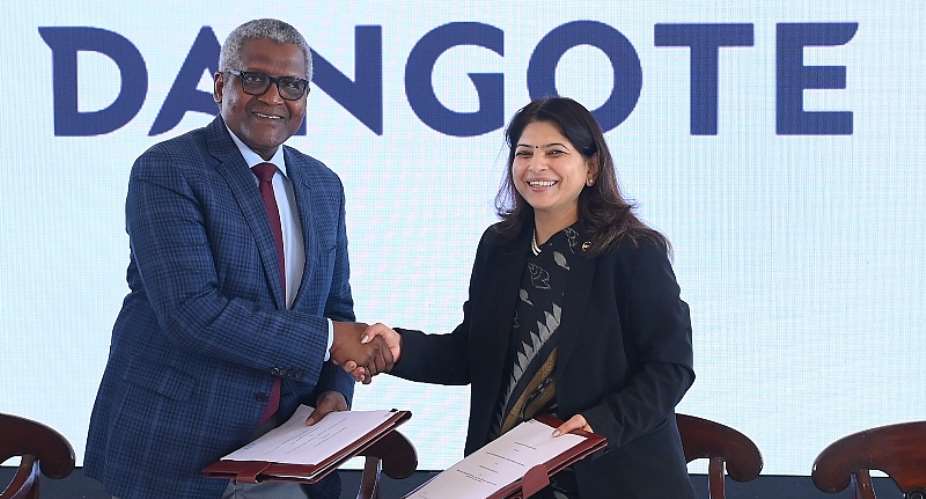
A recent example is the partnership between Africa’s richest businessman, Aliko Dangote, and India’s Engineers India Ltd (EIL). The Indian government-owned engineering company has signed a $450 million deal with Dangote to oversee the construction of a planned $16 billion refinery and petrochemical complex in Lamu, Kenya. The greenfield facility is expected to have a processing capacity of 700,000 barrels of crude oil per day.
This project illustrates what a more mature India-Africa economic relationship could look like. African capital and entrepreneurial ambition can combine with Indian engineering, technology and industrial expertise. Africa gains productive capacity; Indian companies gain business opportunities and deeper access to African markets. The relationship is therefore not simply about India helping Africa develop. It is increasingly about both sides using their respective strengths to create new sources of growth.
These examples show how Africa's emerging industrial ambitions could become one of India's most important economic opportunities over the coming decades. The continent's population growth, expanding urban centres and rising demand for infrastructure, energy, healthcare, mobility and consumer goods will create substantial markets. But the opportunity is not merely about selling more Indian products. India's greater interest should be in participating in the processes that will create these markets in the first place.
That means investing in Africa's productive capacity. African economies seeking to develop industries in cement, fertiliser, petroleum refining, automobiles, pharmaceuticals, agricultural processing, renewable energy and logistics will require technology, capital, engineering and managerial expertise. Indian companies possess capabilities across many of these sectors. Establishing manufacturing and processing facilities in Africa can allow Indian businesses to serve local and regional markets more efficiently while contributing to employment, skills development and local value addition.
This model can also benefit India. Africa's industrialisation can provide Indian companies with new markets and investment destinations while helping diversify their international operations. As the African Continental Free Trade Area deepens regional economic integration, production in one African country could increasingly provide access to markets across the continent. For Indian companies, that creates the possibility of treating Africa not as a collection of individual markets but as an increasingly integrated economic space.
The relationship could also help both sides develop more resilient supply chains. Africa has significant reserves of critical minerals, energy resources, and agricultural commodities, while India has growing demand for many of these inputs. But the objective should not be to reproduce the old model of exporting raw materials and importing finished products. Greater African processing and value addition can create better economic returns for African economies while giving Indian industry more diversified and reliable sources of supply.
Infrastructure will determine whether this potential can be realised. Roads, railways, ports, electricity and digital networks remain essential to connecting African producers with consumers and regional markets. India's experience in delivering relatively affordable infrastructure and technology in resource-constrained environments provides opportunities for cooperation. Yet ambition should extend beyond individual infrastructure projects to infrastructure-led industrial development, where transport corridors, energy systems, digital connectivity, and manufacturing clusters reinforce one another.
India and Africa also possess complementary experiences and capabilities. India has confronted challenges that remain familiar across many African economies, including infrastructure deficits, large informal sectors, agricultural dependence, limited access to finance and the difficulty of delivering affordable services to large populations.
India's experience with digital payments, financial inclusion, affordable pharmaceuticals, agricultural technology, renewable energy and low-cost engineering can provide useful reference points. India's role should therefore not be to present its experience as a ready-made model, but to work with African partners to adapt and develop solutions suited to local circumstances. Digital Public Infrastructure is a good example. India's experience with digital identity and payments can offer useful lessons, but African policymakers, entrepreneurs and developers should determine how such systems are designed and adapted to their own societies. The same principle applies to healthcare, agriculture, education, manufacturing and financial services.
This two-way exchange is important because Africa is not simply a destination for Indian investment. It can also become a source of capital, innovation, commodities, talent and new business models for India. African entrepreneurs and companies are increasingly building businesses that can operate at scale in difficult, diverse markets. Partnerships with such firms can give Indian businesses local knowledge and networks that cannot be built in India alone.
The deeper opportunity, therefore, lies in complementarity. India's expanding economy needs new markets, investment opportunities and diversified supply chains. Africa needs capital, technology, infrastructure, industrial partnerships and access to global markets. Neither side possesses everything it needs, but each has capabilities that can strengthen the other's economic transformation.
The next phase of Africa-India relations should consequently move beyond the language of assistance and even beyond conventional trade. A more consequential relationship will be built around investment, production, value addition, and co-creation. The Dangote-EIL partnership offers a glimpse of that future: African capital and industrial ambition meeting Indian engineering and technological capabilities to create productive capacity in Africa, while opening new commercial opportunities for India. Such partnerships can turn economic interdependence from an aspiration into a practical strategy. Ultimately, Africa is not merely a market or recipient for India, but also a source of markets, capital, resources, regional access, entrepreneurial knowledge and supply-chain diversification for India.


 'If God will judge people we call holy, what about us?' — Evangelist asks after ...
 Nigerian evangelist shares list of top Nigerian pastors he saw in hell weeping f...
 How suspected phone thief swallowed five SIM cards during arrest on Kasoa-Bawjia...
 Two arrested over alleged possession and trafficking of suspected narcotics at K...
 Agric Minister urges Finance Minister to reverse Ghana's withdrawal from food re...
 S&P holds Ghana at B-/B as fiscal risks persist
 Mahama exposes 'humiliating' requirements in trashed US Health Compact
 NSA releases PIN codes for private candidates, defaulters and foreign-trained gr...
 Toyota Hiace crashes Toyota Voxy from behind at Tsibu-Bethel Junction
 'It has been the old story of promises upon promises; we won’t return until sala...


