




Stand on the beach at Cape Coast at low tide and you can smell two things at once: salt water, and history that refuses to stay buried. Behind you sits a whitewashed castle that has watched gold leave this coast for over 370 years. In front of you, fishermen haul in nets that come back lighter every season, because the same ocean floor now carries oil rigs instead of just fish. It is the tidiest metaphor Ghana never asked for: wealth passing through, prosperity staying somewhere else.
So let's ask the blunt question everybody dances around at funerals, in trotro queues, and on Twitter Spaces at 1am: Ghana has gold, oil and cocoa in world-beating quantities. Why does the ordinary Ghanaian still struggle to pay school fees, light bills and rent in the same month?
I am not going to give you a comfortable answer. I am going to give you the numbers, the history, and the argument — and then I am going to let you decide who deserves the blame, because pretending this is simple is exactly how it stays unsolved.
The paradox, in numbers that should embarrass somebody
In 2025 alone, Ghana's mining sector pulled in mineral export earnings of US$21.36 billion, up from US$11.98 billion the year before, according to figures from the Ghana Chamber of Mines reported by African Mining Market. Gold production hit 5.94 million ounces. Mining is now Ghana's single largest source of domestic tax revenue.
And yet, per Think Global Health, roughly 22% of Ghanaians still live below the national poverty line — many of them in the very mining communities producing that gold. Galamsey — illegal small-scale mining — persists not because Ghanaians enjoy poisoning their own rivers, but because, in the words of that same report, miners "have few alternatives to escape poverty."
Read that twice. The people standing closest to the gold are often the poorest people in the country.
Cape Coast Castle: 500 years of extraction, one address
This is not a new story dressed up in new headlines. Cape Coast Castle began life in 1653 as a Swedish trading post built specifically to move gold and timber out of this land. Within decades it had become one of West Africa's largest departure points for the transatlantic slave trade — Ghanaian bodies replacing Ghanaian gold as the export commodity, moving through what is chillingly remembered as the "Door of No Return."
By 1844 the castle was the formal seat of British colonial government on the Gold Coast. The extraction never stopped; it just kept changing its paperwork — gold, then people, then cocoa, then bauxite, then oil. Colonialism did not invent Ghana's resource-export economy. It industrialised it, and it built the institutions — ports, railways to the coast rather than to each other, land laws, export boards — specifically to move raw material out efficiently. That infrastructure, largely unchanged in its basic logic, is still what Ghana runs on today.
Why the small-scale miner never gets rich
Here's where the debate gets uncomfortable for easy villains. Artisanal and small-scale mining (ASM) now accounts for over half of Ghana's total gold output — a genuine milestone reported by TRT Afrika. But a peer-reviewed study in Mineral Economics found that "communities hosting mining operations in Ghana continue to experience high levels of poverty and underdevelopment despite the significant presence of mineral wealth." The researchers call it an "environmental resource curse" — the gold comes out, the water goes bad, and the wealth generated rarely stays in the community that bore the cost.
In January 2025, nine unarmed small-scale miners were killed in a clash with soldiers at the AngloGold Ashanti mine in Obuasi, according to Wikipedia's documentation of the Obuasi shooting — a brutal illustration of how the state treats the very miners it depends on for half its gold. President Mahama called it "tragic" and ordered an investigation. That the incident happened at all tells you something about who is protected in this economy, and who is expendable.
The foreign-ownership question — and why "just nationalize it" isn't the clean answer people want
Now the part that gets people shouting in the comments section. Ghana's flagship Jubilee oil field — the one carrying the FPSO vessel literally named Kwame Nkrumah — has historically been majority-owned by foreign companies. Ownership has shifted over the years between Tullow Oil (UK/Irish), Kosmos Energy (US), Anadarko/Occidental (US), and South Africa's PetroSA, with Ghana's own GNPC typically holding a minority stake — as low as 10% in some blocks. In June 2025, the government signed a fresh Memorandum of Understanding extending those licenses to 2040, per Kosmos Energy's own release.
The nationalist instinct here is obvious: if it's Ghana's oil, why isn't GNPC the majority owner? But the honest answer is that these fields required billions in upfront exploration capital and deepwater engineering risk that GNPC, at the time, could not have raised or absorbed alone. Foreign capital didn't steal the oil — it was invited in on terms that gave Ghana too small a slice of a pie it couldn't have baked by itself. The real failure isn't that foreigners are involved. It's that successive governments never used oil-era windfalls to build the state capacity that would let Ghana negotiate a bigger slice next time.
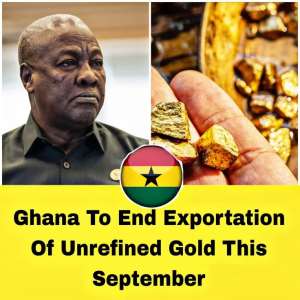
Ghana's gold sector shows the alternative model actually working. The new GoldBod (Ghana Gold Board), which centralises gold purchasing from small-scale miners in cedis before export, is projected to generate close to $12 billion a year once output doubles, per Ghana Gold Board's own figures reported by Bloomberg — and has already been credited with over 40% appreciation of the cedi against the dollar, according to SBM Intelligence. That's not nationalization by seizure. It's the state simply inserting itself into a value chain it had previously abandoned to middlemen and smugglers.
The real theft isn't in the ground — it's in the value chain
If you want the single most damning statistic in this entire debate, it's this one: West Africa supplies roughly 70% of the world's cocoa beans, but according to research cited by The Conversation via Graphic Online, West African economies capture less than 6% of the value of the $150 billion global chocolate industry. Former President Akufo-Addo put it plainly in a 2017 address to Switzerland's Federal Council, reported by InDepthNews: Ghana and Côte d'Ivoire together produced 65% of the world's cocoa in 2015 but earned just 5.75% of the industry's value. Farmers themselves get, at best, around 7% of what a chocolate bar is actually worth.
This is not an accident of geography. Ghana simply doesn't have the dairy industry, packaging sophistication, or reliable cheap energy to compete at the finishing end of the chocolate business — so raw beans leave, and the profit is made in Zurich and Amsterdam instead. It is colonial economic architecture running exactly as designed, seven decades after the flag changed.
Then Ghanaians did try to change the architecture — and the world stopped it
Enter Kwame Nkrumah, who understood this exact problem in the 1950s and tried to industrialise Ghana out of raw-material dependency. On February 24, 1966, while he was in transit to Hanoi on a peace mission, a CIA-linked coup removed him from office. This is no longer conspiracy talk — it's documented history. Declassified CIA and State Department cables, cited by GlobalSecurity.org and confirmed in Seymour Hersh's 1978 reporting, show US intelligence tracking and encouraging "disaffected military and police leaders" to move against Nkrumah for over a year before the coup happened. A memo to President Lyndon Johnson, unearthed by Face2Face Africa, bluntly called the coup "another example of a fortuitous windfall," noting Nkrumah "was doing more to undermine our interests than any other black African." President Mahama himself referenced these declassified documents during Ghana's 2025 independence celebrations, per Arise News, calling it "the most regrettable and darkest moment in our nation's history."
So yes — when Ghana tried to build an industrial base to escape the raw-material trap, external interests helped remove the man building it. That's a fact, not a feeling.
But here's where I have to steel-man the other side, because honesty demands it
If you stop the story there, you let sixty years of Ghanaian leadership entirely off the hook. That's intellectually lazy, and it isn't true.
Nkrumah's own coup-makers didn't only cite Cold War politics — they cited his Preventive Detention Act, one-party rule, and a genuinely collapsing economy, according to Graphic Online's own retrospective. Colonialism built the extractive machine. But every government since 1966 — military and civilian, PNDC, NDC and NPP alike — chose whether to keep running that machine unchanged or to fix it. Most chose the easy money.
Look at COCOBOD today. This is not colonial theft — this is homegrown governance failure, fully documented. Cocoa production collapsed by nearly 50% in three years, and COCOBOD is carrying roughly GH¢60 billion in liabilities as of 2026, according to African Arguments. A World Bank report as far back as 2017 flagged systemic corruption in fertilizer distribution — subsidised inputs meant for farmers were being diverted and smuggled across the border, a fact COCOBOD itself admitted publicly in 2022, as documented on Modern Ghana. Meanwhile, African Arguments reports that every change in government triggers a purge of experienced COCOBOD staff — in December 2024 alone, outgoing management tried to fast-track promotions for roughly 100 politically-aligned staff in two weeks, a process that normally takes five to seven months.
That is not the ghost of British colonialism. That is Ghanaians doing this to Ghanaians, in 2024, in an election transition. No foreign power forced that decision.
So who is actually to blame?
Both, and pretending otherwise insults the intelligence of anyone who has read this far. Colonialism built an economy engineered to export raw material and import finished goods, and it removed the one leader with a serious plan to change that architecture. But sixty years is long enough for any nation to have rebuilt its own institutions if its leaders had chosen to. Singapore, Botswana and South Korea all inherited colonial or post-war disadvantage and used state capacity, discipline and long time horizons to escape it. Ghana has had the same six decades and, too often, chose short election cycles and political patronage over that same discipline.
What "no doubt" solutions actually look like
If there is a genuinely evidence-backed fix — not a slogan, an actual mechanism already showing results — it's this: insert the state into the value chain instead of just taxing what leaves the country. GoldBod is doing exactly that for gold, and it's already moved the exchange rate. President Mahama's push for 50% domestic cocoa processing, and companies like Fairafric proving Ghanaian-made chocolate bars can reach European shelves, point the same direction for cocoa. And extending oil licenses to 2040 while explicitly investing in GNPC's technical capacity, as agreed in the 2025 MOU, is how Ghana negotiates a bigger share of the next oilfield instead of the same small slice of this one.
None of this works without ending the COCOBOD-style purge-and-patronage cycle first. You cannot build a value chain with an institution that resets its own expertise every four years.
An Author's Note
I have walked through Cape Coast Castle. I have stood in the room where men who looked like my ancestors were weighed against gold and found equally exportable. I do not say any of this from a textbook — I say it as someone who grew up watching cocoa trucks leave Kumasi loaded, and watching chocolate arrive back in the shops, imported, at three times the price a Ghanaian farmer was paid for the raw bean. That is not a metaphor. That is Tuesday at Kejetia market.
We inherited a broken architecture. We have had sixty-eight years to rebuild it. The honest debate isn't colonialism orcorruption — it's how much longer we're willing to let both excuses coexist while the gold keeps leaving and the poverty rate stays where it is.
About the Author
Chief Tutu Baffour Asare Brownsy Williams is a Ghanaian author, filmmaker, opinion columnist, and founder of the Brownsy Silva Company, a multi-disciplinary creative platform spanning novels, film, journalism and engineering-adjacent content. Writing for Modern Ghana and other outlets, he addresses African political economy, history and culture for a readership spanning Ghana and its diaspora across the UK, USA, Canada and Germany.


 'Some NPP members did not vote in 2024 election because I left NPP' – Alan Kyere...
 How €225 million cocaine from Ghana traced to fugitive Dutch drug kingpin based ...
 'Galamsey remains an existential threat' – Gyampo demands more action
 'I’m like Akpeteshie, I don’t need adverts to win' – Hawa Koomson storms home tu...
 'Excessive bail conditions must be reviewed' – GBA President
 Ketu South: Four-year water crisis deepens hardship in Agbozume
 Show evidence of higher operating costs to justify fare hike – NPA CEO to transp...
 Four Ghanaians arraigned over alleged €225 million cocaine shipment to France
 Agbogbloshie: Police kill suspected robber, recover AK-47, 186 rounds of ammunit...
 DVLA opens 29 new offices in 18 months; 62 offices nationwide - CEO


