




As climate negotiations become increasingly sophisticated, one fundamental question remains unresolved; are the women most affected by climate change benefiting from the decisions being made at global conference rooms?
Across Africa, women and girls are on the frontline of the climate crisis. They walk longer distances in search of water during droughts, struggle to secure food when harvests fail, and shoulder increased unpaid care work when climate shocks disrupt livelihoods. They are often responsible for feeding families, caring for children and older relatives, and maintaining household stability, even as the resources available to them continues to remain scarce.
Yet despite their central role in sustaining families, communities, and local economies, women of Africa continue to face barriers to accessing climate finance, participating in decision-making, and influencing climate policies. This is one of the defining injustices of the climate crisis: those who contribute least to global emissions are often the first and hardest hit, while those with the least power are expected to carry the greatest burden.
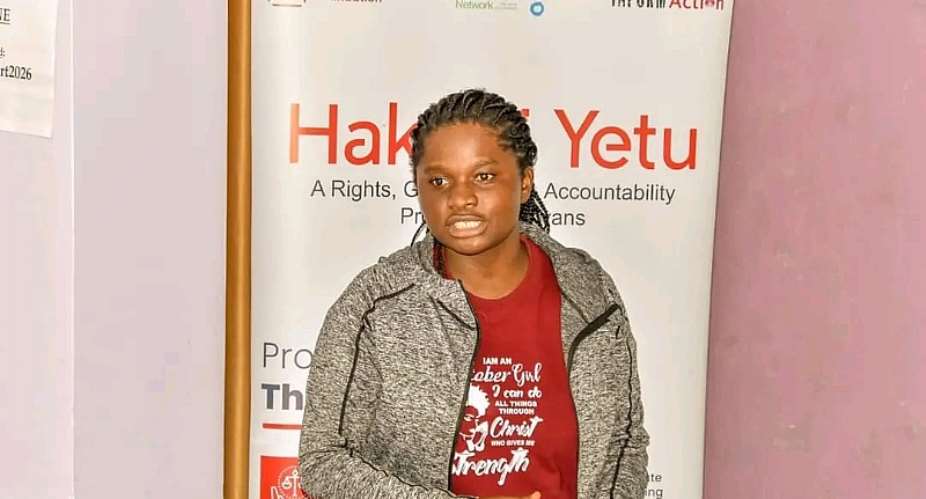
This contradiction became even clearer during my recent participation in the Africa Feminist Climate Justice Academy in Addis Ababa, Ethiopia. The Academy brought together young women climate leaders from across the continent to exchange experiences, strengthen feminist climate leadership, and reflect on the structural inequalities shaping climate action. The discussions highlighted a reality that many communities already know: climate justice cannot be achieved without gender justice.
The stories shared by young women from East, West, Southern, and Central Africa revealed common patterns. Women are developing innovative solutions to climate challenges, leading community adaptation initiatives, protecting natural resources, promoting sustainable agriculture, and mobilising local action. They are restoring degraded land, supporting climate-resilient livelihoods, educating communities, and advocating for policies that respond to local realities.
However, these women often remain excluded from the spaces where climate priorities are set and resources allocated. Their knowledge is frequently treated as anecdotal rather than technical. Their organisations are often invited to consultations but not included in final decisions. Their leadership is celebrated in speeches, yet overlooked when funding, authority, and long-term support are distributed.
This gap between recognition and power must be addressed.
The international community frequently celebrates commitments to gender-responsive climate action. Governments and institutions adopt policies, establish frameworks, and make declarations affirming the importance of women’s participation. However, ambition alone is not enough. As Kenya recently emphasised in discussions on the Belém Gender Action Plan, commitments must translate into measurable implementation that reaches communities on the ground.
A gender-responsive climate policy should not be judged only by the language it contains. It should be judged by whether it improves women’s access to land, finance, technology, education, water, healthcare, and decision-making. It should be judged by whether women farmers can adapt to changing rainfall patterns, whether girls can remain in school during climate-related disruptions, and whether women facing displacement can access safety, livelihoods, and justice.
One of the greatest obstacles remains climate finance. While billions of dollars are pledged globally for climate action, very little reaches grassroots women’s organisations. Women-led groups often face structural barriers, including limited access to collateral, restrictive financial systems, complex accreditation procedures, inadequate technical capacity, and funding mechanisms designed for large institutions rather than community-based organisations.
Many grassroots organisations are doing essential work with small grants, volunteer networks, and local knowledge. Yet they are often expected to meet the same administrative and reporting requirements as international institutions with large teams and dedicated compliance departments. This creates an uneven playing field and prevents resources from reaching the people best positioned to deliver locally relevant solutions.
This raises an important question: who decides where climate finance goes, who receives it, and whose priorities are reflected in its use?
Too often, climate finance is measured by the amount pledged rather than its impact on the lives of women farmers, indigenous communities, and local climate defenders. The focus should shift from counting dollars to measuring transformation. We must ask whether funding has strengthened women’s livelihoods, reduced their unpaid care burden, improved their access to clean energy, increased their resilience to drought and floods, or enabled them to participate meaningfully in local governance.
Direct access to finance is therefore essential. Funding institutions should simplify application procedures, provide flexible and long-term support, invest in the institutional capacity of grassroots organisations, and create dedicated funding windows for women-led initiatives. Local organisations should not be treated merely as implementing partners. They should be recognised as decision-makers, knowledge holders, and leaders of climate solutions.
Meaningful participation must also go beyond representation. Women should not merely occupy seats in consultations or attend climate conferences; they must have genuine decision-making power. They should be involved in setting priorities, allocating resources, designing interventions, and evaluating outcomes. Participation without influence is not empowerment.
This is particularly important for young women, women with disabilities, indigenous women, women living in informal settlements, and those in rural and marginalised communities. Their experiences are diverse, and climate policies must reflect that diversity. A single approach cannot address the realities of women living in arid and semi-arid lands, coastal communities, urban settlements, and agricultural regions.
At Rural Empowerment and Development Organisation ( REDO-Kenya), we believe that climate action must be rooted in the lived realities of communities. For rural women, climate policy is not an abstract concept. It means access to water, affordable finance, resilient livelihoods, sustainable agriculture, secure land rights, clean energy, and protection from climate-related displacement.
It also means recognizing the connection between climate change and other forms of inequality. When drought destroys crops, women may be forced to reduce meals, withdraw children from school, or take on unsafe work. When floods destroy homes, women and girls may face heightened risks of violence and exploitation. When natural resources become scarce, women may spend more time collecting water and firewood, leaving less time for education, paid work, or civic participation.
Effective climate policies must therefore address the everyday realities that determine whether women and girls can thrive in a changing climate. Adaptation programmes should include gender-responsive budgeting, protection from gender-based violence, access to sexual and reproductive health services, and support for women’s economic independence.
The future of climate action in Africa will depend on whether we are willing to invest in local leadership. Young women across the continent are already demonstrating the knowledge, innovation, and courage required to lead climate solutions. What they need is recognition, resources, mentorship, protection, and opportunities to influence decision-making at all levels.
Governments must create enabling environments for women’s leadership. Development partners must fund local organisations more directly. Climate finance institutions must improve transparency and accountability. Civil society must continue challenging systems that exclude women from power. And communities must be supported to recognise women not only as beneficiaries of climate action, but as leaders of it.
As the world prepares for COP31 and beyond, governments, development partners, civil society organisations, and climate finance institutions must ensure that gender-responsive climate action moves from rhetoric to reality. This requires direct access to finance, stronger accountability mechanisms, protection of women climate defenders, investment in local knowledge, and meaningful inclusion of women in climate governance.
It also requires a change in mindset. Women are not vulnerable because they are inherently weak. They are made vulnerable by unequal systems, discriminatory laws, limited access to resources, and exclusion from decision-making. Addressing these structural barriers is not charity; it is a matter of justice and effectiveness.
Africa does not lack climate champions. It lacks systems that consistently support them.
The climate crisis demands urgency. But it also demands fairness. If climate justice is truly our goal, then women and girls must not remain at the margins of climate action. They must be recognised, supported, and empowered as leaders of the solutions our continent urgently needs.
The choices made today will shape Africa’s future. We can continue with approaches that overlook local voices and reproduce inequality, or we can build climate policies that place women’s knowledge, leadership, and rights at the centre.
Only then can we build a climate future that is not only resilient, but also inclusive, accountable, and just.
The writer is the programmes Officer, Rural Empowerment and Development Organization (REDO)

 Atewa Forest under ‘unprecedented attack’ from illegal mining – A Rocha Ghana
 NDC will cover its failure with 'fake news' ahead of 2028 elections – Osahen Afe...
 CSSPS resolution centres extended to September 18 over outstanding placement cas...
 AG, GBA clash at Ada Bar conference over 'political comments'
 Gov't secures US jobs pathway for nurses through Columbus partnership
 Expressway: “Eat your wife’s fufu” — Mahama shares light‑hearted joke with Kumas...
 Accra-Kumasi Expressway would allow people to live in Kumasi and work in Accra –...
 18years of legal battle: Retired lawyer urges Chief Justice to crack down on law...
 'Name NAPO as Running Mate again, kickstart 2028 campaign' – Former Manhyia Nort...
 September 15: Cedi sells at GHS12.20 on forex market, GHS11.47 on BoG interbank


