




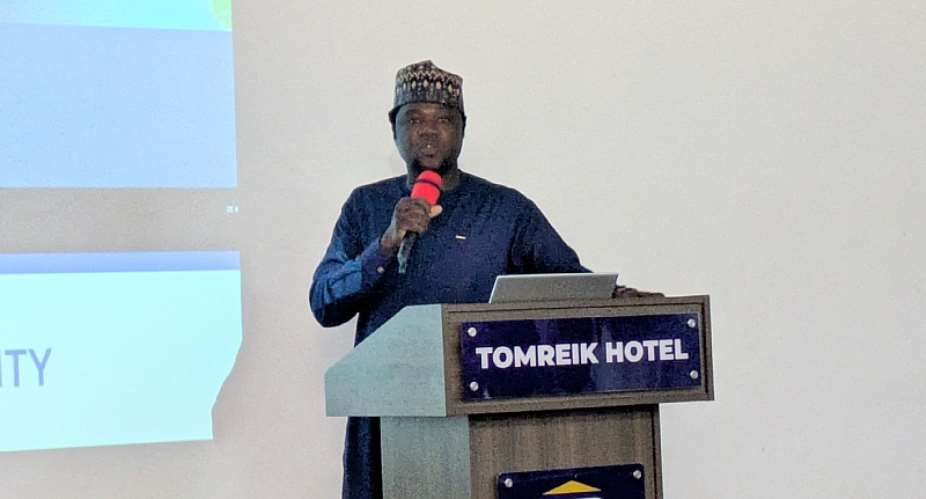
The Executive Director of the West Africa Centre for Counter-Extremism (WACCE), Mutaru Mumuni Muqthar, has cautioned that increasing youth unemployment, governance deficits and social marginalisation could increase Ghana’s vulnerability to terrorism and violent extremism.
He said the threat of violent extremism has expanded from the Sahel towards coastal West Africa over the past decade, with young people facing conditions that could make them susceptible to recruitment by extremist groups.
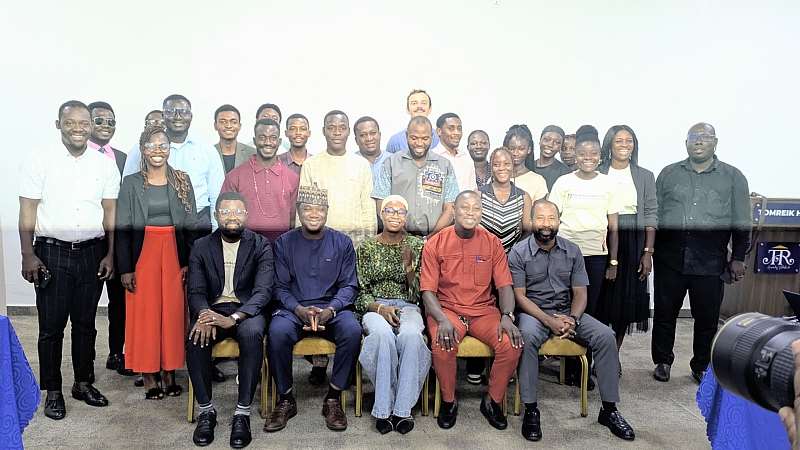
Mr Muqthar made the remarks at the third edition of the Nyansa Dialogue Series, organised by the Nyansa Institute for Strategic Dialogue (NISD) in Accra on Friday, August 21.
The dialogue was held on the theme, “With growing instability across the Sahel, how can Ghana help?” and brought together stakeholders to examine Ghana’s role in responding to insecurity in the Sahel and supporting a more secure and prosperous West Africa.
Youth vulnerability
Mr Muqthar said the region’s security challenges could not be separated from the frustrations of young people who lack jobs, opportunities and confidence in state institutions.
He said 71 per cent of recruits to extremist groups in sub-Saharan Africa had cited human rights abuses by state security forces as a reason for joining, while unemployment and other vulnerabilities also contributed to recruitment.
He said extremist groups had become effective at identifying and exploiting the needs of vulnerable young people.
“Governance deficits and dysfunctional institutions remain one of the biggest sources of grievances,” he said.
According to him, young people are searching for meaning, relevance, recognition and opportunities, but the failure of governments to provide legitimate avenues for achieving these aspirations is creating dangerous vulnerabilities.
He identified youth unemployment, ethnic marginalisation, inequality, corruption, poor governance and unresolved local conflicts among the factors driving insecurity across West Africa.
Terrorism spreading
Mr Muqthar said violent extremism had changed significantly since 2013, when most coastal West African countries had not experienced terrorist attacks.
He said the subsequent spread of attacks into countries such as Burkina Faso and other parts of the region shows that the threat is no longer restricted to the Sahel.
Coups and democratic frustration
The WACCE Executive Director also linked the region’s security crisis to the increasing number of military takeovers in West Africa.
He said several coup leaders had cited corruption, poor governance and the inability of civilian governments to contain terrorism among the reasons for their interventions.
Mr Muqthar, however, stressed that military rule is not the solution to the region’s governance problems.
He said sustainable stability requires responsive institutions, ethical leadership and governments that focused on delivering economic and social opportunities to citizens.
Ghana’s role
Mr Muqthar said Ghana is well positioned to contribute to regional efforts to contain terrorism because of its democratic stability and existing security initiatives.
He mentioned Ghana’s National Security Strategy, its framework for preventing and countering violent extremism, intelligence-sharing arrangements and the Accra Initiative as measures that could support regional security.
He also commended efforts to improve Ghana’s diplomatic relations with the military-led countries in the Sahel.
He said stronger relations with countries such as Burkina Faso could improve intelligence-sharing and coordination, particularly amid strained relations between the Alliance of Sahel States and the Economic Community of West African States (ECOWAS).
He further highlighted the proposed Gulf of Guinea-Sahel Initiative as a potential mechanism for improving cooperation between Sahelian and coastal states.


 Extortion allegations against Afenyo-Markin irrelevant to alleged $1.7bn GoldBod...
 OSP assesses extortion allegations against Afenyo-Markin for possible investigat...
 ‘I don’t support calls to remove Afenyo‑Markin as minority leader’ — Sticka
 Bawumia backs Afenyo-Markin to lead minority’s push for accountability over Gold...
 IMF debt assessments fail to fully capture Ghana’s mounting crisis risks – Dr. M...
 26 suspects put before court over 2020, 2024 election-related violence – Interio...
 June 29 flood affected about 92,000 people, killed 39 – Interior Minister
 Despair and anger in Conakry after deadly landfill collapse
 'We have never taken GHS1 billion overdraft from BoG' – GoldBod denies claim by ...

