




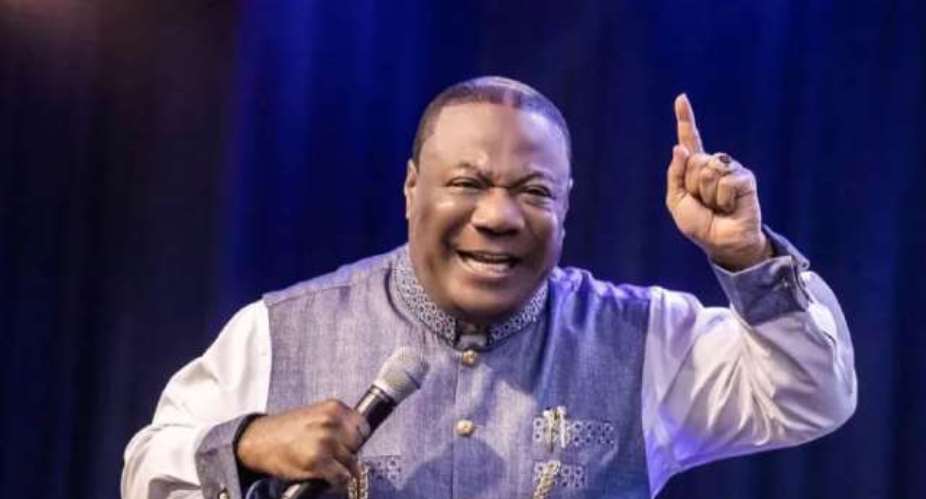
As the Ghana Gold Board, popularly known as GoldBod, begins its work, Archbishop Nicholas Duncan-Williams has urged Ghanaians to pray for the institution, citing resistance from powerful interests within the gold trade.
There is nothing wrong with prayer. Ghana is a deeply religious country, and faith remains an important source of hope and strength. But we must ask whether prayer is sometimes becoming our response to problems that require competence, sound policy, accountability and decisive action.
Ghana has been here before. In 2003 and 2004, prayer sessions were held as Ghana Airways struggled for survival. Yet the airline eventually collapsed. Its problems were not spiritual; they included debt, structural weaknesses, inadequate capital and management challenges. Prayer could provide hope, but it could not replace restructuring and competent leadership.
Similar calls for prayer emerged when the cedi came under severe pressure in 2014. But currencies respond to economic fundamentals such as production, exports, foreign exchange reserves, fiscal discipline and monetary policy.
For decades, religious organisations have prayed for Ghana's peace and prosperity. During the Akosombo water crisis in 2007, religious leaders also prayed for rain as declining water levels threatened electricity generation. Yet Ghana still needed investment, planning and diversification of its energy supply.
Prayer offered hope. Someone still had to solve the problem.
That lesson should guide GoldBod. If the institution faces smuggling, corruption, illegal gold trading and resistance from vested interests, Ghana needs strong investigators, regulators, economists, lawyers, technology and competent management.
Wrongdoers must be identified and prosecuted. Loopholes must be closed, border controls strengthened and gold transactions made more transparent. Competence must be rewarded, while incompetence and corruption must have consequences.
And yes, Ghana can pray while doing all these things. The danger comes when prayer becomes a substitute for policy and responsibility.
This is not an argument against faith. It is an argument against using faith to avoid taking action. Prayer did not restructure Ghana Airways, fix the structural weaknesses of the cedi or by itself solve the country's energy challenges.
Perhaps the answer to some of our prayers is simply: use the brains, institutions and resources we have been given.
Other countries also make serious policy mistakes, but functioning institutions respond. In the United Kingdom in 2022, Chancellor Kwasi Kwarteng left office after just 38 days following the economic fallout from the government's controversial mini-budget. Policies were reversed, and Prime Minister Liz Truss subsequently resigned.
The lesson is not that other countries never fail. It is that institutions must be capable of recognising failure, changing direction and holding decision-makers accountable.
Ghana should not stop praying. Faith remains an important part of our national life. But prayer must be accompanied by competence, integrity, hard work and accountability.
Perhaps our prayer should therefore be: “God, give us the wisdom to use the brains You gave us, the courage to confront wrongdoing, and the humility to step aside when we are not competent enough to do the job.”
GoldBod is too important to Ghana's economy to succeed on faith alone. It will require effective management, transparency, enforcement and accountability.
By all means, let us say Hallelujah. But after the Amen, let us get to work.


 NPP will rise again under my leadership — Boakye Agyarko
 NPP lost 2024 election due to misgovernance, not disunity — Kwame Anthony
 'Tons' of nuclear materials found at undisclosed Syrian site, IAEA chief says
 NPP will reinstate Gertrude Torkornoo as Chief Justice when we come back to powe...
 Two BOGISS watchmen accused of sexually abusing 14-year-old student as family de...
 Gabriel Agambila blasts Upper East Airport critics, says opposition reflects ‘st...
 ‘I don’t think we need a shoot-to-kill approach to solve galamsey’ — Sukparu
 GoldBod has plugged $5bn gold revenue leakage — Dr Steve Manteaw
 Bawumia can only be president of old students’ association, not Ghana — Solomon ...
 GES denies releasing 2026 SHS prospectus

