




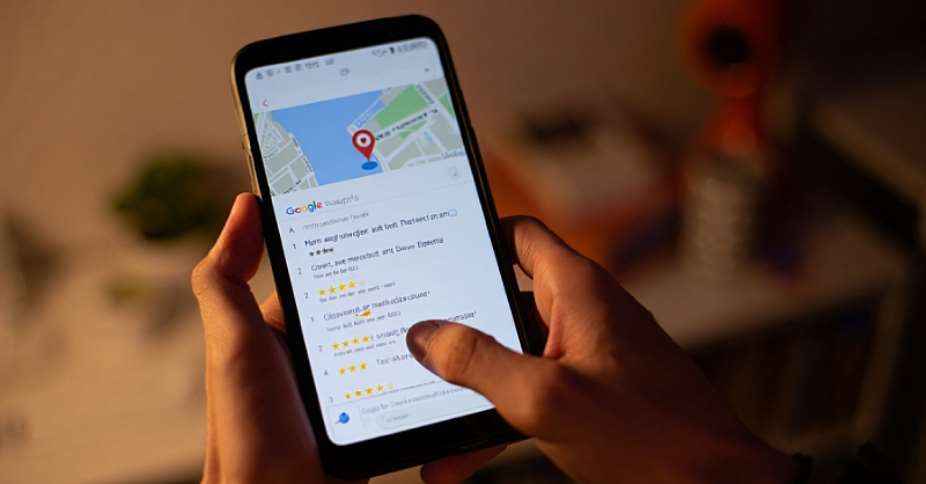
The Cyber Security Authority (CSA) has raised concern over a sharp increase in restaurant and food vendor impersonation scams, cautioning the public to be vigilant when ordering meals online.
According to the Authority, cybercriminals are increasingly posing as legitimate restaurants and food vendors, deceiving customers into making payments for food orders that are never delivered.
Data from the CSA shows that between January and June 2026, it recorded 112 reported cases involving both customers and food vendors, compared to 61 cases during the same period in 2025. Financial losses linked to the scams also surged significantly, rising from GH¢84,592 last year to GH¢296,083.68 this year.
The Authority explained that scammers are manipulating online platforms such as Google Search and Google Maps by altering genuine business listings or creating fake ones. Some exploit Google's "suggest an edit" feature, hijack unverified business profiles, or create duplicate listings using fraudulent phone numbers. Others reportedly pay for sponsored advertisements to ensure their fake contact details appear prominently in search results.
Unsuspecting customers who contact these fake numbers are encouraged to place food orders and make advance payments through mobile money or fraudulent payment links. After the payment is completed, the fraudsters cut off communication and the orders are never fulfilled.
The CSA further warned that some fake payment portals are designed to harvest victims' personal information, including names, delivery addresses and mobile money details, which are later exploited to carry out unauthorised financial transactions.
To reduce the risk of falling victim to such schemes, the Authority advised customers to verify restaurant and food vendor contact information through official websites, verified social media accounts or reputable food delivery platforms before placing orders.
It also urged the public to avoid making payments through unfamiliar links, insist on paying only after receiving their orders where possible, and never disclose sensitive information such as mobile money PINs, one-time passwords (OTPs) or banking credentials.
The CSA also called on restaurants and food vendors to secure their online presence by claiming and verifying their Google Business Profiles, displaying official contact details on their platforms and regularly monitoring their listings for suspicious edits or duplicate profiles. Businesses that identify fraudulent listings have been advised to report them to Google through its Business Redressal Complaint Form.
The Authority reminded the public that it operates a 24-hour Cybersecurity and Cybercrime Incident Reporting Point of Contact to provide support and guidance. Incidents can be reported by calling or texting 292, sending a WhatsApp message to 0501603111, or by email to the Authority's official cyber incident reporting address.

 Mahama announces review of Airport enclave road network amid growing development
 'He collected GH¢82 million' — Angry Agbodza gives Top International Friday dead...
 Talensi: Minerals Commission orders Nanlamtaaba Enterprise to halt mining in Gba...
 'I faced those who openly insisted that there’s no galamsey going on' – Prof Gya...
 Trump threatens to not reopen Kennedy Center after board blocks renaming
 Minority boycotts Foreign Affairs Committee meeting on South Africa evacuation o...
 Police arrest two over 192 parcels of suspected cocaine in Wa
 Challenging Heights reveals how Ghanaian girls are recruited into sex trade thro...
 Education Ministry to review 'problematic' CSSPS after Catholic Bishops’ concern...
 Family of Salormey Baffoe appeals for her release from alleged National Security...


