




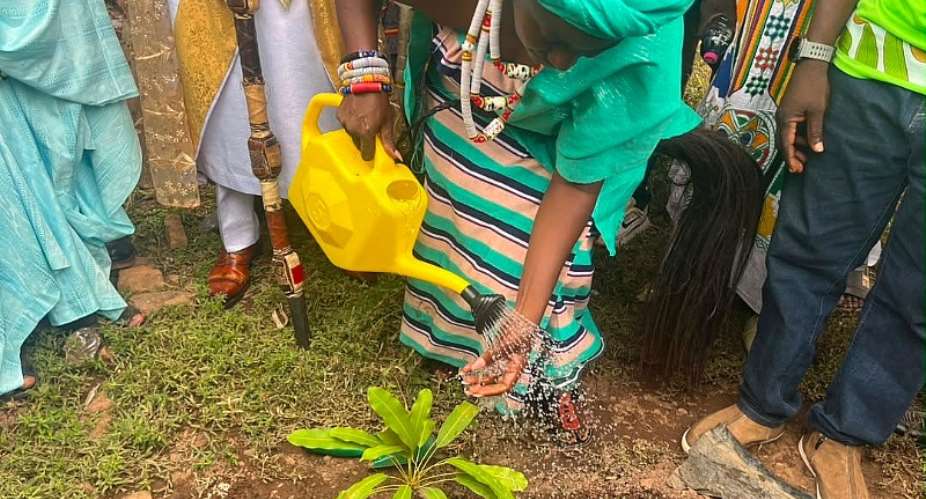
The Global Shea Alliance (GSA) has commemorated this year’s Shea Day with a renewed appeal for urgent, collective action to restore and protect Africa’s rapidly declining shea parklands.
Speaking at the event in Buipe in the Savannah Region, a speech delivered on behalf of Mr Aaron Adu, Managing Director of the GSA, underscored that safeguarding shea resources is essential for sustaining rural livelihoods, preserving biodiversity and securing the long‑term future of the shea industry.
Shea Day forms part of GSA’s annual Shea Month campaign, held every July to mobilise governments, traditional authorities, local communities, development partners, researchers and private sector actors behind efforts to protect the shea ecosystem.
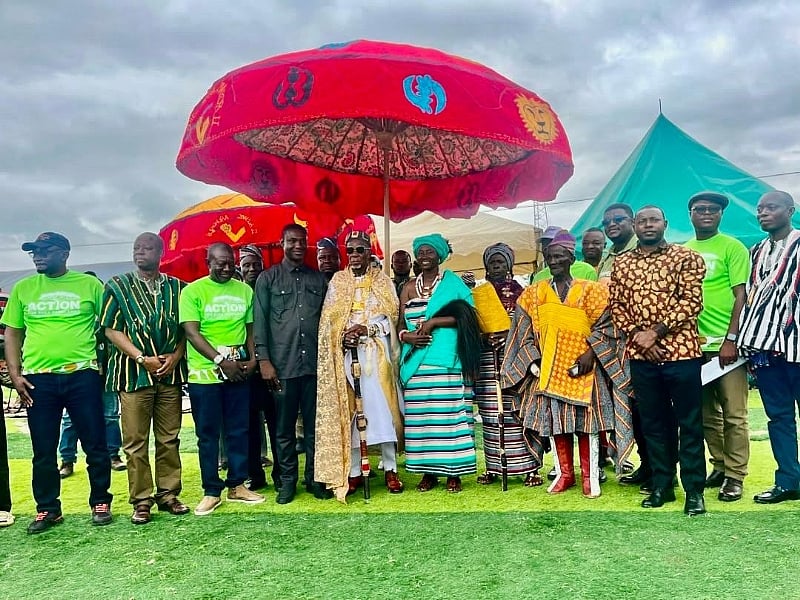
This year’s celebration brought together a wide range of stakeholders including traditional leaders, government officials, development partners, researchers, private sector players and women working across the shea value chain. Participants also planted shea seedlings as part of the day’s activities.
Under the Shea Month programme, the GSA and its partners plan to plant 900,000 shea seedlings, including improved grafted varieties, conduct community sensitisation campaigns across the shea belt, expand online advocacy and organise community events to promote restoration and conservation.
Delivering Mr Adu’s speech, Mr Iddi Zakaria, Ghana’s Representative on the GSA Board, said the celebration was not only to honour the shea tree but to acknowledge its immense contribution to generations of communities—especially women whose livelihoods depend on the shea industry.
He warned that West Africa is losing an estimated eight million shea trees every year due to population growth, agricultural expansion, bushfires, unsustainable tree removal and climate change. If the trend continues, he said, global demand for shea will outstrip supply by 2044, threatening biodiversity, rural economies and millions of women whose incomes rely on the shea value chain.
Mr Adu highlighted GSA’s Action for Shea Parklands initiative, which aims by 2030 to nurture 10 million shea and native trees, restore four million hectares of parklands, empower 10 million women to sustainably manage landscapes and support 10 countries to strengthen policies protecting the shea sector.
He stressed: “Every seedling planted today represents hope for tomorrow. Every mature shea tree protected represents a livelihood secured. Every community that joins this movement brings us one step closer to reversing the decline of Africa’s shea landscapes.”
He expressed appreciation to development partners including the United Nations Development Programme, Green Climate Fund, French Development Agency and the Mastercard Foundation, as well as national institutions such as the Forestry Commission, Tree Crops Development Authority and the Office of the President for their continued support.
Speaker of Parliament, Mr Alban Sumana Kingsford Bagbin, in a speech delivered on his behalf, described shea as one of Ghana’s most strategic natural resources with vast untapped economic potential. He urged the country to move beyond exporting raw nuts and invest in value addition—processing shea into butter, cosmetics, pharmaceuticals and confectionery for domestic and international markets.
Dr Hugh Brown, Chief Executive Officer of the Forestry Commission, commended traditional authorities, women collectors and processors, nursery operators, farmers and local communities for their efforts in restoring degraded landscapes and protecting shea resources. He called for deeper collaboration to conserve biodiversity, strengthen climate resilience and expand economic opportunities through sustainable shea production and value addition.
Central Gonja District Chief Executive, Mr Mahama Fuseini, emphasized the need for strong partnerships to promote sustainable shea production, empower women and young people and expand market opportunities to improve household incomes.
Buipewura Abdulai Jinapor II, Paramount Chief of the Buipe Traditional Area, highlighted the cultural and economic importance of shea, describing it as an integral part of the heritage and livelihoods of the Gonja people. He urged communities to prevent bushfires, protect young shea trees and adopt sustainable land management practices.
He commended the GSA and its partners for their continued efforts to restore and protect shea parklands.

 Tiktok activist ‘mama one’ granted Gh¢50,000 bail over alleged offensive remarks...
 "Arrest contractors of Achimota–Ofankor road over potholes" – Kofi Gharbin urges...
 'I am ready to lead Ashanti region NPP with less talk and more action' — COKA
 'NDC said they did not need too many loans, but are now borrowing heavily' — Osa...
 Chairman Wontumi’s 20-year sentence is a clear case of selective justice — Adoma...
 Ghana’s public debt stock hits GH¢720.8bn, equivalent to 45.1% of GDP — BoG
 Ghana to replace periodic education surveys with real-time data system
 Bank of Ghana keeps policy rate unchanged at 14%
 Wontumi's 20-year sentence raises concerns about proportionality and fairness — ...
 Describing me as the worst-performing MP is demotivating and dangerous — Stephen...

