





Mr. Patrick Apoya, Chief Executive Officer of SkyFox Limited, on Monday said Ghana’s sanitation challenge is less about money and technology and more about governance, social enforcement, and accountability.
Mr. Apoya argued that the fastest pathway to Open Defecation Free (ODF) status is to formally integrate chiefs and clan heads into WASH governance, financing, and bylaw enforcement.
“The crisis persists in districts where formal state enforcement is chronically under-resourced and socially distant. Environmental Health Officers cannot be in every household.
“But the chief’s directive and authority over land and community wellbeing, or a clan head’s ability to withhold communal privileges, carries an immediacy that a court summons cannot replicate,” Mr. Apoya stated.
The Media Coalition Against Open Defecation, as part of its nationwide accountability activation to track how Metropolitan, Municipal, and District Chief Executives (MMDCEs) are delivering on the government's new directive making sanitation a Key Performance Indicator, has identified the role of traditional authorities and religious leaders as key for the realization of President John Dramani Mahama's directives.
Speaking on the role of traditional authorities in the realization of the directives, Mr. Apoya emphasizes that Ghana operates a dual governance system, adding that the two systems rarely run on the same operational track at the community level, yet behaviour change happens in the social space that traditional authority controls.
The 1992 Constitution and the Chieftaincy Act, 2008 (Act 759) recognize chieftaincy as a distinct source of authority, while the Local Governance Act, 2016 (Act 936) vests statutory sanitation functions in the MMDA and the Chief Executive.
“Where the cultural legitimacy and mobilization authority of traditional leaders are formally integrated, we see higher community trust, socially effective bylaw enforcement, more traceable community WASH financing, better loan recovery, and sustained ODF status,” he stated.
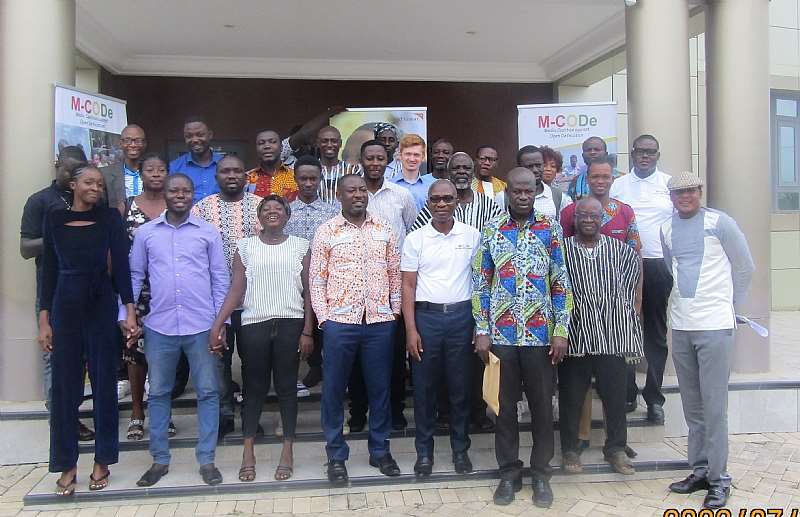
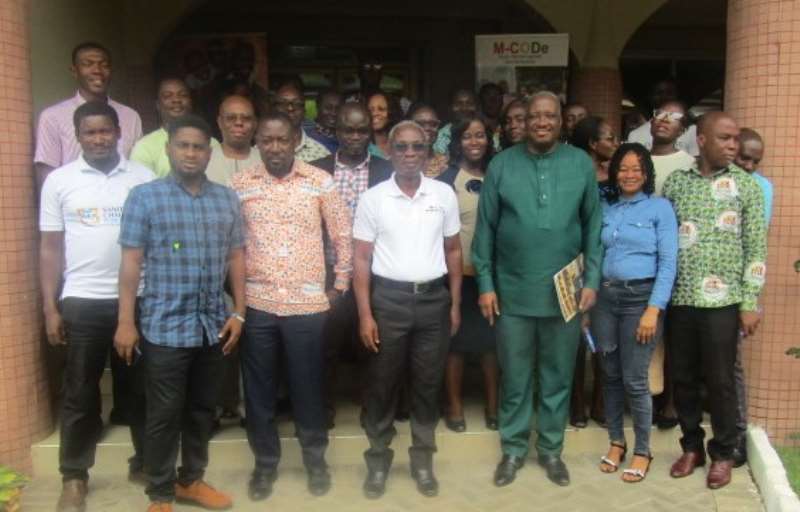
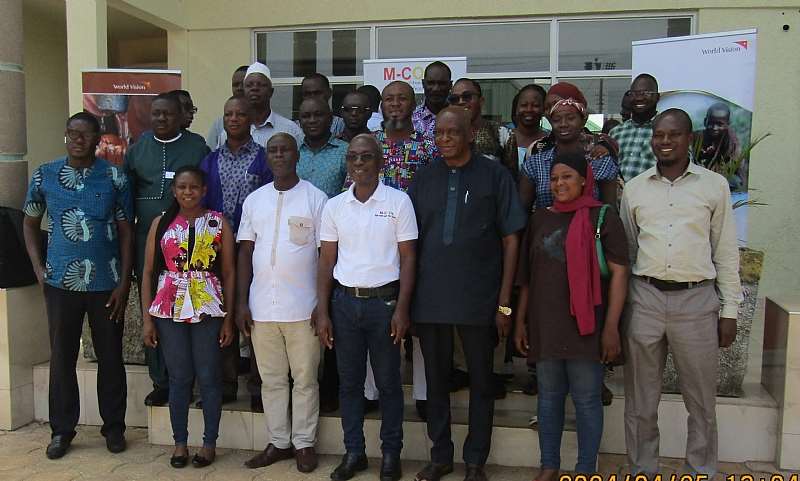
The Media Coalition Against Open Defecation (M-CODe), with support from World Vision Ghana, has rolled out a one-week regional accountability activation from July 20th to 25th to independently track how MMDCEs are delivering on the government's new directive to make sanitation a Key Performance Indicator.
Under the theme “Institutionalizing Sanitation Performance,” the exercise marks the first phase of M-CODE’s revitalization agenda and positions the media as the accountability bridge between government, traditional authorities, local assemblies, and citizens in the push to achieve a clean environment and end open defecation.
The One-Week Regional Accountability Framework has been tailored to regional governance structures to maximize impact, as teams will assess budget allocation, infrastructure delivery, enforcement of by-laws, community sensitization, and coordination between assemblies and religious and traditional authorities.
The first phase of the projects covers Upper East, Northern, Western, Greater Accra, Upper West, and Ashanti.
Mr. Apoya, making a strong case for traditional leaders to play a vital role, noted that community entry co-convened by a chief or clan head signals local sanction rather than an imposed project, adding that traditional authorities can also nominate natural leaders and WASH committee members to improve legitimacy.
He said instead of relying only on prosecution, assemblies can use chief-convened hearings, public naming at the durbar of non-compliant households, and proportionate withholding of communal privileges as first-line measures. Formal prosecution then becomes the last resort.
“Traditional structures already run trusted susu and levy systems. With co-signatories and public reconciliation, they can serve as collection and oversight points for toilet revolving funds and sanitation levies, reducing leakage,” he said.
Mr. Apoya also indicated that when a chief or clan head is visibly associated with a sanitation credit scheme, default carries a reputational cost. Early mediation by traditional authorities can also preserve borrower relationships and the fund’s revolving capacity.
Because traditional structures remain after NGOs exit, they can serve as permanent custodians of ODF through periodic verification walks and by keeping sanitation on the agenda of town and area council meetings.
Mr. Apoya said the value of the proposition will only be realized if it is converted into reportable indicators within the District Composite Budget and DACF/UDG reporting framework.
Mr Francis Ameyibor, M-CODe National Convenor explained that the intervention seeks to position the media as the accountability bridge between government, traditional authority, local assembly, and citizens across the country, with a sharp focus on ending Open Defecation (OD).
Mr. Ameyibor explained that with sanitation elevated to a KPI, the conversation moves from awareness to accountability, and the media’s role, as framed by M-CODE, is to ensure that budgets are not just announced but spent; that by-laws are not just passed but enforced; and that traditional and local leaders are not just present but performing.
He, therefore, appealed to state and non-state actors, development partners, media outlets, traditional and religious leaders, environmental service providers, and the general public to support M-CODe with funds and logistics to ensure the success of the project in the best interest of everyone living in Ghana.
Mr. Yaw Attah Arhin, WASH Technical Specialist at World Vision Ghana said this media-led accountability week ensures that commitments translate into measurable results for the most vulnerable communities.
Mr. Attah Arhin stressed that the week is designed to deliver three immediate outcomes: increased public awareness that sanitation is now a measurable MMDCE performance metric, not a discretionary activity.

 ‘Father-for-all please pardon Chairman Wontumi to increase your glory' - Former ...
 [Full Text] Minority Caucus in Parliament react to High Court conviction of Wont...
 Tiktoker ‘bawumia ba’ re-arrested over alleged offensive conduct
 Minority criticises court for piercing Akonta Mining's corporate veil and holdin...
 Wontumi's conviction was based on assumptions with no evidence — NPP alleges
 Galamsey prosecutions should not end with Wontumi's sentence — Prof Agyemang-Dua...
 Attorney General was very efficient in Wontumi's Samreboi case — Martin Kpebu
 Ghana has lost a statesman among traditional rulers — Mahama mourns Yaa Naa
 Mahama Rallies ECOWAS: “Differences Must Not Divide West Africa”
 “I’ll Put My Life on the Line!” — Appiah‑Kubi Questions Basis of Wontumi’s Galam...

