




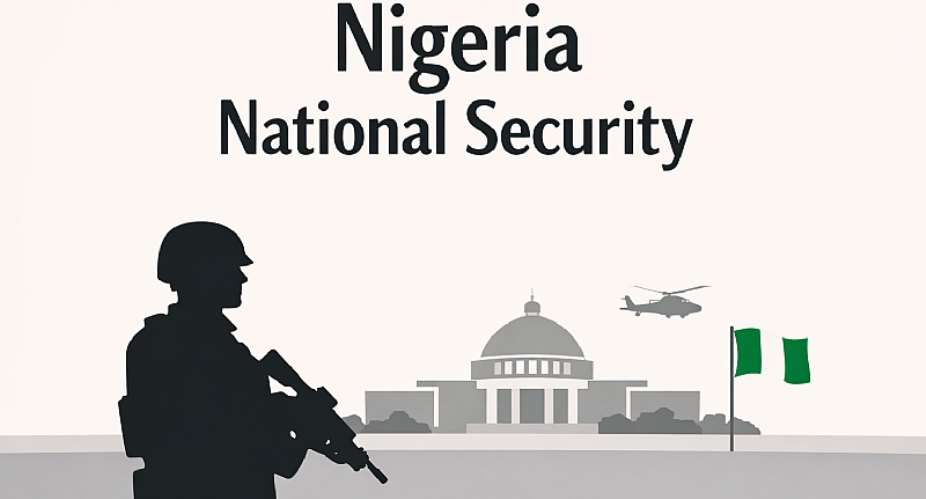
For decades, national security was understood largely in military terms. Governments invested in soldiers, intelligence services, law enforcement agencies, and weapons to defend the state against external aggression and internal threats. While these remain indispensable, the digital age has fundamentally altered the security landscape. Today, one of the most contested battlefields is not a forest, a border, or a trench—it is the information space.
Every minute, millions of Nigerians consume, share, and react to information on social media. Platforms such as Facebook, X, TikTok, Instagram, WhatsApp, and YouTube have become indispensable tools for communication, commerce, education, political engagement, and social interaction. They have democratized access to information and amplified voices that previously went unheard. Yet, these same platforms have also become fertile ground for misinformation, disinformation, hate speech, cybercrime, extremist propaganda, and foreign influence operations.
The implications for national security are profound.
A false rumour shared on social media can spark communal violence before security agencies have time to respond. Manipulated videos and fabricated images can inflame ethnic and religious tensions, deepen political divisions, and erode public confidence in democratic institutions. Terrorist organisations and criminal networks increasingly exploit digital platforms to recruit vulnerable young people, spread extremist narratives, coordinate illicit activities, and glorify violence. Cybercriminals use the same technologies to steal identities, defraud citizens, and compromise critical systems.
These realities demand that we rethink what national security means in the twenty-first century.
Military operations will always remain an essential component of national defence. However, no amount of kinetic action can sustainably address insecurity if the information environment remains vulnerable to manipulation. Winning the battle against terrorism, violent extremism, organised crime, and foreign interference increasingly requires winning the battle for public trust and credible information.
This is why strategic communication should be recognised as a core instrument of national security.
Strategic communication is not propaganda, nor is it government publicity. It is the deliberate, coordinated, and transparent communication of accurate information that helps citizens make informed decisions, counters false narratives, and strengthens public confidence in state institutions. During security emergencies, silence often creates a vacuum that rumours and malicious actors quickly fill. Government must therefore communicate early, consistently, and credibly.
Equally important is the need to strengthen media and information literacy. Every Nigerian with a smartphone has become both a consumer and a publisher of information. This new reality places enormous responsibility on citizens to verify information before sharing it. Schools, universities, media organisations, civil society groups, and government institutions should work together to equip citizens with the skills to identify fake news, recognise manipulated content, and resist online manipulation.
Social media companies also have responsibilities. Governments should engage constructively with digital platforms to address coordinated disinformation campaigns, remove content that incites violence or promotes terrorism within the bounds of the law, and improve mechanisms for crisis communication. Such partnerships must be guided by transparency, accountability, and respect for constitutional rights, particularly freedom of expression. Blanket censorship and indiscriminate restrictions on digital platforms are unlikely to produce sustainable security outcomes. Instead, they risk driving harmful content into less visible spaces while undermining public trust.
Cybersecurity must also become a national priority. As public services, financial systems, and critical infrastructure become increasingly digital, protecting cyberspace is no longer simply an IT issue; it is a national security imperative. Governments, businesses, and citizens alike must embrace stronger cyber hygiene, invest in resilience, and develop the capacity to respond to emerging cyber threats.
Perhaps the most important lesson from recent years is that governments cannot address these challenges alone. National security is no longer the exclusive responsibility of soldiers, police officers, or intelligence agencies. Traditional rulers, religious leaders, journalists, educators, civil society organisations, the private sector, technology companies, and ordinary citizens all have important roles to play in protecting the information environment.
This is the essence of a whole-of-society approach to national security.
Communities are often the first to detect early signs of tension. Religious and traditional leaders frequently possess the credibility to calm emotions before conflicts escalate. Journalists and fact-checkers help separate truth from falsehood. Civil society organisations strengthen accountability and promote dialogue. Young people, who constitute the largest users of social media, can become ambassadors for digital responsibility rather than unwitting amplifiers of misinformation.
For Nigeria, the Office of the National Security Adviser is well positioned to coordinate this broader national effort. Consistent with its statutory mandate to coordinate national security activities and advise the President, the ONSA can provide strategic leadership by developing a National Security Strategic Communication Framework, promoting a National Information Integrity Strategy, strengthening partnerships with state governments and civil society, and improving coordination among security institutions.
A monthly publication by the ONSA could become an important component of this effort. Properly conceived, it would not serve as a publicity bulletin but as a strategic communication platform that explains government policies, promotes national resilience, highlights inter-agency collaboration, counters misinformation with verified information, and fosters informed public discourse on national security issues. Such a publication would help bridge the information gap that often allows rumours, speculation, and hostile narratives to flourish.
The future of national security will depend not only on the strength of our armed forces or the sophistication of our intelligence services but also on the resilience of our society and the integrity of our information ecosystem. In an age where a misleading post can spread across the country within minutes, safeguarding the information space is no longer optional. It is a strategic necessity.
If we are to build a safer, more resilient Nigeria, we must recognise a simple but powerful truth: national security begins not only at our borders but also in the minds of our citizens and in the information they receive, trust, and share.
Wole Oni is a public affairs analyst and a development communication specialist. He writes from Abuja.

 'I would have loved to have experienced Asiedu Nketiah remain NDC National Chair...
 NDC not a principled political party over Supreme Court nominations — Afenyo-Mar...
 Miracles Aboagye’s arrest: EOCO is ‘unprofessional, are liars’ - Nana B
 Black Stars can win AFCON, World Cup if team and coach is maintained – Mahama
 GNAT, NAGRAT and PRETAG threaten strike over unresolved conditions of service
 GHS55m probe: Miracles is not a threat; NPP using national communicator ambition...
 Two Ghanaians petition ICC to probe Xenophobic attacks, killings in South Africa
 Mahama nominates Tony Forson, two Appeal Court Justices to Supreme Court
 Creating new tribunal system to compete with existing courts will create chaos i...
 Tribunal system another new bureaucracy; digilize existing courts — Afenyo-Marki...

