




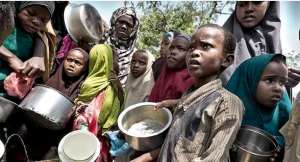
Across the world, poverty is measured in many ways—low income, inadequate housing, unemployment, and limited access to education and healthcare. Yet, for millions of people, the most painful and immediate expression of poverty is hunger. An empty stomach is often the first and harshest reminder of economic hardship.
Unlike many other effects of poverty that develop over time, hunger demands attention every day. A person who has not eaten cannot concentrate, work efficiently, or study effectively. Children struggle to learn in school, while adults find it difficult to earn a living, making hunger both a humanitarian crisis and a major obstacle to economic development.
The impact of hunger extends far beyond discomfort. For children, chronic malnutrition can result in stunted physical growth, impaired brain development, and poor academic performance. These early disadvantages often have lifelong consequences, reducing future employment opportunities and earning potential.
Adults are equally affected. Hunger weakens the body, lowers productivity, and increases vulnerability to disease. Farmers may lack the strength to cultivate their fields, traders may be unable to sustain long working hours, and workers across every sector experience reduced performance. As illnesses become more frequent, families are forced to spend scarce resources on healthcare, driving them even deeper into poverty.
Hunger also compels families to make difficult decisions. Parents may reduce the number of daily meals, withdraw children from school to contribute to household income, sell productive assets, or take on unsustainable debt simply to feed their families. While these measures may provide temporary relief, they often undermine long-term financial security and perpetuate the cycle of poverty.
The consequences of widespread hunger are felt across entire communities. Lower productivity slows economic growth, food insecurity fuels migration, and increasing hardship can contribute to social tensions. Hunger is therefore not only a personal tragedy but also a national development challenge.
The relationship between poverty and hunger is self-reinforcing. Poverty limits access to food, hunger weakens health and productivity, reduced productivity lowers income, and lower income leads to even greater poverty. Breaking this cycle requires addressing hunger as a priority.
Many countries, including Ghana, have introduced programmes aimed at reducing food insecurity. Initiatives such as the Ghana School Feeding Programme help ensure that children receive nutritious meals, improving school attendance and learning outcomes. The Livelihood Empowerment Against Poverty (LEAP) programme provides financial assistance to vulnerable households, enabling them to meet basic needs, including food.
Beyond emergency assistance, sustainable solutions are essential. Investing in modern agriculture, improving food storage to reduce post-harvest losses, creating employment opportunities, strengthening nutrition education, expanding social protection programmes, and improving market access can all contribute to long-term food security.
Ultimately, the fight against poverty begins with ensuring that people have enough to eat. When hunger is reduced, children can learn, adults can work productively, families can plan for the future, and communities can thrive. Addressing hunger is not simply an act of compassion—it is an investment in human potential and sustainable national development.


 Judge halts Ex-NAFCO CEO's trial until ruling on seized phones
 Manhyia South MP who resisted arrest reports to EOCO a day after arrest warrant ...
 "Show us evidence" —Upper West teacher unions demand proof of payment before end...
 Adenta: Bolt driver jailed 25 years for cutlass attack and robbery of beautician...
 EOCO drags Manhyia South MP to former law firm, residence for search
 BNI investigates Yaw Ampofo Ankrah over alleged World Cup visa facilitation sche...
 EOCO arrests three over drone flights at headquarters during arrest, probe of Ma...
 Police arrest three suspected kidnappers over Yendi abduction
 Prof Emmanuel Osei Sarpong appointed Acting NSA Director-General
 NSA Boss Yaw Ampofo Ankrah suspended over US$623,000 World Cup visa allegations


