




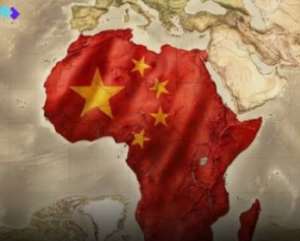
A builder's welcome, a creditor's grip
Roads, dams, mines, fibre-optic networks, stadiums, power plants and industrial zones: across the African continent, China has built a reputation as the partner who shows up and delivers. Beijing lends finances, constructs and inaugurates, and African leaders routinely praise the resulting "Sino-African friendship" at ribbon-cutting ceremonies. Behind that cooperative image, however, a more demanding pattern has taken shape, one in which infrastructure financing gradually converts into lasting financial and strategic dependency.
African governments borrow to build what their economies genuinely need, but the price of that borrowing is a shrinking margin of manoeuvre. China rarely lends in isolation. Its state-linked institutions, chiefly the Export-Import Bank of China, the China Development Bank, the Bank of China and the Industrial and Commercial Bank of China, finance the project, a Chinese contractor typically wins the construction tender, and the recipient state is left holding both the finished asset and the accompanying debt. Beijing, in turn, secures repayment, market access and, in a growing number of cases, a foothold in the resource sector underpinning the loan.
West Africa: infrastructure needs, deepening exposure
Senegal illustrates the pattern clearly. Loans from Chinese institutions financed a sequence of major projects over the past several years, including the Diamniadio data centre, an industrial park, road and viaduct construction, and rural water infrastructure, building toward a multibillion-dollar exposure to Chinese creditors by 2025. Senegal's wider debt position has drawn separate scrutiny this year after a hidden-debt accounting scandal pushed total public debt estimates for 2024 to roughly 25 billion dollars, well above earlier official figures, with debt service obligations projected to roughly double in 2026. The specific weight of Chinese bilateral lending within that broader debt stock underscores a dynamic playing out across the region: each new loan tranche narrows a government's fiscal choices for the following decade.
Côte d'Ivoire follows a comparable trajectory. Chatham House research has identified China as a major lender to Abidjan, with billions of dollars in cumulative Chinese loans financing strategic infrastructure since the early 2000s, ranking among Beijing's largest commitments in West Africa. Chinese construction firms operating in the country post substantial annual revenues on the resulting projects. The arrangement is not simply lending, it is a closed loop: financing opens the door to contracts, contracts install Chinese firm’s in-country, and those firms anchor a long-term commercial and strategic presence that outlasts any single loan agreement.
Mali and Guinea: when debt meets the minerals of tomorrow
In Mali, the dependency dynamic takes on a distinctly extractive character. Chinese lithium group Ganfeng has steadily expanded its control of Mali's lithium sector through Mali Lithium, moving from a minority position toward majority and eventually near-total ownership, while a comparable pattern of growing Chinese influence has emerged around the Goulamina lithium mine. Lithium's centrality to global battery production and the energy transition makes this more than a routine mining deal; it positions Beijing at the source of a mineral increasingly treated as strategically indispensable.
Guinea offers a parallel story built around iron ore rather than lithium. Guinea's debt to Chinese creditors has climbed into the billions, closely tied to financing around the Simandou mining project, one of the world's largest untapped iron-ore deposits. Chinese state bank ICBC has taken part in syndicated financing linked to Simandou-related acquisitions, reinforcing a pattern in which infrastructure lending, sovereign debt and access to a strategically vital mineral converge in a single project.
Central Africa: sovereignty under quiet pressure
Cameroon stands out as one of the more exposed states in Central Africa, with its debt to Chinese creditors rising year over year and Chinese firms, China First Highway Engineering Company prominent among them, securing road contracts worth hundreds of billions of CFA francs. Independent debt trackers have placed Cameroon among the African countries carrying several billion dollars in Chinese debt, a level of exposure that leaves the government managing an uncomfortable trade-off each budget cycle: honor Chinese repayment schedules, or protect spending on civil servants, subsidies and public services. A creditor confident that a debtor state has limited alternatives can afford patience, and patience, in this context, is itself a form of leverage.
The Democratic Republic of Congo shows the pattern at its most complete. Chinese financing there spans the Inga II hydropower dam, ring-road and avenue construction in Kinshasa, an industrial-city development project valued in the billions, and the long-running Sicomines arrangement tied to copper and cobalt extraction around Kinsevere. With cumulative Chinese investment stock and annual construction revenue both running into billions of dollars, the DRC illustrates how Beijing can secure returns on two fronts simultaneously, financial repayment on one side, control over strategic mineral supply chains on the other, from a single set of interlocking agreements.
Even smaller economies are not exempt. Gabon's debt to Chinese creditors has fluctuated but remained a persistent feature of its external debt profile, compounded by Fitch's recent downgrade of Gabon's sovereign rating amid rising fiscal stress. In the Central African Republic, comparatively modest Chinese investment has generated construction revenues for Chinese firms many times larger than the initial outlay, a ratio that shows how little capital is required to establish outsized leverage in a fragile fiscal environment.
The soft diplomacy that accompanies the hard numbers
Chinese engagement in Africa is deliberately framed in the language of cooperation, partnership and South-South solidarity, and gestures reinforce that framing: medical equipment donations, Red Cross support, multimedia rooms, vehicles and food aid accompany the billions in loan financing. These gifts cost little next to the scale of the loans and contracts they sit beside, but they sustain a narrative of a benevolent partner untethered from the political conditionality’s historically associated with Western lending.
The absence of explicit political conditions, however, does not mean the absence of leverage. It simply relocates into contract terms, repayment deadlines, technical dependency, data access arrangements and mining concessions. A government carrying substantial debt to a single creditor will, understandably, hesitate before challenging an unfavorable contract clause, contesting a concession, or opposing that creditor's position in an international forum.
A warning already written
The clearest illustration of where unmanaged dependency can lead remains Sri Lanka's Hambantota port, handed over to China Merchants Group for 99 years in 2017 after Colombo could no longer service the Chinese loans that built it, in exchange for 1.12 billion dollars. Across a dozen African states now carrying multibillion-dollar exposure to Chinese creditors, from Senegal and Côte d'Ivoire in the west to Cameroon and the DRC in Central Africa, the Hambantota precedent functions less as a prediction than as a boundary condition worth remembering.
The infrastructure Africa is building with Chinese financing is, in most cases, genuinely needed. The question African governments cannot keep deferring is what portion of tomorrow's sovereignty is being pledged to secure today's roads, dams and mines, and whether that trade can still be renegotiated before repayment deadlines make the terms of the relationship irreversible. The pattern documented across West, Central and East African debt books this year is not inevitable; it reflects a power imbalance in how these deals are struck, and power imbalances, unlike geography, can be corrected.
References
Chatham House, "The response to debt distress in Africa and the role of China," https://www.chathamhouse.org/node/30877/nojs
Anadolu Agency, "Africa makes up over half of all countries with highest debt to China," https://www.aa.com.tr/en/economy/africa-makes-up-over-half-of-all-countries-with-highest-debt-to-china/3594478
Financial Afrik, "Debt: Senegal meets the March 13 deadline by paying 471 million dollars to its creditors," https://www.financialafrik.com/en/2026/03/15/debt-senegal-meets-the-march-13-deadline-by-paying-471-million-dollars-to-its-creditors/
Ecofin Agency, "Senegal's Hidden Debt: Accounting Crisis, Not Vanished Capital," https://www.ecofinagency.com/news/1712-51472-senegal-s-hidden-debt-accounting-crisis-not-vanished-capital
Heinrich Böll Stiftung, "Hidden Billions: The Scandal of Senegal's Concealed Public Debt," https://www.boell.de/en/2025/11/16/hidden-billions-scandal-senegals-concealed-public-debt
FinDev Lab, "What we learn from the new International Debt Statistics on the hidden debt of Senegal," https://findevlab.org/what-we-learn-from-the-new-international-debt-statistics-on-the-hidden-debt-of-senegal/
ISS African Futures, "China's overseas lending and debt sustainability in Africa," https://futures.issafrica.org/blog/2023/Chinas-overseas-lending-and-debt-sustainability-in-Africa.html
Wikipedia, "Economy of Gabon" (external debt and trade data), https://en.wikipedia.org/wiki/Economy_of_Gabon

 EOCO questioned Miracles Aboagye over GH¢5million, not GH¢55million – Sammi Awuk...
 'I do not take any enjoyment, pride in prosecuting people if they have done no w...
 Father arrested for allegedly forcing her 16-year-old daughter to sleep with men...
 Female ward assistant in court over alleged GH¢1.7million military recruitment s...
 "He stood for peace, good neighborliness" — Bawku Naba mourns demise of Yaa Naa ...
 Mahama targets completion of Ho Sports Stadium before Ghana's 70th anniversary
 'Repression will not silence Ghanaians' — Richard Ahiagbah tells Mahama over Tik...
 'I would have loved to have experienced Asiedu Nketiah remain NDC National Chair...
 NDC not a principled political party over Supreme Court nominations — Afenyo-Mar...
 Creating new tribunal system to compete with existing courts will create chaos i...

