




"We, the G7 foreign ministers of Canada, France, Germany, Italy, Japan, the United Kingdom, and the United States of America, and the High Representative of the European Union, urge the Rapid Support Forces and allied armed groups to immediately cease any action likely to lead to further atrocities or endanger civilians in El-Obeid, including drone strikes and impediments to humanitarian access," the statement reads.
The leaders also called on all parties, including the Sudanese army, to cease hostilities, allow aid access and engage in good-faith talks.
"Following the atrocities committed during the Rapid Support Forces' siege and attack on El Fasher, we remain gravely concerned about alleged severe violations of international humanitarian law and international human rights law across Kordofan and Darfur regions, as well as Blue Nile in Sudan."
UN warns of an 'imminent risk of mass atrocities' in Sudan's Kordofan
The group urged the Rapid Support Forces, as well as the Sudanese Armed Forces and allied armed groups "to abide by their obligations under the rules of international humanitarian law and international human rights law, as applicable" as "civilians must be protected".
Ministers also backed United Nations efforts to de-escalate the crisis, calling on the UN Security Council to expand the Darfur arms embargo to the whole of Sudan.
They urged external players to halt military and financial support to the warring sides, and vowed to promote accountability for violations while supporting Sudan's unity and democratic aspirations.
Sudan: Three years of war and new reports of meddling by Ethiopia
Spiralling crisis
Sudan has been at war since April 2023, with reports of human rights violations and crimes against humanity.
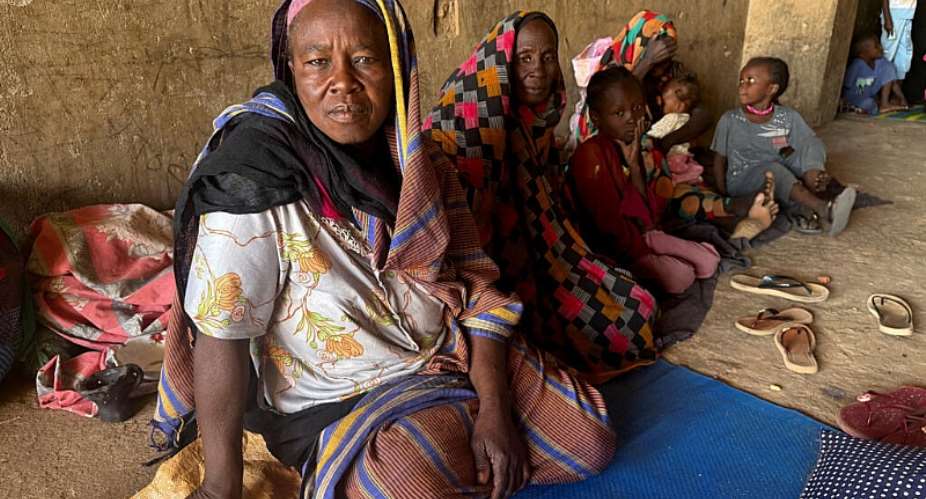
The war between Sudan's army and the paramilitary Rapid Support Forces, now in its fourth year, has displaced millions and devastated much of the country. Aid agencies have repeatedly warned of worsening food insecurity and limited humanitarian access.
The conflict has been described by the UN as the world's worst humanitarian crisis.
Sudan's RSF paramilitaries accused of crimes against humanity in El Fasher
A senior World Food Programme (WFP) official said on Tuesday that the country now risks sliding backwards into deeper hunger, as conflict, aid funding cuts and rising agricultural costs driven by disruption linked to the Iran war threaten to reverse gains made after famine took hold in parts of Sudan.
Around 5 million people are facing emergency or catastrophic levels of hunger, even after an intensive aid response helped reduce the number of people in famine-like conditions, Carl Skau, the WFP's acting executive director, told Reuters.
"It's a massive crisis, both in terms of numbers, but also the gravity," he said, adding that more than 100,000 people were still facing famine-like conditions, placing them in the highest level of the UN-backed IPC hunger classification.
Across Sudan, nearly 19.5 million people face high levels of acute food insecurity, according to the IPC.
(with Reuters)


 'I would have loved to have experienced Asiedu Nketiah remain NDC National Chair...
 NDC not a principled political party over Supreme Court nominations — Afenyo-Mar...
 Miracles Aboagye’s arrest: EOCO is ‘unprofessional, are liars’ - Nana B
 Black Stars can win AFCON, World Cup if team and coach is maintained – Mahama
 GNAT, NAGRAT and PRETAG threaten strike over unresolved conditions of service
 GHS55m probe: Miracles is not a threat; NPP using national communicator ambition...
 Two Ghanaians petition ICC to probe Xenophobic attacks, killings in South Africa
 Mahama nominates Tony Forson, two Appeal Court Justices to Supreme Court
 Creating new tribunal system to compete with existing courts will create chaos i...
 Tribunal system another new bureaucracy; digilize existing courts — Afenyo-Marki...

