




Introduction: The Old Question That Refuses to Go Away
Few subjects generate as much confidence and as many disagreements as discipline.
Mention a child's challenging behaviour in almost any gathering, and solutions will arrive with remarkable speed. Some will advocate stricter punishment. Others will argue for counselling and support. A few will confidently explain that the problem is that "children of today are different."
Curiously, every generation seems to say this about the next generation.
Yet beneath the debates lies an important question: Does punishment change behaviour in the way we think it does?
The answer, according to decades of research, is more complicated than many people imagine.
Punishment and Discipline Are Not the Same Thing
One of the biggest misconceptions in discussions about behaviour is the tendency to treat punishment and discipline as identical concepts.
They are not.
Punishment focuses primarily on imposing consequences for undesirable behaviour. Discipline, by contrast, aims to teach, guide, and develop self-regulation.
The distinction matters.
A child may stop a behaviour because punishment makes it unpleasant. However, stopping a behaviour is not necessarily the same as learning a better alternative. Behavioural scientists have long observed that while punishment may suppress behaviour temporarily, it often fails to teach replacement skills (Alberto & Troutman, 2022).
In other words, punishment can answer the question, "What should I stop doing?" while leaving unanswered the equally important question, "What should I do instead?"
Why Punishment Appears to Work
If punishment has limitations, why is it so widely used?
The answer is surprisingly simple.
Because it often produces immediate results.
A learner is reprimanded and becomes quiet. A child is punished and complies. A student is suspended and is no longer disrupting the classroom.
From the perspective of adults, the problem appears solved.
The difficulty is that immediate behavioural change is not always the same as long-term behavioural improvement. Research suggests that punishment frequently changes behaviour in the moment without necessarily changing the factors that caused the behaviour in the first place (American Psychological Association, 2023).
It is rather like turning off a warning light in a car without investigating why it came on.
The light disappears.
The underlying issue may not.
The Hidden Costs of Excessive Punishment
Punishment can carry unintended consequences, particularly when it is frequent, inconsistent, or harsh.
Some children become fearful rather than reflective. Others become resentful rather than responsible. Some simply become better at avoiding detection.
Perhaps most concerning is the possibility that repeated punishment can damage relationships between adults and children. When learners perceive adults primarily as sources of correction rather than support, trust may begin to erode.
This is significant because positive relationships are among the strongest predictors of behavioural improvement in educational settings (Gregory et al., 2021).
Children are often more willing to accept guidance from adults they trust.
What Emotional and Behavioural Disorders Teach Us
The limitations of punishment become particularly apparent when Emotional and Behavioural Disorders (EBD) are involved.
Consider a learner experiencing severe anxiety. Punishing avoidance may not eliminate the anxiety driving the behaviour.
Similarly, a child struggling with emotional regulation may require support in developing coping strategies rather than repeated sanctions for emotional outbursts.
Modern understandings of EBD increasingly emphasise that behaviour is influenced by interactions between biological, psychological, social, and environmental factors (Mash & Wolfe, 2023). Consequently, effective interventions often address underlying causes rather than focusing exclusively on observable behaviours.
This perspective aligns closely with the Bioecological Model, which highlights how behaviour emerges through interactions between individuals and their environments (Bronfenbrenner & Morris, 2006).
The Difference Between Fear and Self-Control
There is an important distinction between compliance and self-regulation.
A child who behaves appropriately because an adult is present may be demonstrating compliance.
A child who behaves appropriately even when no one is watching is demonstrating self-regulation.
The second outcome is ultimately the goal of education and parenting.
True discipline involves helping individuals develop internal controls rather than relying exclusively on external controls. This requires opportunities to practise decision-making, problem-solving, emotional regulation, and reflection.
Unfortunately, these processes take longer than punishment.
Human development has always had a frustrating tendency to favour patience over shortcuts.
What Actually Promotes Positive Behaviour?
Evidence increasingly supports approaches that combine clear expectations with positive relationships and skill development. Learners benefit when adults communicate boundaries consistently, acknowledge progress, and teach emotional and social competencies explicitly (Durlak et al., 2022).
This does not mean abandoning consequences. Consequences remain important. However, consequences are most effective when they are logical, proportionate, and connected to learning rather than humiliation.
A learner who damages property may help repair or replace it. A learner who harms a relationship may participate in restoring it.
Such responses focus not merely on punishment but on growth.
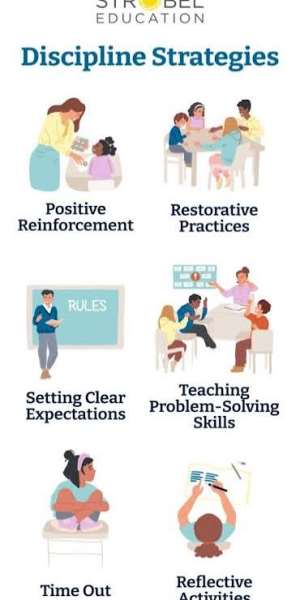
The Rise of Restorative Approaches
Across many educational systems, restorative practices are gaining attention. Rather than asking, "Who is to blame and how should they be punished?" restorative approaches ask:
Who has been affected?
What harm has occurred?
How can the harm be repaired?
Research suggests that restorative approaches can improve school climate, strengthen relationships, and reduce behavioural incidents when implemented effectively (Wachtel, 2024).
These approaches do not eliminate accountability.
They redefine it.
A Slightly Uncomfortable Observation
Many adults believe that strict punishment built their character. This may be true.
However, it is also worth considering another possibility.
Perhaps what shaped them most positively was not the punishment itself, but the caring adults who remained supportive despite mistakes.
Human beings often remember consequences. They remember relationships even more.
The Ghanaian Conversation
In Ghana, discussions about discipline frequently intersect with cultural values concerning respect, responsibility, and communal harmony. These values remain important and should not be discarded.
The challenge is ensuring that disciplinary practices reflect both cultural values and contemporary evidence about child development and behaviour.
Respect and compassion are not opposing ideas. Accountability and support are not enemies. Indeed, the most effective approaches often combine both.
Conclusion: Beyond Punishment
The question is not whether behaviour should have consequences.
It should.
The real question is whether our responses help individuals become more capable, responsible, and emotionally healthy.
Punishment may stop behaviour temporarily.
Discipline seeks to transform behaviour sustainably.
As understanding of Emotional and Behavioural Disorders continues to evolve, perhaps the future lies not in choosing between firmness and compassion, but in recognising that effective support requires both.
After all, changing behaviour is one thing.
Helping a person grow is quite another.
Bibliography
Alberto, P. A., & Troutman, A. C. (2022). Applied behavior analysis for teachers (10th ed.). Pearson.
American Psychological Association. (2023). Evidence-based approaches to behaviour management and child development. APA.
Bronfenbrenner, U., & Morris, P. A. (2006). The bioecological model of human development. In W. Damon & R. M. Lerner (Eds.), Handbook of child psychology (6th ed., pp. 793–828). Wiley.
Durlak, J. A., Domitrovich, C. E., Weissberg, R. P., & Gullotta, T. P. (2022). Handbook of social and emotional learning: Research and practice (2nd ed.). Guilford Press.
Gregory, A., Clawson, K., Davis, A., & Gerewitz, J. (2021). The promise of restorative practices to transform teacher–student relationships and achieve equity in school discipline. Journal of Educational and Psychological Consultation, 31(1), 1–27.
Mash, E. J., & Wolfe, D. A. (2023). Abnormal child psychology (9th ed.). Cengage.
Wachtel, T. (2024). Defining restorative. International Institute for Restorative Practices.
Website: https://jaansahpublications.com
By J. A. Ansah


 How IGP Yohuno led Police team to rescue victim, arrest four kidnappers in Assin...
 Akufo-Addo would have used Accra-Kumasi expressway for galamsey – Mahdi Gibrill
 Nigeria's Dangote refinery launches continent's biggest IPO
 Accra-Kumasi Expressway to cut travel time to 2hours, drive 120km per hour — Mah...
 'Our own money $2billion ready, we have not gone to borrow money from anywhere' ...
 Founder’s Day September 21 declared public holiday
 Council of State was not qualified to determine prima facie case against Torkorn...
 'Grounds for removal of Chief Justice and justice of superior court shallow, eph...
 Don't be a Bar that flips on principles but a Bar that is consistent — AG tells ...
 Prostate cancer may show no symptoms until advanced stage – Urologist warns


