




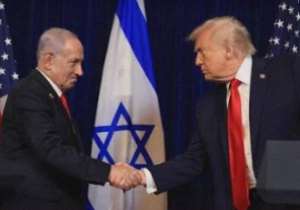
Months before the world learned of tense, expletive-laden phone calls between US President Donald Trump and Israeli Prime Minister Benjamin Netanyahu, a far more consequential rupture was already forming beneath the surface of the US-Israel alliance one centered on Israel's alleged plans to kill the very Iranian officials Washington needed alive to end a war, The New York Times reported on July 2, 2026.
The Core Allegation
Citing multiple current and former US officials, the Times reported that Washington believed Israel may have planned to assassinate Iranian Foreign Minister Abbas Araghchi and Parliament Speaker Mohammad Bagher Ghalibaf in the weeks following an April 8 ceasefire that halted the US-Israel war with Iran, a conflict that had begun on February 28, 2026. So concerned were US officials that they reportedly reached out to governments across the region, asking them to relay warnings to Tehran that its top negotiators could be targeted.
From Legitimate Targets to Indispensable Interlocutors
Officials explained the shift in reasoning to the Times: in the war's opening phase, as Israel worked through much of Iran's senior leadership killing figures including national security chief Ali Larijani and former foreign minister Kamal Kharazi both Araghchi and Ghalibaf could reasonably have been considered legitimate military targets. But once the two men were designated to represent Iran in ceasefire talks, US officials feared that killing either would collapse the negotiations outright and reignite the fighting.
The Mashhad Incident
The report's most vivid detail concerns Ghalibaf's return flight from Islamabad on April 12, following talks with US Vice President JD Vance. Pakistan had provided fighter jet escorts for the Iranian delegation as an added security measure. On the way back, however, Iranian security forces reportedly notified the aircraft of intelligence indicating that two Israeli fighter jets had entered Iranian airspace from Iraq with the apparent intent of striking the plane.
The aircraft diverted and made an emergency landing in Mashhad, in northeastern Iran, and Ghalibaf's delegation completed the journey to Tehran by an eight-hour drive instead. It would not have been Ghalibaf's first brush with death in the conflict he was reportedly pulled from rubble in both the June 2025 twelve-day war and the 2026 war after buildings he was in were struck.
Washington Steps In
According to a Pakistani official cited earlier by Reuters, Islamabad had already warned Washington in March that killing either Araghchi or Ghalibaf would leave Iran with "no one else to talk to," prompting the US to directly ask Israel to remove both men from its target list. US and Middle Eastern officials told the Times that Washington played an especially active role in securing Ghalibaf's removal specifically.
A Deeper Rift Than Recently Understood
The revelations recast the now widely reported Trump-Netanyahu tensions including Trump's public call for Netanyahu to be "more responsible," warning that "too many people have been killed," and separately reported private remarks in which Trump is said to have described the Israeli leader in far harsher terms as the visible tail end of a disagreement that had been building since April. Analysts and the report itself frame the episode as evidence that Washington's and Israel's underlying war aims diverged early and sharply: while the Trump administration needed a negotiated stop to the fighting, Israel's continued targeting of Iran's negotiating team suggested a preference for removing anyone capable of making a deal possible.
Where Things Stand
Neither the White House nor the Israeli government has publicly confirmed the specific claims in the Times report. Washington has since continued pursuing diplomacy with Tehran independent of Israel, culminating in a memorandum of understanding between the US and Iran a track Netanyahu has publicly criticized even as the broader US-Israel relationship has shown further strain over the separate, ongoing conflict in southern Lebanon.
Mustapha Bature Sallama.
Medical/ Science Communicator,
Private Investigator, Criminal investigation and Intelligence Analysis.
International Conflict Management and Peace Building.USIP
[email protected]
+233-555-275-880
Sources
The New York Times, cited via The Times of Israel, "US indirectly warned Iran during talks that Israel might try to kill its top negotiators," July 2–3, 2026
The Jerusalem Post, "US believed Israel planned to kill Iranian negotiators, feared for peace talks," July 2, 2026
Middle East Eye, "NYT: Washington warned Tehran Israel was plotting to kill Araghchi, Ghalibaf," July 2, 2026
The Week, "Did US warn Iran of Israeli's plan to assassinate Ghalibaf, Araghchi?," July 3, 2026
Reuters (cited in above reports), March 2026, on Pakistan's intervention to remove Araghchi and Ghalibaf from Israel's target list

 Transport Ministry defends purchase of diesel locomotives, rejects NPP criticism
 Outdoor air pollution costs Ghana more than GH¢28 billion - UNDP
 Yagbonwura joins Asantehene for fifth Awukudae celebration
 How US lawmaker Carol Ammons traces ancestry to Paga, enskinned as Queen Mother
 NDC signs cooperation agreement with Russia's United Russia Party
 Canada-Ghana trade rises 56% to US$752 Million
 Foreign Affairs Ministry to replace passports lost, damaged in floods
 Two bodies retrieved after flooding at Adakope near Weija
 Heartbreaking moment as Senegalese fan reportedly passes out after Belgium's dra...
 Elderly man allegedly throws stone at resident after being caught dumping refuse...
