




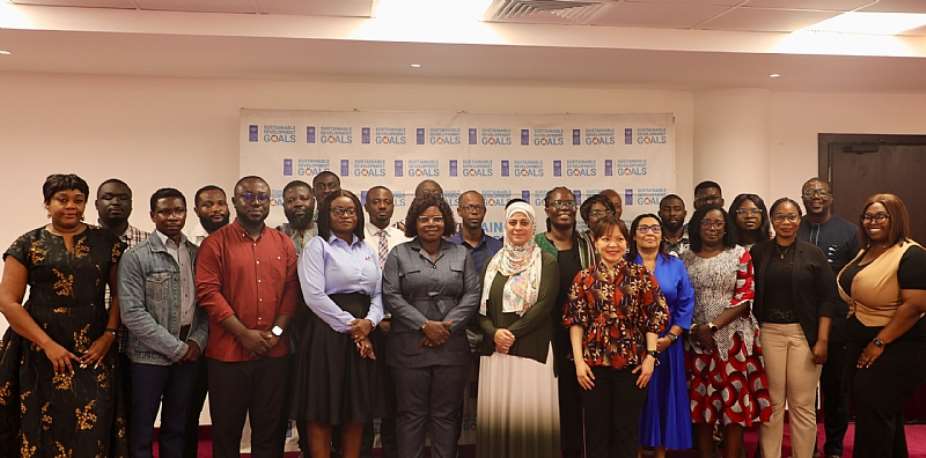
Outdoor air pollution cost Ghana an estimated GH¢28 billion (US$1.9 billion) in economic losses in 2024, representing about 2.3 per cent of the country’s Gross Domestic Product (GDP), a United Nations Development Programme (UNDP) report on the Investment Case for Improved Ambient Air Quality and Health has disclosed.
The study, undertaken in collaboration with Breathe Cities and funded by Clean Air Fund, said ambient, or outdoor, air pollution also contributed to 12,870 deaths and more than 316,000 disease cases within the same year, underscoring its growing health and economic burden on the country.
Stroke accounted for the largest share of air pollution-related deaths at about 47 per cent, followed by ischaemic heart disease with 21 per cent and acute lower respiratory infections at 17.4 per cent.
Acute lower respiratory infections also recorded the highest number of disease cases linked to outdoor air pollution. 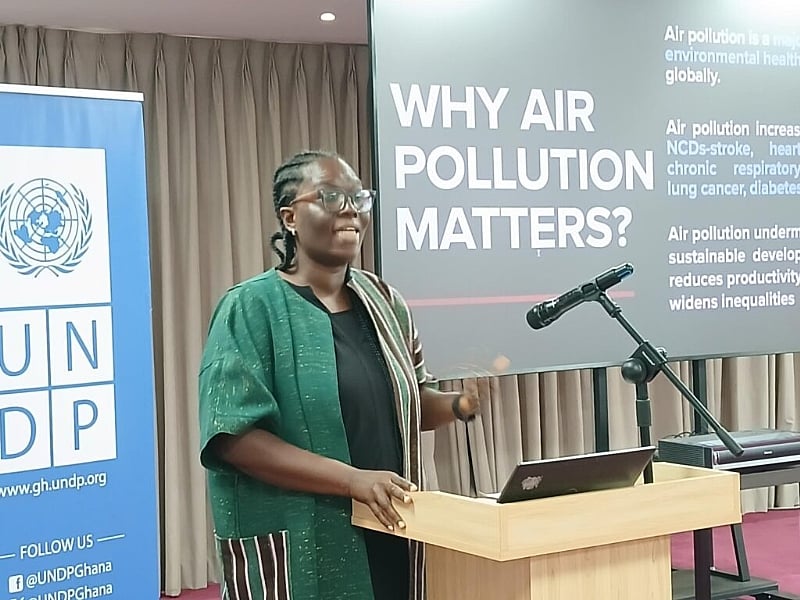
Ms Belynda Amankwa, Programmes Specialist, HIV, Health and Development, UNDP, who presented key highlights of the report at its launch in Accra, said the investment case was undertaken to quantify the health and economic burden of ambient air pollution and provide evidence to guide policy decisions.
“What gets measured gets managed. It’s only when we know the scale at which we are dealing with that we can put in the remedial actions to address it,” she said.
Ms Amankwa explained that the study focused exclusively on ambient or outdoor air pollution and did not assess indoor air pollution.
She said the analysis drew on data from the Environmental Protection Agency (EPA), Ghana Health Service, Ministry of Health, Ministry of Finance, Ghana Statistical Service, National Health Insurance Authority and other stakeholders, using an internationally recognised methodology adapted to Ghana’s context.
She described the study as “a labour of love,” noting that it had undergone extensive technical reviews and validation involving government institutions, academia, development partners and civil society organisations.
The report, at national level, she said recommended the development of a unified national air quality policy to strengthen coordination, alongside expanded air quality monitoring systems and improved mechanisms for sharing air quality data.
Other recommendations include strengthening multi-sectoral collaboration, mobilising innovative financing through climate funds, green bonds and carbon markets, and increasing research, particularly on the impact of air pollution on vulnerable populations such as women, children and pregnant women.
At the city level, she said the report urged metropolitan, municipal and district assemblies to promote cleaner transport systems, improve waste management, strengthen enforcement of environmental regulations on industries and intensify public education on the dangers of open burning and other pollution-generating activities.
“We need to take the message out of the boardrooms and into the communities, markets and lorry stations, so people understand why we must all act to reduce air pollution,” Ms Amankwa said.
She called for sustained collaboration among government agencies, local authorities, development partners and communities to ensure cleaner air, improved health and a more resilient economy. 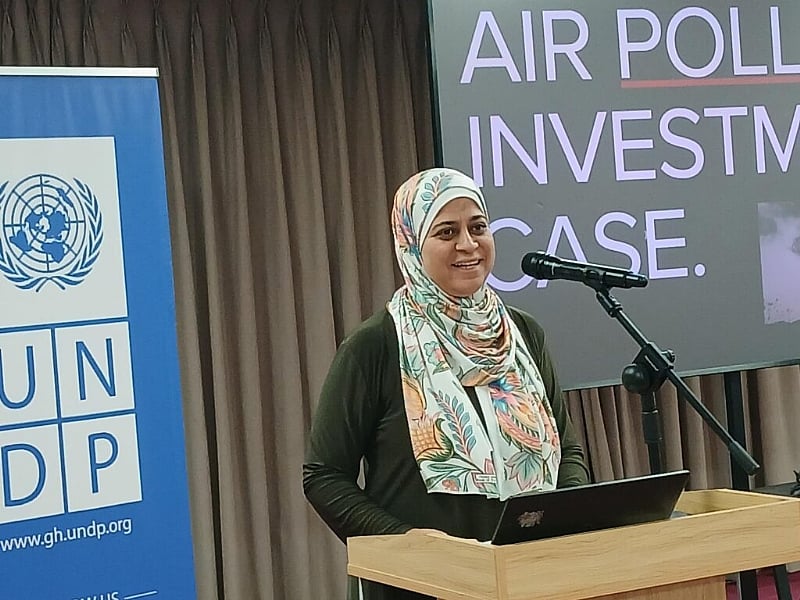
Ms Shaima Hussein, Deputy Resident Representative of UNDP Ghana, said air pollution remained one of the world’s most preventable environmental threats, with nearly 99 per cent of the global population breathing air that exceeded World Health Organisation guidelines.
She said the investment case therefore provided robust evidence to guide coherent, multisectoral action in Ghana to minimise the situation if not entirely eradicate it.
She urged stakeholders to translate the report’s findings into practical interventions to protect public health and drive resilient socio-economic growth.
Mr Desmond Appiah, Country Lead, Clean Air Fund, said the report would help communicate the true cost of air pollution in a language policymakers understood, making it easier to prioritise action and investment.
He said Clean Air Fund had, since 2022, sought to build a strong local evidence base to demonstrate the health and economic impact of air pollution in Ghana.
“We wanted to contextualise the situation in our own country and in our cities,” he said, adding that the report’s recommendations, including a national air quality policy and stronger multi-sectoral collaboration, provided practical solutions for implementation.
Mr Solomon Laryea at the Policy, Planning, Monitoring and Evaluation Directorate of the Ministry of Health, said the investment case would strengthen evidence-based policymaking and support implementation of the country's Health National Adaptation Plan.
He reaffirmed the Ministry’s commitment to working with UNDP and partners to translate the report’s recommendations into concrete policies and interventions.
GNA
 Transport Ministry defends purchase of diesel locomotives, rejects NPP criticism
 Outdoor air pollution costs Ghana more than GH¢28 billion - UNDP
 Yagbonwura joins Asantehene for fifth Awukudae celebration
 How US lawmaker Carol Ammons traces ancestry to Paga, enskinned as Queen Mother
 NDC signs cooperation agreement with Russia's United Russia Party
 Canada-Ghana trade rises 56% to US$752 Million
 Foreign Affairs Ministry to replace passports lost, damaged in floods
 Two bodies retrieved after flooding at Adakope near Weija
 Heartbreaking moment as Senegalese fan reportedly passes out after Belgium's dra...
 Elderly man allegedly throws stone at resident after being caught dumping refuse...
