




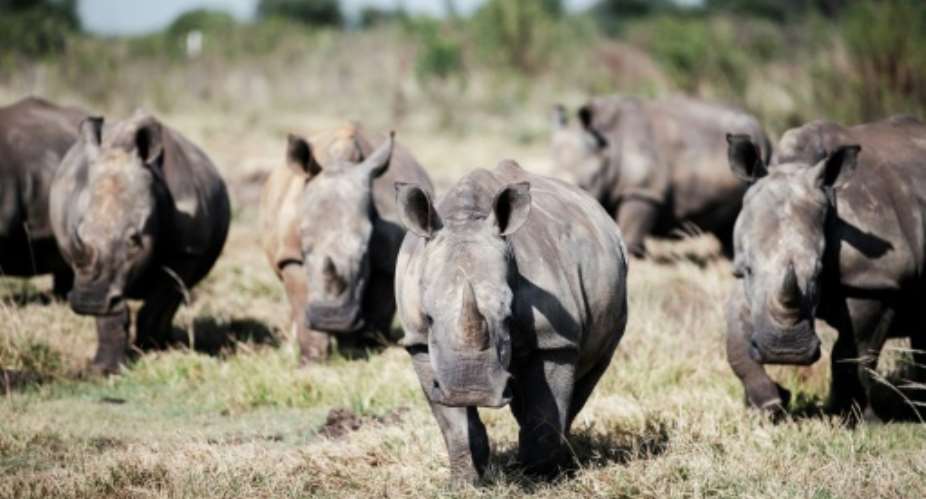
South Africa has lost a bid to overturn a court ruling that could allow exports of legally harvested rhino horn, the private conservationist who brought the case said Friday.
Trade in rhino horn has been banned globally since 1977 under the Convention on International Trade in Endangered Species of Wild Fauna and Flora (CITES).
Supporters say the ban is vital to protect dwindling wild rhino populations from poaching, while advocates of legal trade argue that regulated sales of horn harvested from live animals could fund conservation and curb black-market demand.
Wicus Diedericks, owner of a 33,000-acre (13,355-hectare) game reserve in South Africa's Northern Cape province, sued the government to compel it to authorise the export of more than 500 white rhino horns.
In 2025, the Northern Cape High Court ruled in his favour, finding that horn from captive-bred white rhinos bred for conservation purposes could qualify for export certificates, subject to legal requirements.
Diedericks said the same court had on Friday dismissed, with costs, the government's application for leave to appeal that judgment.
"This historic decision validates the rights of private conservationists and breeding facilities to fund their critical, high-cost protection efforts," he said in a statement.
"It is a decision that experts believe could save the species, sustainably fund conservation, and uplift rural communities across South Africa."
The environment department did not immediately respond to AFP's request for comment.
Friday's decision can still be appealed to a higher court under South African law.
British NGO the Environmental Investigation Agency (EIA) in May called Diedericks' lawsuit "a reckless gambit", saying it sought to circumvent the international ban on rhino horn trade and could increase demand, weaken enforcement and fuel illegal trafficking.
South Africa is home to the world's largest rhino population but is also a poaching hotspot, driven by demand for rhino horn in parts of Asia, where it is used in traditional medicine and as a status symbol.

 Outdoor air pollution costs Ghana more than GH¢28 billion - UNDP
 Yagbonwura joins Asantehene for fifth Awukudae celebration
 How US lawmaker Carol Ammons traces ancestry to Paga, enskinned as Queen Mother
 NDC signs cooperation agreement with Russia's United Russia Party
 Canada-Ghana trade rises 56% to US$752 Million
 Foreign Affairs Ministry to replace passports lost, damaged in floods
 Two bodies retrieved after flooding at Adakope near Weija
 Heartbreaking moment as Senegalese fan reportedly passes out after Belgium's dra...
 Elderly man allegedly throws stone at resident after being caught dumping refuse...
 Foreign Affairs Ministry to replace passports lost in June 29 floods

Comments
Legalising the trade in rhino horn will help protect rhinos by creating a regulated market that benefits conservation. Rhino horn can be harvested without killing the animal because it grows back, allowing owners to earn income while keeping rhinos alive. This money could fund anti-poaching efforts, habitat protection, and community development. A legal supply of rhino horn will also reduce the profits of illegal traders by lowering black market prices. Since demand for rhino horn already exists...