





While developed nations are aggressively turning garbage into gold through advanced circular economies, Ghana is tragically letting waste kill its citizens. Walk through our major transport hubs, residential enclaves, and markets, and the reality is undeniable: illegal dumpsites are expanding, plastic pollution is choking our marine life, and blocked drainage channels turn every seasonal rainfall into a deadly flood zone. We have treated sanitation as an expensive burden rather than an economic goldmine.
The standard approach of mixing organic food waste, hazardous materials, and plastics into a single black bin—only to dump it in an overflowing landfill—is a failed, archaic model. We do not have a waste crisis; we have an organizational crisis. By failing to enforce source-separation and commercial recycling, we are throwing away millions of Cedis in revenue, destroying our public health, and burying the economic future of our youth under mountains of trash. The time for endless workshops and theoretical policy documents is over. We need immediate, aggressive, localized execution.
The Grim Arithmetic of Ghana's Waste Crisis
To understand the sheer scale of the emergency, one must look at the hard data. Studies show that Ghana generates between 13,000 and 15,000 metric tons of solid waste every single day, culminating in over 5 million metric tons annually. Major urban hubs like Accra and Kumasi shoulder the heaviest burden, combining to produce over 4,000 metric tons daily.
The underlying problem is not just how much we produce, but what we do with it:
- The Uncollected Backlog: In Accra alone, approximately 2,800 metric tons of waste are generated daily, but only 70% to 75% is officially collected. This leaves an estimated 600 to 700 metric tons of garbage dumped daily into open drains, lagoons, and water bodies, guaranteeing catastrophic structural floods when it rains. [14, 15, 16, 17]
- The $290 Million Economic Drain: According to environmental economic assessments, improper waste management and the resulting environmental degradation cost Ghana an estimated $290 million annually—equivalent to 1.6% of our national GDP.
- High-Value Waste Breakdown: Our trash is not valueless muck. Characterization audits reveal that a staggering 53.9% to 60% of Ghana's municipal waste is pure organic matter, while 14% to 16.1% is high-value recyclable plastic, primarily PET beverage bottles and HDPE water sachets. We are quite literally burying raw industrial resources.
Unlocking the "Green Economy": Wealth and Jobs for Ghanaian Youth
An Institute of Statistical, Social and Economic Research (ISSER) study notes that Ghana could generate up to GH¢47.9 billion annually from the waste and circular economy sector by 2032. Instead of leaving our youth to migrate or hazard their lives in illegal mining, a national source-separation framework unlocks formal, sustainable "Green Jobs":
- Neighborhood Eco-Collectors: Transitioning the informal waste sector into formal, digitized collection networks. Youth groups can manage localized routes, using tricycles to collect pre-sorted plastics directly from homes, earning stable per-kilogram payouts from off-take aggregators.
- Compost & Organic Fertilizer Technicians: Utilizing the 60% organic waste stream to manufacture localized agricultural inputs. This creates downstream jobs for youth in organic farming support, soil remediation, and bulk transport to agricultural belts.
- Plastic Upcycling and Processing Entrepreneurs: Setting up small-scale community processing centers where youth are employed to operate mechanical shredders, crushers, and balers, transforming raw plastic waste into high-density pellets ready for export or local industrial manufacturing.
The Pilot Blueprint: Setting Up a Low-Cost Community Sorting Project
We do not need multi-million dollar investments to prove this model. A local assembly can launch a highly efficient, self-sustaining Plastic Source-Separation Pilot targeting a cluster of 1,000 households over a 6-month period for a relatively modest setup cost:
- The Operational Plan: Households are given two bins—one for dry plastics/sachets, and one for general waste. Tricycle operators collect the plastic twice a week.
- The Revenue Model: 1,000 affluent households generate roughly 1.5 tons of plastic per week. At current factory buy-back rates, selling sorted, crushed PET/HDPE directly to aggregators yields steady weekly revenue, making the pilot entirely self-funding after month three.
Actionable Stakeholder Recommendations
1. For Private Waste Management Companies (WMA)
- Deploy Two-Bin Systems: Replace single-container collections with dual-bin options (one for dry plastics/paper, one for organics).
- Create Localized Buy-Back Hubs: Establish community weigh-stations where citizens can directly trade sorted plastics for mobile money or utility credits.
2. For Citizens and Households
- Separate at the Source: Stop mixing food waste with plastics, cans, and paper.
- Enforce Neighborhood Watch: Actively report and penalize individuals or commercial entities caught dumping trash into open public drains.
3. For Market Associations and Traditional Authorities
- Enforce Clean-Up Bylaws: Institute and enforce strict traditional bylaws against littering within markets, modeled after successful communities like Assin Kushea.
- Appoint Sanitation Captains: Designate market leaders to supervise daily waste sorting at food stalls before collection trucks arrive.
A Direct Call to President John Dramani Mahama: Task the DECs or Fire Them
Your Excellency, President John Dramani Mahama, the sanitation crisis in Ghana cannot be solved from a desk in the Jubilee House. Local government is the frontline of this battle, and the responsibility stops squarely with your appointees at the local level.
To clean Ghana, you must hold your leadership strictly accountable with clear, uncompromising timelines:
- The Presidential Directive: Issue an immediate executive order tasking all Metropolitan, Municipal, and District Chief Executives (MMDAs/DCEs) to design, launch, and supervise at least one functional household waste-separation or commercial recycling pilot project within their respective districts.
- The 6-Month Ultimatums: Give all DCEs a strict six-month timeline to clear all major illegal dumpsites, desilt critical drainage channels, and establish local recycling partnerships.
- The Accountability Metric: Any DCE whose district fails to meet measurable cleanliness and source-separation milestones at the end of this six-month period must be summarily fired for administrative incompetence. Cleanliness must become the primary metric for job security in local government.
The Choice Before Us
Ghana stands at a crossroads. We can continue down the path of administrative negligence, watching our cities choke on plastic while burying our citizens after every heavy rain. Or, we can embrace the circular economy, empower our youth with green jobs, and transform our waste into wealth. The tools, the markets, and the models already exist. What we lack is the political courage to enforce discipline. Mr. President, fire up the DCEs, clear the drains, and let us build a cleaner, wealthier, and safer Ghana today.
✍️ Retired Senior Citizen
For and on behalf of all Senior Citizens of the Republic of Ghana 🇬🇭
Teshie‑Nungua
[email protected]

 President Mahama calls for five permanent UN Security Council seats for Africa
 GRIDCo announces 15-hour power interruption in parts of Greater Accra
 Wenchi Traditional Council suspends Twafohene
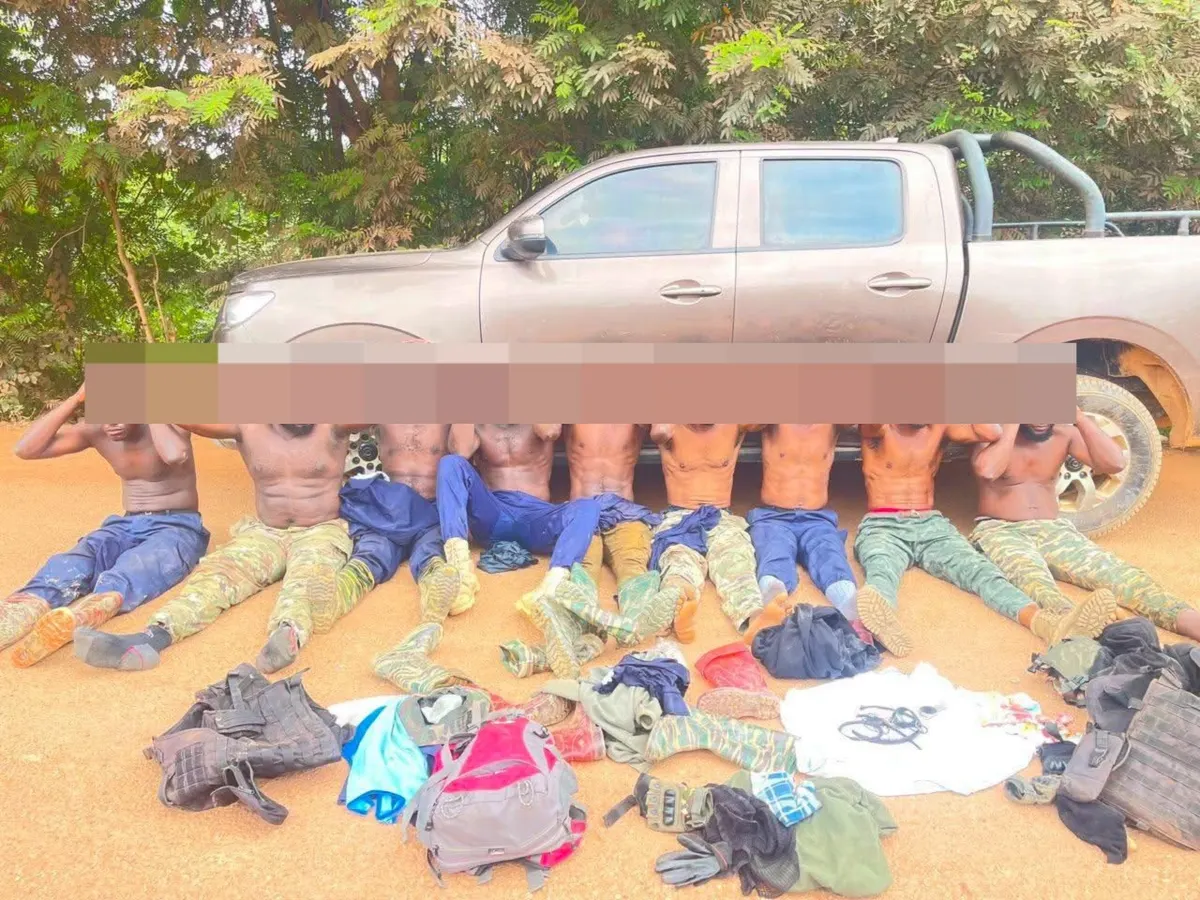 Nine Blue Water Guards arrested over alleged bribery, mpersonation of NAIMOS at ...
 Less than 20km of clearing work remains on Accra-Kumasi expressway – Roads Minis...
 My father predicted family feud, church division before his death – Adwoa Safo
 Afenyo-Markin knows why I called him ‘extortionist’; I dare him to sue me – Samm...
 45-year-old man accused of assaulting 90-year-old woman over witchcraft allegati...
 50 aspirants pick NPP national executive election forms; filing begins August 23
 'Contrary to law': US judge strikes down Trump's 75-country visa ban

