




The World Bank says Ghana's economic future depends on urgent youth job creation and a smooth transition from education to work.
The position was outlined at the 2026 Africa West and Central Youth Forum on Jobs held in Accra on Monday.
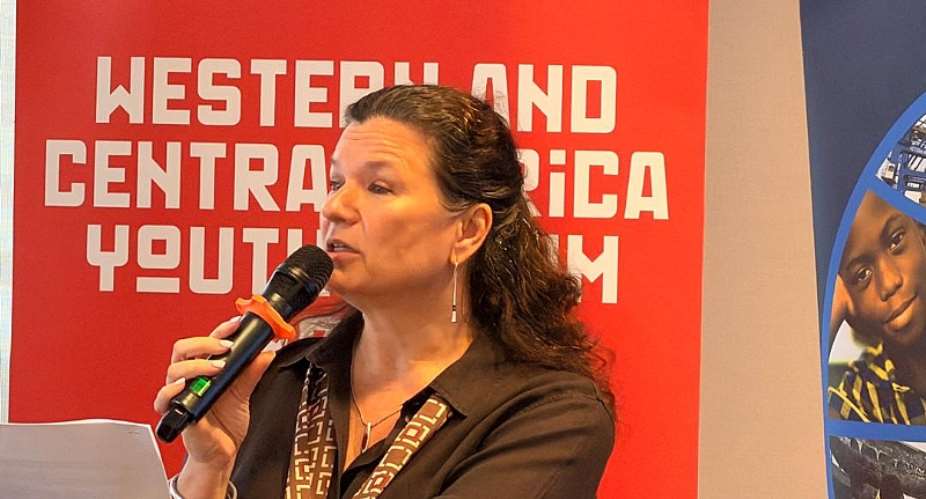
“Here in Ghana, this conversation is very relevant. The country's growth trajectory will largely depend on how successful young people transition from education into productive employment, from ideas to enterprises and from ambition into concrete opportunity,” Michelle Keane, Operations Manager for Ghana, Liberia and Sierra Leone at the World Bank said at the forum:
She said young people were already demonstrating entrepreneurial activity, largely through small-scale businesses, but stressed that the urgency of the youth employment challenge could not be overstated.
Ms Keane urged stronger collaboration between government and the private sector to scale up youth enterprises into sustainable businesses.
She said the challenge of youth unemployment was not limited to Ghana but across Africa, warning that the continent's growing youth population could become an economic burden if not addressed.
Speaking on the theme, “Youth Works, Africa Thrives,” Ms Keane said the forum focused on how to create sustainable opportunities for young people now and in the future, and whether systems, institutions and investments were aligned with their ambitions.
She said Ghana's entrepreneurial culture, expanding digital ecosystem and growing small and medium-sized enterprise (SME) sector provided a strong base for economic transformation.
However, Ms Keane noted that World Bank analysis showed many SMEs struggled to achieve productivity and growth due to limited access to finance, weak market linkages, skills gaps, inadequate mentorship and limited digital access.
She urged Ghana to prioritise entrepreneurship, SMEs and youth-led innovation as central pillars of economic development, given their potential to drive job creation at scale.
“These are not peripheral issues but central to Ghana's economic recovery and inclusive growth,” she said.
Ms Keane said the World Bank was supporting Ghana through interventions in human capital development, education and skills, digital connectivity, the business environment, and inclusion of women and young people in the economy.
She cited a US$3 million World Bank-supported project aimed at ending the double-track system in senior high schools (SHSs) and improving skills development for students transitioning into higher education or employment.
Ms Keane said that the International Finance Corporation (IFC), the World Bank Group's private sector arm, was working with financial institutions and businesses to expand access to finance, support SMEs and stimulate job creation at scale.
She called for stronger alignment between policy, investment and entrepreneurship to deliver sustainable employment, noting that many of the solutions discussed at the forum lay at that intersection.
GNA

 'Contrary to law': US judge strikes down Trump's 75-country visa ban
 GoldBod’s gains must be weighed against full cost to Ghana – Prof. Bokpin
 ‘Afenyo-Markin’s smear campaign against me is about extortion’ – Sammy Gyamfi
 August 22: Cedi sells at GHS12.30 on forex market, GHS11.13 on BoG interbank
 There is a deliberate smear campaign against GoldBod from Minority – Sammy Gyamf...
 ‘If GoldBod wants credit, it must accept blame for losses’ – Dr Owusu Sarkodie
 Akosombo control system to be restored next month – Energy Minister
 ‘Temporary Akosombo system not very robust’ – Energy Minister on recent power ou...
 Mike Ocquaye Jr reacts to Adwoa Safo’s reported return to NPP Dome-Kwabenya race
 Foreign Affairs Ministry urges Tijjaniya pilgrims to Senegal to travel by air ov...

