




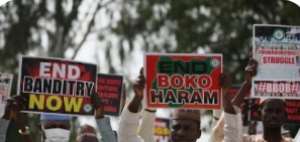
For over a decade, Boko Haram was Nigeria's defining security nightmare the insurgency whose brutality transfixed the world, sparked the #BringBackOurGirls movement, and forced Nigeria onto every global security agenda. But ask ordinary Nigerians today particularly those in the North-West, North-Central, and even the federal capital which threat keeps them awake at night, and a disturbing consensus emerges: it is not the jihadists of Borno State.
It is the bandits and criminal networks that have turned kidnap-for-ransom into a systematized national industry, reaching deeper into daily life, extracting more money from more families, and operating with brazenness that Boko Haram, for all its savagery, never quite achieved at this scale.
The numbers tell this story with merciless precision.
The Scale of the Crisis: 2022–2026
Between July 2021 and June 2022, SBM Intelligence recorded ransom payments totalling N653 million, worth approximately $1.2 million. That was grim enough. By 202, it had become a different order of catastrophe entirely.
Tracked ransom payments rose by 750 per cent between 2023 and 2025, reaching N2.57 billion. Ransom demands rose by an even higher proportion 860 per cent from N5 billion in 2023 to N48.01 billion in 2025. Within three years, the total ransom demanded from Nigerians in captivity stood at N63.99 billion.
In terms of recorded incidents: 582 occurred in 2023, 1,130 in 2024, and 997 in 2025 a total of 2,709 tracked kidnapping incidents over three years, in which 15,910 Nigerians were abducted. Within that same period, 2,400 persons were killed an annual average of 800 deaths including security operatives on rescue missions.
The National Bureau of Statistics (NBS), using its broader household-based survey methodology, produced figures that were even more staggering. The NBS estimated kidnapping incidence at 2,235,954 cases between May 2023 and April 2024. Among households that experienced kidnapping, 65 per cent paid a ransom. The average amount paid was N2.7 million per incident, with an estimated total ransom of N2.2 trillion paid within that twelve-month reference period alone. The North-West reported the highest ransom paid N1.2 trillion while rural areas recorded far more kidnappings than urban centers.
These are not the figures of a manageable security problem. They are the balance sheet of a criminal economy embedded in the fabric of Nigerian society.
More Deadly Than Boko Haram in the North-West
The comparison with Boko Haram is not rhetorical. It is empirical. From 2018 to 2023, bandits killed more people in Nigeria's North-West than the terrorist groups ISWAP and Boko Haram combined killed in the North-East. Yet the international community, media, and much of Nigeria's policy conversation remained fixated on the North-East insurgency even as the quieter, more mercenary violence of the North-West consumed more lives per year.
The structural difference between the two threats is also what makes the ransom economy so insidious. Boko Haram is ideologically driven: its violence serves a declared political and religious project. While the 2014 Chibok kidnapping was motivated by ideological and strategic reasons, armed bandits have increasingly adopted kidnapping purely as an avenue to collect ransom.
There are no manifestos to negotiate with, no political demands to address, no religious grievance to channel into dialogue. There is only money demanded at gunpoint, paid in desperation, and reinvested in further violence.
Armed bandits target farmers, traders, students, families, and travelers, turning abduction into a low-risk, high-reward enterprise that thrives amid weak state protection and fragmented security responses. In this calculation, the kidnapper has little to fear and everything to gain.
The Geography of Terror: Katsina and the North-West at the Epicenter
The regional concentration of the crisis is not evenly distributed, and that matters for understanding its political gravity. The North-West remained the epicenter, accounting for 62.2 per cent of victims during the 2024–2025 reporting period. Zamfara alone reported 1,203 abductions, while Katsina recorded the highest number of incidents at 131.
Families of victims in North-West Nigeria often sell farmlands to pay ransoms of N2 million to N5 million. This is not simply a security crisis. It is a mechanism of economic dispossession a predatory levy on communities that were already poor, stripping them of the productive assets that took generations to accumulate. When a farmer sells his land to pay a kidnapper, the family does not just lose a loved one; it loses its future.
By some estimates, 30,000 bandits operate in North-West Nigeria, largely in Zamfara State but also in Katsina and Sokoto states. Bandits are spreading southward, travelling on motorcycles and hiding in forests. The security architecture of the region already stretched thin by years of bandit warfare and the retreat of capable forces from conflict zones has proven wholly inadequate to this pressure.
In Katsina State specifically, the situation has reached a point where state institutions are effectively capitulating. According to Nigerian newspapers, 20 of 34 local governments in Katsina State have reportedly entered into truces with bandits, in which hostages would be released for prisoners. When a state is reduced to negotiating with the criminals terrorizing its own citizens, it has ceased, in the most meaningful sense, to govern.
Schools as Targets: A War on the Future
Among all the dimensions of the ransom economy, none is more morally unconscionable than the systematic targeting of schools. More than 1,680 schoolchildren have been kidnapped and 180 schools attacked by various bandit and terrorist groups since 2014.
The pattern has accelerated relentlessly. More than 600 school kidnapping cases were recorded in 2025 alone in northern and north-central states, according to Global Rights Nigeria. In November 2025, over 400 people, mostly schoolchildren were kidnapped across four states in the North-Central region surpassing in scale the 2014 Chibok kidnapping that shocked the world. In November of the same year, gunmen abducted over 300 students and 12 teachers from a school in Niger State.
According to security forces in the region, the kidnappers conduct detailed planning surveilling schools, mapping escape routes then execute raids at vulnerable hours with large armed teams, overwhelming lightly protected schools. Once in captivity, ransom is handled via burner phones and encrypted communications, paid through informal channels like hawalas that evade the traditional banking system.
This is not opportunism. It is operational sophistication applied to the most defenseless targets imaginable.
The Ransom Economy as Governance
What has emerged is something qualitatively different from ordinary crime. Bandit groups already regulate movement, impose informal taxes, and control access to livelihoods in parts of Zamfara, Katsina, and Sokoto states. They operate in hybrid systems of authority, where state presence is weak, contested, or selectively captured.
In this "economy of fear," insecurity reduces crop production and food supply, empties markets, disrupts local trade and transport routes, and drives up prices. Kidnapping functions like a regressive tax on already impoverished communities.
The SBM analyst Confidence McHarry observed that the indirect consequences are just as devastating as the direct ones: "We have seen indirect declines in GDP across entire regions."
Following the government's failed attempt to criminalize ransom payments in April 2022, Nigerians are increasingly turning to social media crowd funding to pay hefty sums for abducted loved ones. This has created a perverse feedback loop: public solidarity becomes a pricing mechanism for kidnappers. Armed groups are no longer pricing hostages solely against what families can pay; they assess what a wider network can mobilize, adjusting demands accordingly. Visibility and empathy, rather than deterring the crime, now actively inflate it.
The Jihadist–Bandit Convergence
The distinction between criminal bandits and ideological jihadists, already blurring, is now collapsing in ways that amplify the danger of both. Both Boko Haram and ISWAP have begun to reach into the North-West, providing financial support and training to bandit groups there. "This has produced a fraught and fluid nexus between jihadist insurgents and criminal networks, enabling extremists to establish enclaves in the northwest."
Nigeria has now also seen the emergence of entirely new armed formations. Lakurawa, operating in the North-West along the border with Niger Republic, carries out attacks, enforces a severe ideology, and recruits from local communities. Nigerian authorities declared Lakurawa a terrorist group in 2025. JNIM the Al-Qaeda affiliate that has terrorized Mali and Burkina Faso may also be establishing a foothold in Nigeria, according to government authorities.
The boundary between crime and terrorism in Nigeria's North-West is no longer a meaningful analytical category. It is a continuum.
What Is to Be Done
The federal government's responses have been episodic and structurally inadequate. President Tinubu's "no ransom" policy, however morally defensible in principle, has not curbed the crisis: local governments have begun to approach bandit groups to negotiate peace deals themselves, exemplifying frustrations with the federal government's current approach.
The deeper structural drivers poverty, unemployment, state absence, climate stress, land conflict remain unaddressed. Kidnapping became the economic mainstay of armed bandit groups, replacing cattle rustling which had provided the bulk of bandit revenues between 2011 and 2019, but became less lucrative as cattle stock were depleted and herders relocated to safer areas.
Crime adapts to opportunity. Only structural reform genuine investment in North-West communities, credible prosecution chains, intelligence coordination between security forces, and economic alternatives for young men who currently have none will change the underlying equation.
Boko Haram was catastrophic. The ransom economy is, by the evidence of its reach, its victims, its financial extraction, and its structural entrenchment, something that has exceeded it. Nigerians know this. It is time their government did too.
Mustapha Bature Sallama.
Medical/ Science Communicator,
Private Investigator, Criminal investigation and Intelligence Analysis.
International Conflict Management and Peace Building.USIP
[email protected]
+233-555-275-880
Sources: The Whistler / SBM Intelligence (June 18, 2026); National Bureau of Statistics (NBS) Crime Experience and Security Perception Survey 2024; BusinessDay Nigeria / SBM Intelligence (August 2025); Soufan Center (November 2025); ISS Africa (May 2026); The New Humanitarian (March 2026); Africa Defense Forum (January 2026); Human Rights Watch World Report 2026; Global Centre for Responsibility to Protect (2026); Eurasia Review / Eurasiareview.com (December 2025); ACLED / Qiraat Africa; WifaTalents Nigeria Kidnapping Statistics Report (February 2026).

 Mahama announces establishment of three expert panels to advance reparatory just...
 GNPC Explorco, Tamale Technical University partner to drive technical capacity a...
 I will use scientific approach to restore NPP's glory as Greater Accra Regional ...
 Bawumia will never repeat 2024 early concession— Kpandai MP
 Digital learning interventions supporting over 120,000 SHS students — Education ...
 'No Fees Stress': Over GHC888.8 million spent on 312,448 students so far — Educa...
 'Avoid too much alignment with government, NDC' — The People’s Forum urges Chief...
 Reparatory fight will be won just as we did with colonialism and apartheid — Abl...
 2026 World Cup: Young Lawyer dies while celebrating Ghana’s victory over Panama
 WASSCE 2026: Six students arrested in separate arson and rioting incidents — Pol...


