




A CITY HELD HOSTAGE
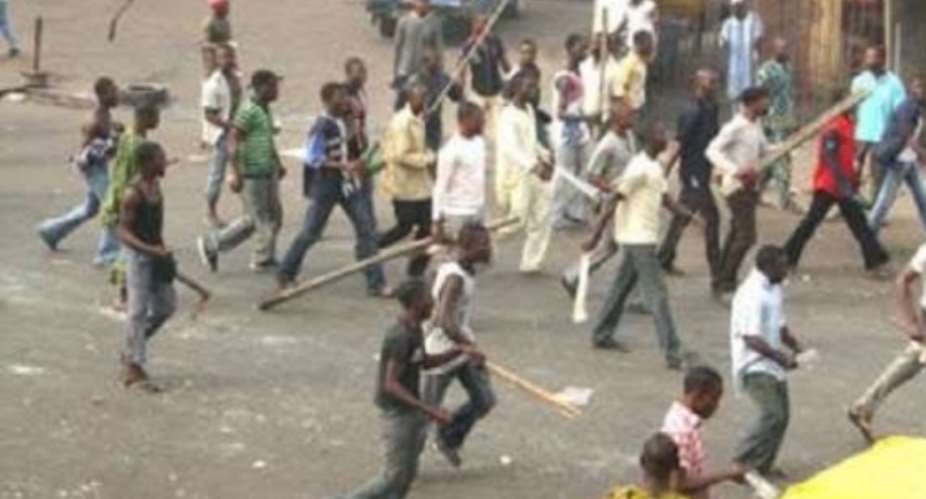
Kano is more than a city. It is the commercial soul of northern Nigeria, a place where centuries of Islamic scholarship, trans-Saharan trade, and Hausa civilization converge. Yet in recent years, a shadow has crept across its ancient streets. Kano is facing a worsening crisis of insecurity driven by the rise of Yan Daba a network of local thugs who terrorize neighborhoods through robbery, phone snatching, intimidation, and street violence.
The problem is not new, but its current scale, organization, and political entrenchment make it one of the most urgent urban security crises anywhere in West Africa. This article draws on field reports, academic research, police records, and human rights investigations to map the full anatomy of the Yan Daba phenomenon from its linguistic and historical roots to its modern criminal economy and contested institutional responses.
WHAT IS A "DABA"? LANGUAGE, SPACE, AND CRIMINAL IDENTITY
The name itself tells a story. "Daba" comes from the Hausa term for a gathering place where people would sit and converse during their leisure time. Over time, the term took on a different connotation, referring to a spot where idle individuals would congregate, discuss, and plan their criminal activities, often fuelled by drug addiction. From a place of conversation, the daba became a place of conspiracy a street-corner incubator of criminal enterprise. The shift in meaning tracks the shift in the lives of the young men who populated those corners: from idle youth to armed threat.
Later, the term "yan daba" (singular: dan daba) took on a new meaning when some youths began associating with these gathering spots and engaging in antisocial behavior such as drug abuse, petty robbery, phone snatching, and political thuggery. Today the term carries a specific, feared identity across Kano metropolis one that residents, police, and politicians all recognize instantly.
HISTORICAL ORIGINS: FROM NEPU'S GUARDS TO FULL-FLEDGED GANGS
The organized criminality of the Yan Daba was not born in a vacuum. It grew from the soil of competitive northern Nigerian politics in the late colonial era. The origin of Yan Daba was traced to the political patterns of 1954 to 1966, when the principal opposition party in Kano the Northern Elements Progressive Union (NEPU) felt threatened and was not adequately protected by the Native Authority Police. This led to the recruitment of local hunters as thugs or vanguards to provide protection to opposition leaders.
This caused the opposing party to form its own group, which sparked the fights that went on beyond the First Republic. However, these political thugs did not become full-fledged gangs until the early 1980s, when they were divided between Easterners (Yan Gabas) and Westerners (Yan Yamma). What began as political self-defence calcified, over two decades, into a culture of organized street violence.
The Maitatsine crisis of the late 1970s to early 1980s provided the decisive rupture. Historically, Hausa society had warriors known as Yan Tauri brave adventurers who possessed magical powers and charms that made them nearly invincible in battle. They were also skilled hunters. However, the state government enlisted Yan Tauri's help to combat the Maitatsine followers. Yan Tauri fought bravely, killing many followers, but this exposure to violence and bloodshed had a profound impact on them. Following the Maitatsine crisis, Yan Tauri began to metamorphose into Yan Daba, a group notorious for their thuggery and violence.
Politicians exploited Yan Daba for their gain, employing them as enforcers and thugs. During Governor Rimi's tenure, the divide within the People's Redemption Party (PRP) in Kano State further exacerbated the situation. The party split into two factions: the Santsi group led by Governor Rimi, and the Tabo group led by Malam Aminu Kano. Both factions employed Yan Daba thugs, leading to deadly fights between the two groups. Notorious Yan Daba members during this period included Gogarma, Mal Hadi, Gambo Cooperation, Sarki Change, Sabo Wakilin Tauri, and Uba Dala Bala Turu known for their brutality and willingness to do whatever it took to achieve their objectives.
THE DEMOCRACY DIVIDEND THAT NEVER CAME: 1999 TO PRESENT
The return of civilian rule in 1999 should have extinguished the Yan Daba problem. Instead it poured fuel on it. Since the restoration of democracy in 1999, gangsters have been hired for campaigns and political thuggery.
Young people are employed to launch attacks on opposition parties during campaigns or disrupt voting procedures. After the election season, these gangs are left without income and resort to illegal activities. The cycle is as cruel as it is predictable: recruit, deploy, abandon, repeat each election season leaving a larger pool of armed, traumatized, and economically desperate young men on Kano's streets.
Behind the frightening activities of these gangs lies a deeper, more painful reality: these young men are often used, empowered, and later abandoned by politicians, creating a cycle of violence that haunts the city long after election seasons have passed. The story of Yan Daba is not only a tale of crime. It is a story of broken promises, failed leadership, drug abuse, unemployment, and the silent suffering of families.
CASE STUDY ONE: THE MADIGAWA ATTACKS AND THE ARCHITECTURE OF TERROR
The Madigawa area of Kano provides one of the most extensively documented case studies of how Yan Daba operates at the neighborhood level. Their methods combine systematic economic destruction with calculated mass intimidation.
The criminals are known to destroy kiosks and unfinished structures, remove gates and railings, and raze shops. (HumAngle) In one documented incident at Madigawa, the gang arrived in force over fifty members moving in coordinated groups, each carrying bright security torches deliberately aimed at blinding witnesses and potential resisters. This was not a mob. It was an operation with tactical planning behind it.
When Kano residents closed their shops early having heard the gang was coming that night, they returned the next morning to find every stall razed to the ground. "They usually come to rob people of their properties," one trader named Hassan Iliyasu told HumAngle Media after losing his newly constructed kiosk, "but that fateful day, they found no one because we closed early, and that was the reason they burnt down shops." The destruction was not a frustrated impulse it was punishment for non-compliance, a message to the entire neighborhood about who controls the street.
CASE STUDY TWO: KAWO, NASARAWA LGA THREE DAYS OF UNBROKEN TERROR
In early June 2026, residents of Kawo in Nasarawa Local Government Area of Kano State expressed concern over renewed clashes involving suspected Yan Daba gangs as violence in the area entered its third consecutive day. The unrest, which residents said had disrupted daily activities and created fear among traders and commuters, was described as part of a gradual resurgence of gang-related violence in Kano.
A resident named Muhammad told Daily Post: the gangs had not yet begun entering houses, "but they scare away traders and loot them." The immediate trigger was reportedly a dispute involving commercial tricycle operators from different sections of Kawo an indicator of how economic competition in the informal sector now serves as kindling for organized gang escalation.
Yarima, chairperson of the Centre for Thuggery and Violence Awareness in Kano, condemned the growing trend, warning that thuggery had returned across the city especially because of the upcoming 2027 elections, and had been growing since 2015. Areas like Ƙulƙul, Dala, Hotoro, Kurna, Abbatore and Fagge Local Government Area were identified as hotspots. The painful development, he noted, is that some thugs have started using traditional guns called Baushe. CASE
STUDY THREE: KOFAR NAISA, DORAYI, AND SHEKA THE FLASHPOINT GEOGRAPHY
Areas like Kofar Naisa, Sheka, Dorayi, and Kofar Dan-Agundi have become flashpoints for armed gang violence. While the Kano police have apprehended several suspects, residents remain sceptical, alleging political protection for some gang leaders.
In Dorayi, Gwale Local Government Area, over a hundred gang members were arrested and paraded by the Kano State Police Command following a broad daylight attack. In Sheka, community residents wrote letters directly to the Police Commissioner expressing relief after the Anti-Daba Squad cleared out notorious gang leaders.
Residents of Sheka Quarters wrote: "The people of Sheka Quarters now sleep peacefully and with their two eyes closed," formally commending the Anti-Daba Squad for clearance operations against notorious gang leaders involved in phone snatching, robbery, thug clashes (Fadan Daba), and motorcycle theft. That such relief could be expressed over a single police operation underscores how acute the day-to-day terror had been.
In Kofar Mata, between March 13 and 14, 2025, the Kano State Joint Task Force on Peace Restoration and Youth Rehabilitation arrested 53 suspects, seizing illicit substances and weapons including cannabis, codeine syrup, cutlasses, and charms. In a later sweep between May 10 and 14, 31 more suspects were apprehended across hotspots such as Dorayi, Unguwar Dabai, Kabuga, and Kofar Mata.
Authorities recovered firearms, knives, Exol tablets, and large quantities of cannabis, identifying several individuals long known in the thuggery network. A wider crackdown in April 2025 led the taskforce to capture over 500 wanted criminals, including scores directly implicated in Daba-led violence and drug trafficking operations across Kano State.
THE DRUG NEXUS: FADAN DABA'S CHEMICAL FOUNDATION
One of the most alarming findings to emerge from police investigations is the structural integration of drug trafficking into Yan Daba operations. This is not peripheral. It is central.
Investigations revealed that the organized thuggery groups, commonly associated with Fadan Daba, are reportedly sustained by drug distribution networks that provide both funding and operational support. (PRNigeria) In April 2026, a police report directly linked 70 percent of crimes in Kano to drug abuse, and uncovered 513 suspected dealers connected to the Yan Daba ecosystem prompting proposals for a Multi-Agency Task Force incorporating the Nigeria Police Force, NDLEA, Neighborhood Watch, and vigilante groups.
The drugs of choice are well documented. Task force operations across Kano have repeatedly recovered cannabis, codeine syrup, Tramadol, and Exol-5 tablets alongside cutlasses, knives, and firearms. These substances are not recreational indulgences for the gang members they are operational inputs, suppressing fear, reducing inhibition, and fuelling the kind of sustained group violence that would otherwise be psychologically unsustainable.
These gangs, fuelled by factors such as poverty, unemployment, drug abuse, and political manipulation, operate in areas like Kurna, Dorayi, and Fagge, engaging in crimes like street fights, robbery, and extortion.
THE POLITICAL PROTECTION PROBLEM
No serious analysis of Yan Daba can avoid the most uncomfortable dimension: the active complicity of politicians. This is not conjecture it has now attracted the attention of international human rights bodies.
Amnesty International launched a public inquiry into the growing wave of gang violence and political thuggery in Kano State following deadly attacks that claimed at least five lives in Kano and Gwarzo on May 5, 2026. The Executive Director of Amnesty International Nigeria, Isa Sanusi, warned that the activities of armed gangs linked to influential politicians and government officials now pose a major threat to peace and human rights in Kano.
The political silence from the state government itself has been noted in the Nigerian press. Despite the killing of innocent people in the Lakwaya area of Gwarzo local government area, the political thuggery clash popularly known as Fadan Daba within Kano metropolis, and the reaction of angry youths in Gwarzo local government area that led to parts of the local government secretariat being set ablaze, the Kano state government has remained silent. (Blueprint Newspapers Limited) Critics charged that the administration appeared more focused on electioneering and party primary arrangements for 2027 than on the bodies accumulating in Tsanyawa, Shanono, and Gwarzo.
Opposition governorship candidate and former Deputy Governor Aminu Abdussalam Gwarzo accused Governor Abba Kabir Yusuf of failing in his responsibility to protect the lives and property of residents, describing the security situation in Kano as alarming and having deteriorated more than any other time in recent history. On the very day the deputy governor was sworn in, five people were killed.
The systemic problem is captured starkly by the Centre for Thuggery and Violence Awareness: ninety percent of thuggery has returned to Kano especially because of the upcoming elections and it has been growing since 2015.
The pre-2027 election cycle is now accelerating what was already an entrenched crisis.
INSTITUTIONAL RESPONSES: WHAT HAS BEEN DONE AND WHERE IT FALLS SHORT
The Kano State Police Command, to its credit, has not stood still. Under Commissioner of Police CP Ibrahim Adamu Bakori, who assumed office on March 17, 2025, the Command developed what it described as a comprehensive security roadmap.
Between April 23 and April 28, 2025, the Command arrested 33 suspected thugs during intelligence-led clearance operations across flashpoints in Kano metropolis. The operations were led by the Officer-in-Charge of the Anti-Daba Team, CSP Bashir Musa Gwadabe, with suspects apprehended carrying dangerous weapons, illicit drugs, and stolen property.
By year's end, the numbers were more substantial. Suspected thugs known as Yan Daba constituted the bulk of those arrested in 2025, with 2,350 apprehended in connection with street violence, phone robbery and related offences, particularly within Kano metropolis, out of a total of 3,081 suspected criminals arrested by the Command during the year.
Operation Kukan Kura, the Command's flagship anti-gang initiative, drew direct praise from affected communities. The Kano Police Command deployed tactical units including Operation Puff Adder, the Anti-Daba Squad, and Mobile Police Force detachments, conducting round-the-clock patrols in volatile areas particularly during weekends and at night when gang clashes most often occur.
Yet residents remain sceptical. The pattern is one of operation, relief, recurrence. Residents pointed out that thefts and killings often follow Daba activity and called for stronger preventive measures not just reactive arrests. They criticized responses as sporadic, arguing that while enforcement is ongoing, the underlying driver’s economic hardship and youth exclusion remain unaddressed. THE
STRUCTURAL DRIVERS: WHY THE GANGS KEEP RECRUITING
Every arrested Yan Daba member creates a vacancy that the economic and social conditions of Kano fill almost immediately. The root causes are well understood and persistently unaddressed.
Unemployment among northern Nigerian youth remains catastrophically high. The Almajiri system, chronic underfunding of public education, and the collapse of the industrial base that once employed working-class Kano families have created an enormous pool of young men with no legitimate economic future. Drug networks prey on precisely this population offering income, belonging, and chemical insulation from despair.
Politicians complete the cycle. They offer cash, motorcycles, and a sense of power during campaign seasons then withdraw all support the moment polls close. The young men who were "empowered" are left with skills in intimidation, networks of fellow gangsters, and nowhere to direct their energy except at their own communities.
The state government under Governor Yusuf has been pursuing a multi-pronged strategy to uproot Yan Daba, including Operation Safe Corridor and the Peace Committee, aiming to restore security, tackle underlying youth distress, and disrupt the cycle of political gangsterism. Whether these frameworks will survive the pressure of 2027 electioneering when the same politicians who fund rehabilitation programmes may simultaneously be funding gang mobilization remains the central unanswered question.
CONCLUSION: THE PRICE OF CONTINUED INACTION
Kano's Yan Daba problem is not primarily a policing problem. It is a political economy problem. The gangs persist because they serve powerful interests during elections, are fuelled by a drug trade that law enforcement cannot contain alone, and recruit from a population that formal institutions have structurally failed.
Amnesty International's probe, the public letters from terrified Sheka residents, the daily reports of phone snatchings on Club Road and shop burnings in Madigawa, and the six bodies that fell on the day Kano swore in its new deputy governor all of these are not isolated incidents. They are symptoms of an organized crime ecosystem that has been decades in the making and will require decades of genuine structural intervention to dismantle.
The guns called Baushe are already on the streets. The pre-election mobilization has already begun. The question is whether Kano's leaders elected, traditional, and religious will summon the will to break the cycle before the 2027 campaign season turns it into something far worse.
Aisha Lawal Malumfashi
A Criminologist from Department of Sociology, University of Abuja, Nigeria.
+2348036443457
[email protected]
with
Mustapha Bature Sallama
Medical/ Science Communicator
Private Investigator, Criminal Investigation and Intelligence Analysis.
International Conflict Management and Peace Building.
+233555275880
mustysallama@gmail .com
SOURCES AND REFERENCES
HumAngle Media "Yan Daba: The Local Gangs Terrorising Kano Neighbourhoods," Aliyu Dahiru, April 27, 2024. humanglemedia.com
The Daily Reality "The Evolution of Yan Daba: From Warriors to Thugs in Kano," January 21, 2025. dailyrealityng.com
Enganya, Yakubu et al. "The Evolution and Development of Yan Daba: A Study of Criminal Gangs in Kano State, Nigeria," International Journal of Advanced Multidisciplinary Scientific Research (IJAMSR), August 2025. ijeais.org
Dr. Usman "The Case of Yan Daba in Kano, Nigeria," Semanticscholar/PDFs (Kano State study using questionnaire administered to Police, Youth Development Department, and the Office of the Special Adviser to the Governor on Metropolitan Affairs). pdfs.semanticscholar.org
The ICIR "Kano Nightmare: Dreaded Gangs Unleash Terror on Pedestrians, Commuters," February 13, 2026. icirnigeria.org
ModernGhana.com "The Rise of Yan Daba in Kano: A Miserable Story of Robbery, Phone Snatching, and Political Abandonment," December 9, 2025. ModernGhana.com
Daily Post Nigeria "Fear in Kano as Suspected Yan Daba Clashes Enter Third Day," June 3, 2026. dailypost.ng
Legit.ng "Kano Residents, Traders Panic as Deadly Gang Clashes Disrupt Daily Life," April 13, 2025. Legit.ng
AIG Salisu Fagge (Rtd) "Peace Under Siege: Rising Thuggery and Gang Violence in Kano," Opinion Nigeria, July 2025. opinionnigeria.com
The Star Nigeria "Married Women Protest Rising Thuggery as Taskforce Battles Criminal Networks in Kano," August 2, 2025. thestar.ng
PRNigeria "Police Report Links 70% of Crimes in Kano to Drug Abuse, Uncovers 513 Suspected Dealers," April 23, 2026. prnigeria.com
Daily Post Nigeria "Kano Police Arrest 33 Suspected Thugs in Intelligence-Led Clearance Operations," April 28, 2025. dailypost.ng
Leadership Newspaper "Police Arrest 3,081 Suspected Criminals in Kano," December 31, 2025. leadership.ng
Daily Post Nigeria "Amnesty Opens Probe into Kano Political Violence," May 9, 2026. dailypost.ng
Blueprint Newspapers "Kano Government's Dangerous Silence on Insecurity, Thuggery," June 2026. blueprint.ng
Daily Trust "Gwarzo: Kano Witnessing Rising Killings Under Gov Yusuf," June 2026. dailytrust.com
The News Nigeria "Police Officer, Two Special Constabularies Under Investigation for Corruption in Kano" (contains community letters praising Operation Kukan Kura and the Anti-Daba Squad), August 2, 2025. thenewsnigeria.com.ng

 Mahama announces establishment of three expert panels to advance reparatory just...
 GNPC Explorco, Tamale Technical University partner to drive technical capacity a...
 I will use scientific approach to restore NPP's glory as Greater Accra Regional ...
 Bawumia will never repeat 2024 early concession— Kpandai MP
 Digital learning interventions supporting over 120,000 SHS students — Education ...
 'No Fees Stress': Over GHC888.8 million spent on 312,448 students so far — Educa...
 'Avoid too much alignment with government, NDC' — The People’s Forum urges Chief...
 Reparatory fight will be won just as we did with colonialism and apartheid — Abl...
 2026 World Cup: Young Lawyer dies while celebrating Ghana’s victory over Panama
 WASSCE 2026: Six students arrested in separate arson and rioting incidents — Pol...


