




A World Cup opener arrived, the Black Stars took the pitch in Toronto, and the loudest story wasn't the match. It was a courtroom ruling in Ottawa, a furious note of protest from Accra, and a question that has nothing to do with football and everything to do with how this country deploys its power: who does Ghana actually fight for?
What Happened, Stripped of the Noise
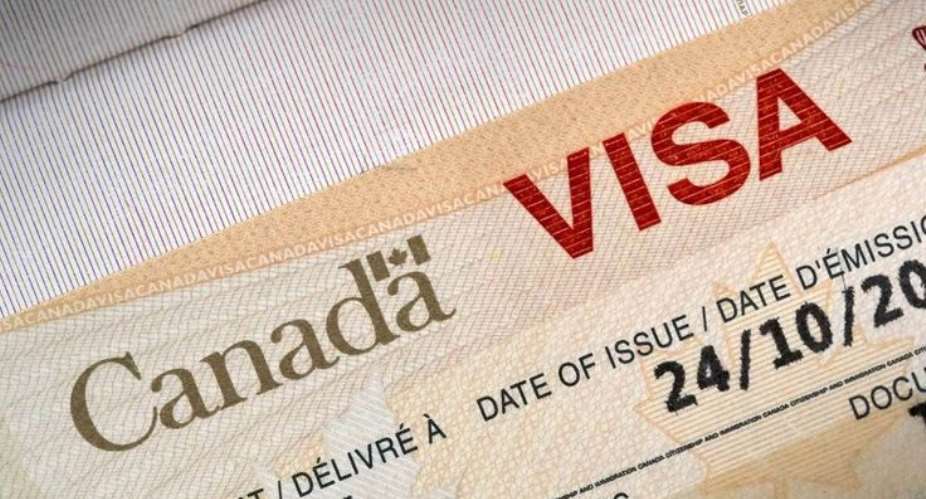
A Canadian Federal Court denied an emergency bid to secure entry for a member of the Black Stars squad, citing immigration rules around foreign nationals facing serious pending criminal charges abroad. Ghana's Foreign Ministry called the decision unfair and dispatched a formal protest to Ottawa. The player remained on the wrong side of the border while his teammates played without him.
Set aside, for a moment, who the player is and what he is accused of. That case belongs in a courtroom, and nothing here should be read as a verdict on it either way. What deserves scrutiny is something else entirely: the machinery of the Ghanaian state that sprang into action the moment a footballer's travel was at stake, and how rarely that same machinery moves for anyone else.
The Double Standard Nobody Wants to Name
Here is the question that should be asked at every radio call-in show and every Twitter thread this week: when was the last time the Ghanaian Foreign Ministry filed an emergency legal challenge on behalf of an ordinary citizen denied entry somewhere?
Every week, Ghanaians are turned back at foreign borders, refused visas after months of saved-up fees and paperwork, deported from countries where they worked for years, sometimes held in conditions that would shame any government into action. Where were the urgent diplomatic notes for them? Where was the formal protest when a Ghanaian nurse, trader, or student lost a visa over a technicality with far less due process than a federal court hearing?
The uncomfortable truth is that the state's appetite for diplomatic confrontation seems to scale with a person's fame, not with the injustice of their treatment. That is not patriotism. That is selective patriotism, reserved for cases that make the news.
Sovereignty Is Not Negotiable, Even for the World Cup
There is a second myth worth dismantling here: the idea that hosting or participating in a global tournament should soften a country's own laws for visiting nations, or that another country's laws should bend because a tournament is involved.
Canada's immigration framework, like that of most countries, including Ghana's own, allows authorities to deny entry to foreign nationals facing certain categories of pending serious charges abroad. This is not a uniquely cruel or anti-African policy. It is a standard tool of border administration that applies regardless of profession, fame, or the calendar. A country does not surrender its right to apply its own laws because the world is watching a football match. If anything, the scrutiny of a global audience is exactly the moment a state is least likely to make exceptions, because exceptions made under spotlight invite exactly this kind of controversy.
Ghanaians frustrated by this outcome might ask a harder question: would we accept it if the situation were reversed, and Ghana applied its own immigration screening to a foreign national facing serious pending charges, only to be told by another government that football, fame, or diplomatic pressure should override our domestic law? The answer reveals something about what we are actually defending here. Is it the player, or is it the principle that exceptions should exist for the prominent?
What This Costs Beyond One Match
There is a real cost to all of this beyond a single afternoon in Toronto. Every time the state pours emergency legal resources and diplomatic capital into a high-profile case while ordinary visa injustices go unanswered, it teaches young Ghanaians a quiet but corrosive lesson: your government's protection is proportional to your visibility. That is a dangerous thing to teach a generation already navigating brutal, arbitrary global migration systems with no safety net behind them.
It also distracts from the more productive question Ghana should be asking after any high-stakes international embarrassment: did the Ghana Football Association and the relevant ministries do the contingency planning a World Cup campaign demands? Travel documentation, legal exposure, and eligibility risk for every player on a global squad are not things a serious footballing nation should be discovering at the eleventh hour, in a courtroom, days before kickoff. If there were known legal complications well in advance, the failure of foresight sits with administrators in Accra and at the GFA, not with a foreign court applying its own law.
A Fair Word for the Other Side
It is worth saying plainly that frustration with this outcome is not irrational. Ghanaians take immense pride in the Black Stars, and losing a key player before a World Cup opener, for any reason, is a genuine sporting blow. Nobody should be mocked for feeling that loss, or for wanting their country's institutions to fight hard for its citizens abroad. The instinct to defend one's own is not the problem. The problem is the inconsistency in who gets that defense, and how loudly.
The Conversation Ghana Actually Needs
So here is the real debate worth having, far past the final whistle of one match: should Ghana's diplomatic machinery exist primarily to manage reputational emergencies involving famous citizens, or should it exist, with equal urgency, for the thousands of nameless Ghanaians facing their own border indignities every single week, with no cameras and no Foreign Ministry statement waiting for them?
Would Ghanaians be having this national conversation at all if the person denied entry had been an ordinary trader rather than a World Cup footballer? And if the honest answer is no, what does that say about whose dignity this country has decided is worth fighting for?
That is the question that should fill comment sections this week, not whether one player should have been let in, but why outrage in this country so often depends on who is asking for help.

 GES directs Ashanti regional, Obuasi East educational directors to step aside ov...
 Ghana's economy doing well; Bawumia's 'pocket economy’ theory will not fly – Apa...
 Obuasi SHTS headmaster resigns as Juaben NDC secretary, withdraws chairmanship b...
 NDC reverses decision, directs Obuasi SHTS headmaster to step aside from Juaben ...
 Africa must turn mineral wealth into jobs and shared prosperity – Mahama
 'Despicable!’ – Prof. Prempeh blasts GES, NDC over handling of Obuasi SHTS alleg...
 Police search for missing fishing canoe and seven crew members off Axim
 October 20: Cedi sells at GHS12.25 on forex market, GHS11.67 on BoG interbank
 'Very distasteful’ – Selorm Branttie blasts NDC for clearing Obuasi SHTS headmas...
 Power fluctuation destroys MTN mast power plant worth GH¢200,000 in Begoro


