




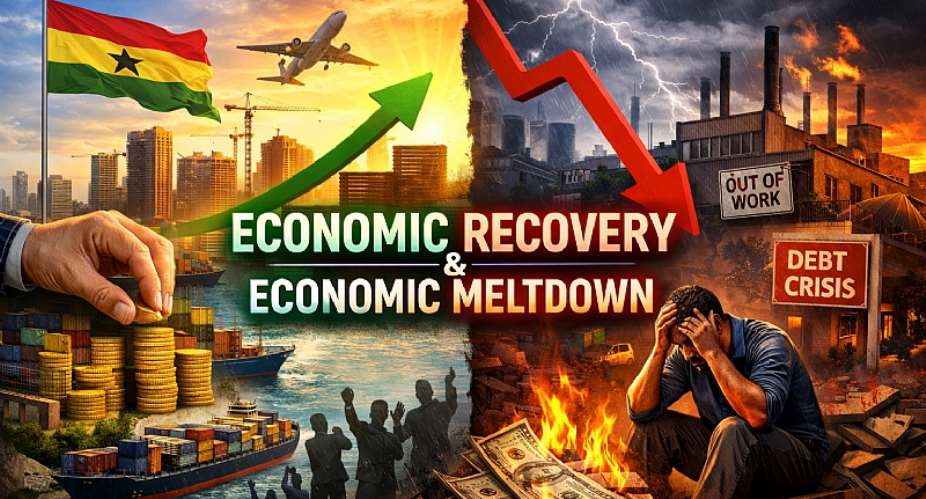
In those heady days of slash‑and‑plunder under the Akufo‑Addo/Bawumia/Ken Ofori‑Atta administration, those who chose to remain loyal to Ghana — refusing to join in the alleged looting — were often regarded as the unwise ones. What many saw as the deliberate plunder of national resources, regulated, formalised, and sanctioned from the highest corridors of government, took a severe toll on the nation and its people.
There is no need to belabour the painful economic history Ghanaians endured. Today, many individuals associated with the previous administration are perceived to be wealthy and influential, having accumulated fortunes during those years, while the overwhelming majority of citizens continue to reel from the consequences of eight years of economic hardship imposed by leaders entrusted with their welfare.
Yet today, all indications point toward economic recovery. A genuine wind of optimism appears to be blowing. There are few strong arguments against the current direction of economic management, and there are many positive developments worth celebrating. The national currency has shown strength and stability at trading points, benefiting traders and importers alike. Without excessive borrowing, the government has managed to mobilise resources for numerous construction projects across the country. Ghana’s international economic outlook is attracting increasingly favourable reviews, reinforcing confidence in the nation’s prospects.
By and large, Ghana appears to be moving in the right direction.
The major concern, however, is that while current economic management promises brighter days ahead, attention must not be diverted from the tens of thousands of Ghanaians who are involuntarily sacrificing their livelihoods to support these improving economic indicators.
The uncomfortable truth — rarely acknowledged publicly — is that beyond the historical arrears owed to many workers, numerous government appointees and public employees have not received regular payments for services rendered. In effect, these individuals have unwillingly contributed to the favourable economic statistics being celebrated today, including lower inflation and the strengthening of the cedi against major foreign currencies.
It is commendable to praise the current managers of the economy for their stewardship. However, we must not forget the tens of thousands of citizens who have had to forgo salaries and wages while these gains have been achieved.
The reality is that many Ghanaians are not yet experiencing the benefits of the improving economic situation. Their involuntary sacrifices deserve recognition, and in due course, they too must begin to feel and enjoy the dividends of the recovery being celebrated.
If equity is to mean anything, then we must all be in it together.


 Ethiopia's new rebel war redraws alliances across the Horn of Africa
 Netanyahu warns of 'very heavy price' if any country found to be behind FlyDubai...
 EU approves tougher migration rules in latest push to tighten borders
 EU ‘fully rejects’ US threat to ban diesel exports unless bloc releases more fue...
 AU urges Ethiopia, Eritrea and Egypt to exercise restraint amid rising diplomati...
 I consulted Akufo-Addo, Kufuor, NPP stalwarts before entering chairmanship race ...
 Strong partnerships key to advancing decentralisation – Mahama Ayariga
 AMA directs closure of shops, markets for October 3 National Cleanup Day
 ‘Fake’ – EOCO denies GH¢50m bail report on Baffour Awuah
 COMAC gives Finance Ministry 14-day ultimatum to suspend new fuel tax rule


