




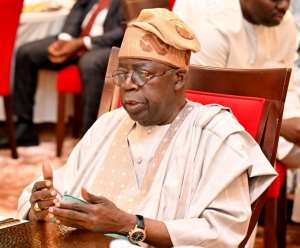
In the annals of Nigeria’s democratic journey, few moments have been as perplexing as the current push by President Bola Ahmed Tinubu and his allies to secure a second term in office. For a nation battered by economic hardship, insecurity, and a pervasive sense of disillusionment, the idea of extending this administration’s tenure is not only politically tone-deaf but also morally indefensible. It is, quite frankly, the height of inconsideration.
When Tinubu assumed office, he did so under the banner of “Renewed Hope.” Nigerians, weary from years of economic stagnation and political missteps, clung to that slogan with cautious optimism. Yet, more than three years into his tenure, hope has not been renewed, it has been eroded. Inflation has soared, the naira has plummeted, and the cost of living has reached unbearable heights. For ordinary citizens, daily survival has become a herculean task.
To ask these same citizens to endorse another four years of the same policies is to trivialize their suffering. It is to suggest that the pain of the people is inconsequential compared to the ambitions of the political elite.
Nigeria’s economy under Tinubu has been marked by turbulence. The removal of fuel subsidies, while touted as a bold reform, has left millions struggling to afford basic necessities. Transportation costs have skyrocketed, food prices have doubled, and wages remain stagnant. The middle class, once a fragile but hopeful segment of society, has been pushed closer to poverty, while the poor have been plunged into deeper despair.
A government that presides over such economic decline should be focused on stabilizing the nation, not campaigning for continuity. To seek reelection amidst widespread hardship is to ignore the cries of market women, artisans, civil servants, and unemployed youths who bear the brunt of these policies.
Beyond the economy, insecurity continues to plague the nation. Banditry, kidnapping, and terrorism remain rampant, with rural communities living under constant threat. Despite repeated assurances, the government has failed to provide a coherent strategy to restore peace and protect lives. Nigerians are left to wonder: if the administration has not been able to secure the nation in its first term, what justification exists for granting it another? The call for a second term, therefore, rings hollow. It is a demand for trust without evidence, for loyalty without delivery.
Even within the ruling All Progressives Congress (APC), there is a palpable struggle to defend Tinubu’s record. Party loyalists find themselves caught between allegiance to their leader and the undeniable reality of public discontent. Selling this government to the electorate has become a herculean task, not because Nigerians are impatient, but because they are perceptive. They can see the widening gap between promises and performance, between rhetoric and reality.
The APC’s predicament underscores the futility of a second-term bid. A party that cannot convincingly market its own government should not expect the electorate to buy into another four years of uncertainty.
At its core, the push for a second term is an act of inconsideration. It dismisses the lived experiences of millions who wake up each day to uncertainty, who queue for fuel at exorbitant prices, who struggle to feed their families, and who wonder if their sacrifices will ever be rewarded with competent governance. It sends a chilling message: that the government’s priority is power, not people.
Leadership is not about clinging to office; it is about service. When service fails, humility demands retreat, not insistence. Tinubu’s administration should be focused on salvaging credibility, not campaigning for continuity.
Democracy is a contract between leaders and the people. The people entrust leaders with power, expecting accountability, transparency, and tangible progress. When leaders fail to uphold their end of the bargain, the contract is broken. In such circumstances, the honorable path is to step aside, allowing fresh leadership to restore faith in governance.
Tinubu’s second-term ambition disregards this contract. It assumes that Nigerians will overlook hardship, insecurity, and disillusionment simply because the machinery of incumbency is powerful. But democracy thrives not on incumbency, but on legitimacy. And legitimacy cannot be manufactured, it must be earned.
Granting a second term to a struggling administration risks entrenching failure. It signals to future leaders that performance is optional, that accountability is negotiable, and that the electorate can be taken for granted. Such a precedent would be disastrous for Nigeria’s democratic evolution.
Nigeria needs leaders who understand that power is a privilege, not a birthright. Leaders who recognize that governance is about impact, not tenure. Leaders who measure success not by the length of time in office, but by the quality of life of the people they serve.
As the nation approaches another electoral cycle, Nigerians must reflect deeply on the choices before them. The question is not whether Tinubu desires a second term; it is whether he deserves one. And the answer, based on the realities of the past years, is clear: he does not.
The electorate must resist the temptation to normalize mediocrity. They must demand accountability, insist on performance, and reject inconsideration. To reward failure with continuity is to mortgage the future of the nation.
In the final analysis, Tinubu’s second-term bid epitomizes inconsideration. It trivializes the suffering of Nigerians, disregards the failures of governance, and prioritizes ambition over service. Nigeria deserves better. The people deserve leadership that listens, adapts, and delivers. To insist on another mandate without first earning the trust of the people is to betray the very electorate whose faith brought him to power.
Tinubu’s administration should focus on salvaging credibility, not campaigning for continuity. Anything less is a betrayal of Nigeria’s democratic promise. Asking for a second term, under these circumstances, is not just audacious, it is the height of inconsideration.

 Samreboi case: AG files objection to stop Appiah Kubi from withdrawing services ...
 Mahama will never pardon former MASLOC CEO Sedina Tamakloe — NDC MP
 Attack on forest officers undermines fight against environmental crimes — A Roch...
 Gov't settles bonus arrears, releases over GH¢76 million for Black Stars' World ...
 AI being exploited by criminals to launch more sophisticated operations — CID Bo...
 Nii Lante Vanderpuye resigns as DRIP Coordinator to pursue NDC National Executiv...
 Stay focused and be faithful — Bishop Dr. Dogbe advises Bawumia
 'Bawumia is a person of great integrity' — Bishop Dr. Hilliard Dogbe
 2026 FIFA World Cup: 'Let’s stop rooting against South Africa' — Michael Blackso...
 NAIMOS hands over 141 seized firearms, nearly 2,000 rounds of ammunition for des...


