




Introduction
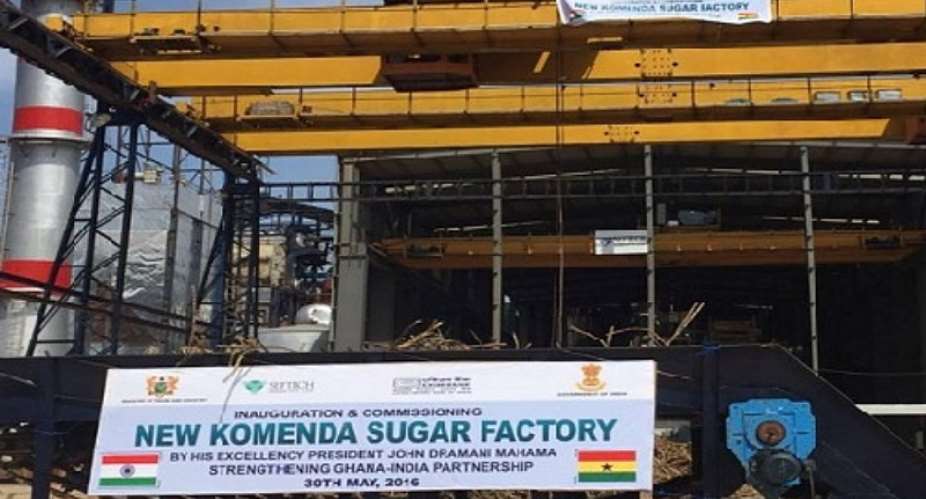
In the coastal town of Komenda, Central Region, stands a $35 million industrial plant with the capacity to crush 1,250 tonnes of cane daily and produce 30,000 tonnes of sugar a year. The Komenda Sugar Factory was meant to be more than steel and pipes. It was meant to be jobs, local wealth, import substitution, and pride. Yet 8 years after commissioning, it remains mostly silent. This is the story of Ghana’s sweetest unfulfilled promise - and why reviving it still matters.
1. The Vision: From Farm to Factory to Future
Commissioned in 2016 under a public-private partnership, Komenda Sugar Factory was built to reverse Ghana’s heavy dependence on imported sugar. Ghana imports over 400,000 metric tonnes of sugar annually, costing hundreds of millions of dollars.
The plan was simple and powerful:
- Outgrower farmers in Komenda, Elmina, and surrounding communities would supply sugarcane.
- The factory would process it into refined sugar for local consumption and export.
- Youth and women would get direct jobs, while thousands more earned income from farming, transport, and services.
Government projections spoke of 7,000 direct and indirect jobs. For a town where fishing and farming dominate, that was transformational.
2. Why It Stalled: The Bitter Truth
Operations began briefly in 2016, but production stopped within months. The core issues were structural, not technical:
Raw material gap: The factory was built before large-scale cane farms were mature. Cane takes 12-18 months to grow, and Ghana lacked enough outgrower schemes to feed the plant at full capacity. Running below capacity makes sugar expensive.
Financial and management issues:
Disagreements over funding, working capital, and management models slowed progress. Without consistent cash flow, maintenance and farmer payments stalled.
Market competition:
Imported, subsidized sugar from Brazil and India is often cheaper than what a new local factory can produce at low volumes. Without policy protection, local sugar struggled to compete on price.
The result: A world-class factory with no cane, no cash, and no output.
3. The Human Cost
Walk through Komenda today and you’ll hear the same refrain: “We were hopeful.” Farmers who cleared land and planted cane lost income when the factory shut down. Youth who trained as technicians and machine operators remain unemployed. Importers still control the sugar market, while forex leaves the country to pay for what we could grow here.
The factory didn’t just fail to produce sugar. It chipped away at trust in “big projects” and industrialization promises.
4. Revival Efforts: A Second Chance Brewing
Hope returned in recent years. Government and investors have been working to restructure the factory under a new investor model. The focus now is “farm first, factory second”:
- Massive outgrower development: Over 3,000 acres of nucleus farms and smallholder schemes are being developed to guarantee cane supply before full production resumes.
- New strategic investor: A private investor with sugar expertise is being brought in to provide capital, technical management, and market access.
- Policy support: Discussions around tax incentives and import policy to give local sugar a fair chance against heavily subsidized imports.
The goal: Switch the plant on and keep it on, not another short trial.
5. Why Komenda Still Matters
Reviving Komenda is bigger than sugar. It’s a test case for Ghana’s industrialization agenda - “Planting for Food and Jobs”, “1 District 1 Factory”, import substitution.
Economic sense: Every tonne of sugar produced locally keeps forex in Ghana and builds value chains from farm to shelf.
Social impact: Stable factory jobs + outgrower income = reduced youth migration and stronger rural economies.
National lesson: Factories don’t run on ribbon-cutting ceremonies. They run on raw materials, capital, management, and consistent policy.
Conclusion: Don’t Waste the Sweetness
The Komenda Sugar Factory is not scrap metal. It’s infrastructure waiting for the right ecosystem. Ghana has the land, labor, and market for sugar. What’s missing is patience to grow the farms first, discipline in management, and policy that protects local industry long enough to compete.
If Komenda works, it becomes a blueprint. If it fails again, it becomes a cautionary tale. For the farmers of Komenda, the youth of Central Region, and every Ghanaian tired of “potential,” we owe it to ourselves to get this one right.
The dream was sweet. The stall was bitter. The revival can be sweeter still.

 Mahama Begins Four‑Day State Visit to Belarus to Deepen Ghana–Belarus Cooperatio...
 Adubinsu Tanker Explosion: Fire Service Slams Residents for Attacking Firefighte...
 80 Suspects Grabbed as Police Storm Upper East in Massive Anti‑Crime Sweep
 Abuakwa South MP Pushes for National Disaster Fund to Support Flood Victims
 “Don’t Be Fooled!” — Foh-Amoaning Tells African MPs LGBTQ+ Rights Not Backed by ...
 BoG Mops Up GHS 11.28bn in Fresh Liquidity Sweep as 14‑Day Bill Auction Records ...
 Foreign Digital Content Eroding African Values — Sam George Warns Parents
 Anthropic calls for global AI slowdown, says systems may outpace human control
 Bono Region: Police investigate murder of retired veterinary officer
 VIDEO: Fuel tanker driver burnt to death in fiery crash at Adubinso, seven shops...


